San Francisco County
Your full June 2, 2026 San Francisco ballot is researched and laid out below — every contest, candidate, and measure, with the case for and against each. The address lookup is still available if you want to re-pull the raw contest list from Google Civic.
Click on the county where you vote.
County list fallback
Pull every race Google Civic has for an address in San Francisco County.
Google Civic is address-based. A county can contain many districts, so a street address is needed to find the contests tied to one voter's ballot. The address is sent to Google Civic through this server and is not stored by this app.
Every contest on your California Statewide Direct Primary ballot (Supervisor District 2 · Assembly District 17 · U.S. House CA-11), deep-researched with at least two independent sources per candidate. This is research to inform your vote, not an endorsement— each dossier gives the case for and against. In California's top-two primary, the two highest finishers advance to November regardless of party. Polling place: 1280 Laguna St, San Francisco. Updated 2026-05-28.
Each race is collapsed below — tap one to expand it; opening a race closes the last one.
Top of the ballotGovernor
61 candidates · 8 major contenders
Governor
61 candidates · 8 major contenders
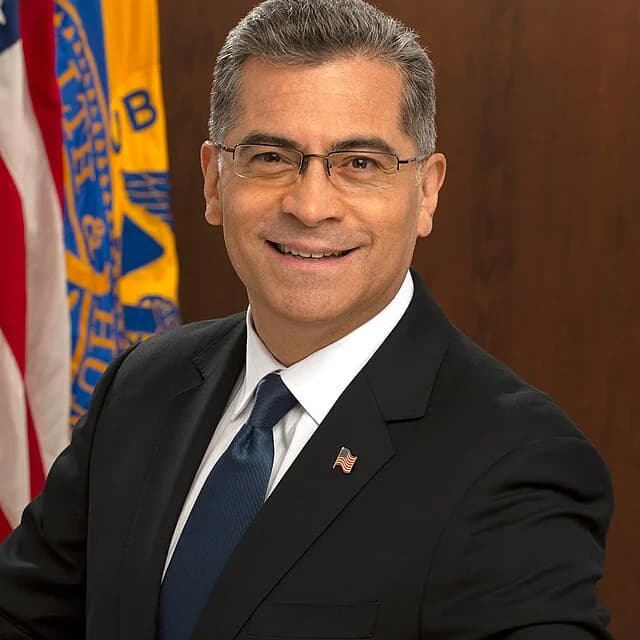
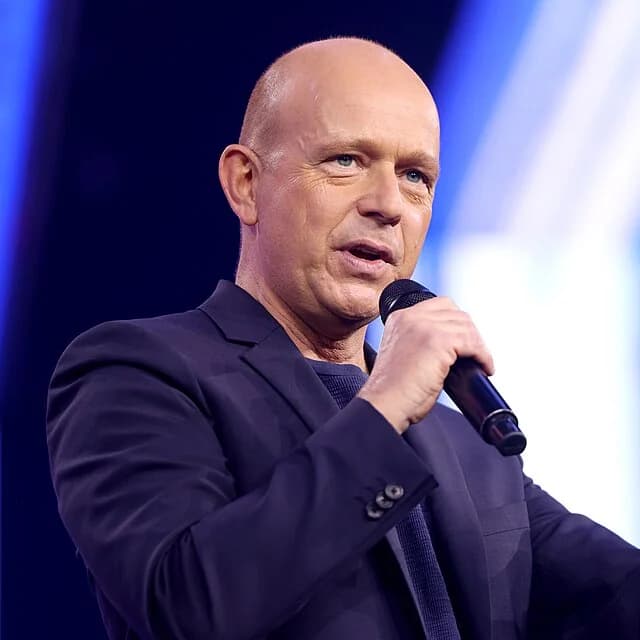
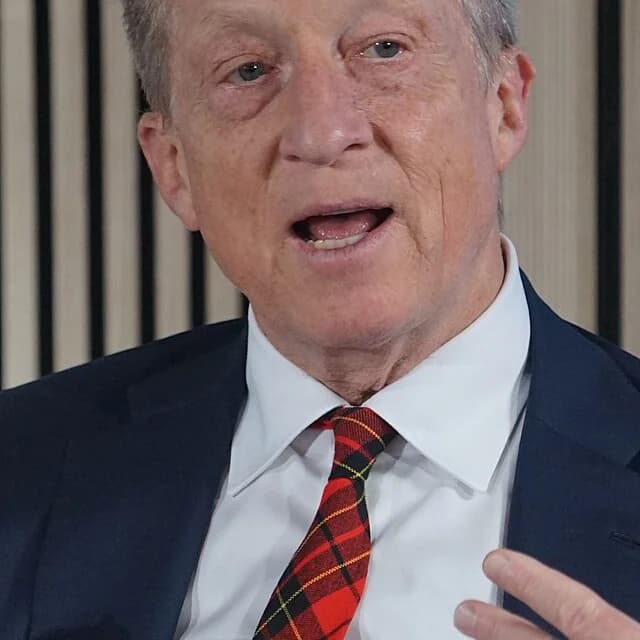
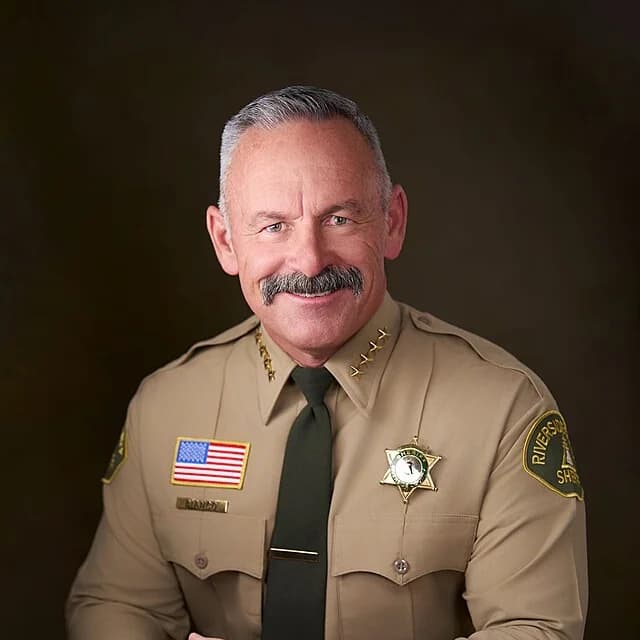
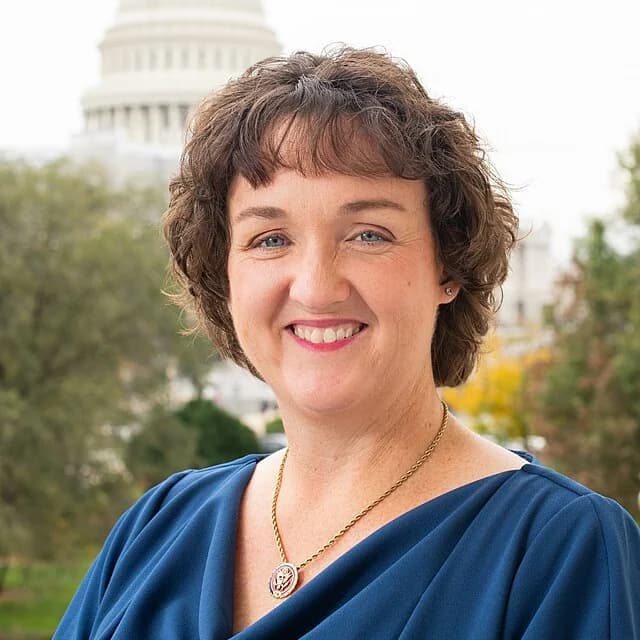
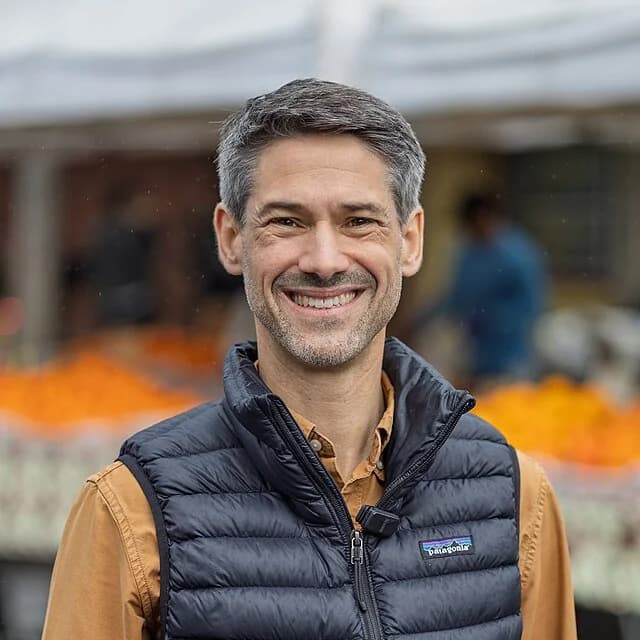
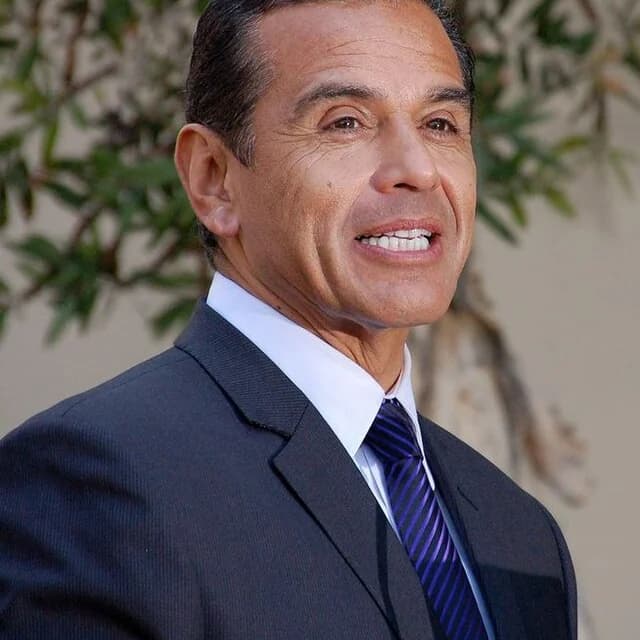
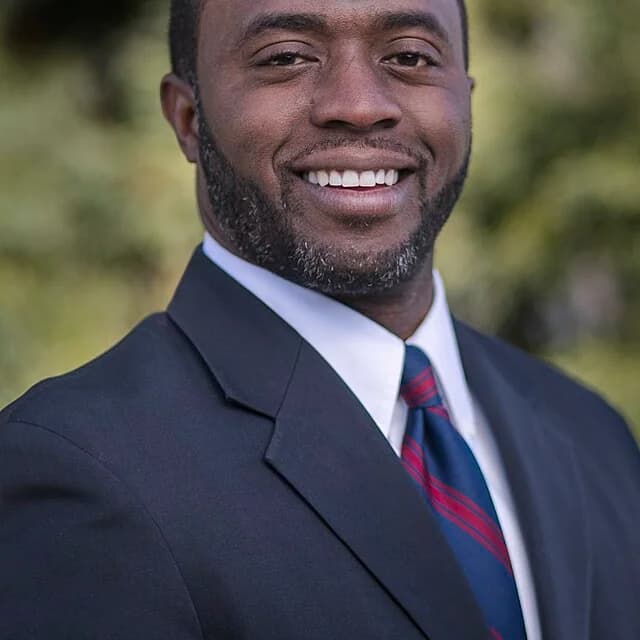
Becerra and Hilton are trading the lead; Steyer is fighting Hilton for the second runoff slot. Eric Swalwell and Betty Yee remain printed on the ballot but suspended their campaigns in April. Compare all eight on the issues →
ContestU.S. House of Representatives — District 11
Likely to advance: Scott Wiener, Connie Chan, Saikat Chakrabarti
U.S. House of Representatives — District 11
Likely to advance: Scott Wiener, Connie Chan, Saikat Chakrabarti
California's 11th Congressional District covers all of San Francisco and sends one member to the U.S. House of Representatives, where they vote on federal law, the budget, and oversight in a 435-member chamber. The seat is open for the first time in decades after the retirement of former Speaker Nancy Pelosi, drawing a crowded field of 10 Democrats plus one Green Party write-in. State Senator Scott Wiener is the clear frontrunner, polling around 33-40% with the California Democratic Party endorsement and the largest conventional fundraising base; Supervisor Connie Chan and progressive organizer Saikat Chakrabarti are statistically tied (roughly 17-18%) in a separate battle for the second slot. Under California's top-two primary, all candidates appear on one ballot regardless of party and the two highest finishers advance to the November general election — so in this heavily Democratic district the June vote most likely sets up a Democrat-vs-Democrat runoff, with the contest centered on who joins Wiener in second place.
The core choice: Voters are choosing among three distinct theories of Democratic representation. Scott Wiener offers an experienced legislative insider with the longest record of passed laws — especially pro-housing (YIMBY) and LGBTQ measures — but draws criticism for opposing local and state wealth taxes favored by most California Democrats and for tech-aligned donors; he was also notably passed over by Pelosi. Connie Chan presents a working-class immigrant and labor-backed progressive with deep neighborhood roots and Pelosi's late endorsement, though her supervisor votes against housing-supply and transit measures cut against her affordability platform. Saikat Chakrabarti is the outsider movement progressive and Green New Deal architect with the most ambitious agenda (Medicare for All, a federal social-housing program, a wealth tax), self-funding nearly all of a ~$10M campaign — a strength he frames as donor independence and critics frame as buying a seat — while having never held elected office. The cleavage runs along experience versus disruption, establishment versus movement politics, and how aggressively the next member should tax wealth and reshape the Democratic Party.
Scott Wiener
DEMFrontrunnerScott Wiener is a 56-year-old San Francisco Democrat and California State Senator (SD-11, since 2017) running to succeed retiring Rep. Nancy Pelosi in California's 11th Congressional District. He is the frontrunner in the June 2, 2026 top-two primary, polling at 33% (Data for Progress, April 2026) against a field of 11 candidates. Wiener has spent nearly 30 years in San Francisco civic life — as a Deputy City Attorney, District 8 Supervisor (2011-2016), and then State Senator — and has authored more than 100 laws. He is best known nationally as California's most prominent pro-housing (YIMBY) legislator and as a leading LGBTQ rights advocate. His campaign is the best-funded mainstream Democratic entry in the race (~$3.5M raised), and he holds the California Democratic Party endorsement. The race's most significant late development is that former Speaker Nancy Pelosi endorsed rival Connie Chan on May 19, 2026 — a public snub of Wiener — though he still leads in all available polling and prediction markets.
▸ Full dossier — case for & against, record, endorsements, sources▾ Hide dossier
Wiener has the most extensive proven legislative record in the race: over 100 laws signed, ranked first in California Senate legislative effectiveness, and a 97% lifetime labor voting score — demonstrating he can both win votes and move legislation. On housing — the dominant issue for SF and the nation — he is the most credible federal candidate, having driven SB 79 into law in 2025 after a decade of effort on transit-density housing. His LGBTQ rights record is unmatched, with endorsements from HRC, Equality California, the Victory Fund, and Equality PAC. He holds the California Democratic Party endorsement and leads all available polling by double digits. His fundraising base of 3,300+ individual donors is the strongest conventional Democratic showing in the race. He is an openly gay Jewish man who has used his identity to pass landmark civil rights law — and who would be the only out LGBTQ member of Congress from California. His platform reflects a coherent governing philosophy: build more housing, protect civil rights, regulate AI and tech monopolies, and defend immigrants — all areas where federal legislative capacity matters most. His willingness to eventually use the term 'genocide' and reject AIPAC funding, combined with J Street's endorsement, suggests he has navigated the Israel-Palestine issue into a defensible center-left position.
Wiener's opposition to both the Overpaid CEO Tax (Prop D) and the state Billionaire Tax Act — positions that align precisely with his largest donors (Chris Larsen, Garry Tan) — is the most serious substantive criticism: it raises genuine questions about whose interests he will prioritize in a Congress where corporate tax policy will be central. SEIU California — a major labor union — withdrew its endorsement over this issue. Nancy Pelosi, the most powerful Democrat in SF politics, endorsed rival Connie Chan rather than Wiener, reportedly in part because he pushed into the race before she had announced her retirement. His Gaza position pivot — from refusing to use 'genocide' to embracing the word within four days of being booed at a debate — has been criticized by both pro-Israel groups (as irresponsible capitulation) and pro-Palestinian advocates (as politically calculated rather than principled). This episode has damaged his credibility with both communities. His housing deregulation record, while celebrated by YIMBY advocates, has drawn sustained criticism from tenant advocates and racial equity organizations who argue it prioritizes market-rate development and accelerates displacement. His AI safety bill (SB 1047) — arguably his most nationally visible tech policy work — was vetoed by a Democratic governor, raising questions about his ability to build coalitions on tech regulation. The April 2026 Data for Progress poll showed Wiener had a 46% unfavorable rating — unusually high for a Democrat in a safe Democratic seat.
- — Housing: Federal legislation to build 8 million homes over 10 years, including a $1.2T social housing program, doubled affordable housing tax credits, expanded Section 8 vouchers, and a Prohousing Incentive Fund rewarding cities that build. His signature state achievement is SB 79 (2025), which legalized mid-rise apartments near major transit statewide — the successor to his failed SB 827 (2018) and SB 50 (2020).
- — LGBTQ Rights: Pass the federal Equality Act; override red-state anti-LGBTQ laws; protect transgender healthcare from Trump-era cuts; expand doxxing protections; fund LGBTQ community institutions. Authored major California laws on PrEP access, LGBTQ nursing-home protections, and repeal of HIV criminalization statutes.
- — Israel-Palestine: Supports a two-state solution. After initially declining to use the term 'genocide' at a January 7, 2026 forum (drawing boos), reversed course on January 12 and stated the Israeli government 'tried to destroy Gaza and to push Palestinians out and that qualifies as genocide.' Opposes offensive arms sales to Israel; supports defensive systems only; rejects AIPAC funding. Resigned as co-chair of the California Jewish Caucus in February 2026.
- — Immigration: Abolish ICE with accountability measures; ban private prisons and ICE detention; create pathways to citizenship; make DACA recipients citizens; pass the No Kings Act to enable civil rights lawsuits against federal agents.
- — Healthcare: Protect and expand Medicaid and the ACA; advance toward Medicare for All single-payer; expand mental health insurance coverage; fund scientific research.
- — Technology: Authored SB 1047 (2024), a landmark AI safety bill that passed the California legislature but was vetoed by Governor Newsom. Supports federal net neutrality, federal data privacy law, and antitrust enforcement against tech monopolies. Opposes tech self-preferencing by mega-platforms.
- — Transportation: Increase predictable federal transit formula funding; support the Westside Subway and other transformational projects; reform NEPA environmental review for transit; lower transit project delivery costs.
- — Wealth and taxation: Opposes San Francisco's Proposition D (Overpaid CEO Tax) and the state's Billionaire Tax Act, citing concerns about California's 'unstable boom-bust tax system.' Pledges to reverse Trump and Bush federal tax cuts and close corporate loopholes at the federal level.
California Democratic Party (February 2026) · Human Rights Campaign PAC · Equality California · Equality PAC · LGBTQ+ Victory Fund · California Legislative LGBTQ Caucus · California Attorney General Rob Bonta · Rep. Sam Liccardo · SF City Attorney David Chiu · SF Board of Supervisors President Rafael Mandelman · SF Board of Education President Phil Kim · BART Director Victor Flores · San Jose Mayor Matt Mahan · Asm. Catherine Stefani · State Sen. Alex Lee (Legislative Progressive Caucus Chair) · J Street Action Fund ($60,000 independent expenditure) · Housing Action Coalition / SF YIMBY · GrowSF (pro-housing civic organization)
As of spring 2026, Wiener has raised approximately $3.5 million from more than 3,300 individual contributors — the top mainstream Democratic fundraising total in the race. Notable donors include cryptocurrency billionaire and Ripple Labs co-founder Chris Larsen and Y Combinator CEO Garry Tan (both via the Abundant Future super PAC, which has received $100,000+ from Larsen). Wiener says he does not accept corporate PAC money directly. Outside spending: J Street Action Fund has committed $60,000 in independent expenditures supporting Wiener. Rival Saikat Chakrabarti raised ~$5.2 million but roughly $4.8 million came from his own personal tech wealth. Connie Chan raised ~$456,000. SEIU California withdrew its endorsement of Wiener in April 2026 over his opposition to Prop D (Overpaid CEO Tax).
1. Gaza/genocide flip-flop: At a January 7, 2026 candidates forum, Wiener declined to answer a yes-or-no question about whether Israel was committing genocide — drawing audience boos and widespread criticism. Four days later he reversed course, stating the Israeli government had committed genocide. Opponents from both sides criticized the timing as politically motivated; Israel's Consul General called it 'disgraceful'; the Israeli-American Council demanded his resignation from the Jewish Caucus. He resigned as co-chair of the California Jewish Caucus in February 2026. (Sources: KQED, SF Standard) 2. Opposition to wealth taxes / tech donor ties: Wiener opposes San Francisco's Prop D (Overpaid CEO Tax) and the statewide Billionaire Tax Act — positions that align with his major donors, including crypto billionaire Chris Larsen (who gave $100K to the Abundant Future PAC backing Wiener, $5M to a PAC fighting the billionaire tax, and $700K opposing the CEO tax) and Y Combinator CEO Garry Tan. 72% of California Democrats support the billionaire tax. SEIU California withdrew its endorsement in April 2026 over Prop D. (Sources: The Intercept, Mission Local) 3. Pelosi snub: Former Speaker Nancy Pelosi endorsed rival Connie Chan on May 19, 2026, rather than Wiener. Reports indicate Wiener irritated Pelosi's camp by agitating to enter the race before she had formally announced her retirement. (Sources: CalMatters, KTVU, Axios SF) 4. Left-flank housing criticism: Critics argue his housing deregulation policies reward commercial real estate developers, fail to generate sufficient affordable units, and accelerate gentrification and displacement of low-income residents. (Source: Housing Is A Human Right, American Prospect) 5. Public safety criticism: Conservative and moderate critics argue Wiener enabled addiction by authoring SB 57 (safe injection sites), opposing Prop 36 (drug penalties), and opposing fentanyl dealer enhancement bills. (Source: Santa Monica Observer op-ed) 6. SB 1047 tech industry friction: His AI safety bill (SB 1047) was vetoed by Gov. Newsom after fierce tech industry opposition; some tech critics see this as evidence he was out of step with industry, while AI safety advocates see it as a badge of courage.
Connie Chan
DEMContenderConnie Chan is a San Francisco District 1 Supervisor and the establishment-progressive candidate in the crowded June 2, 2026 top-two primary for the open CA-11 congressional seat vacated by Nancy Pelosi's retirement. Born in Hong Kong, she immigrated to Chinatown at 13, worked service jobs, and built a 20-year career in city government before winning her supervisor seat in 2020. She carries endorsements from Pelosi, Adam Schiff, SEIU California (which dropped Wiener to back her exclusively), and the SF Labor Council. Her platform centers on Medicare expansion, affordable housing, immigrant protections, and worker rights. Her supervisor record as Budget Committee Chair includes a $400M federal-cuts reserve fund and immigration defense funding, but also sustained criticism for voting against housing supply bills, transit funding, and car-free measures that subsequently passed without her support. She is in a tight race with Saikat Chakrabarti for the second top-two primary slot behind frontrunner Scott Wiener, with prediction markets giving her a 64% probability of advancing. Her fundraising is a significant vulnerability at $649K total raised against Wiener's $3.9M and Chakrabarti's ~$10M self-funded campaign. The Pelosi endorsement, arriving 15 days before election day when 90% of Democratic ballots were still unreturned, is considered the pivotal late development in the race.
▸ Full dossier — case for & against, record, endorsements, sources▾ Hide dossier
Chan is a genuine working-class immigrant success story whose lived experience — arriving as a teenager in Chinatown with no English or money, sleeping in a rent-controlled apartment on bunk beds, working service jobs — directly informs her policy focus on housing affordability, immigrant protections, and healthcare costs that affect working-class San Franciscans. She has 20+ years of deep institutional knowledge of city government, having worked in the offices of Kamala Harris, Aaron Peskin, Sophie Maxwell, and Kevin Mullin before being elected. As Budget Committee Chair she demonstrated real fiscal judgment, creating the $400 million federal-cuts reserve fund before federal threats materialized and using her budget position to direct supplemental funding to immigration defense. Her endorsement coalition — Nancy Pelosi, Adam Schiff, SEIU California (which pulled its Wiener endorsement to back her exclusively), California Teachers Association, National Nurses United, and the SF Labor Council — represents broad establishment-progressive and organized labor support, suggesting she would be an effective inside-game legislator in the Pelosi tradition. Her immigrant background and deep ties to the AAPI community in one of the most diverse congressional districts in the country could be particularly valuable on immigration legislation. The Pelosi endorsement came when approximately 90% of Democrats still had unreturned mail ballots, giving it real potential to shift final vote distribution.
Chan's supervisor record shows a persistent pattern of voting against housing supply, car-free space, and transit-funding measures that she campaigned in favor of — and these votes frequently put her in the losing minority (9-2, 7-4 defeats) on the very issues she now campaigns on federally. Critics from both the left and urbanist communities argue her 2026 congressional platform recycles the same unfulfilled promises from 2020. On public safety, her initial vote to authorize lethal-force robots and subsequent vote for mass ALPR surveillance contradicts her stated 2020 commitments against militarized policing and invasive surveillance. Her fundraising — $649K total raised with only $72K on hand as of mid-May 2026 — is dramatically weaker than both Wiener ($3.9M raised, $1.3M cash) and Chakrabarti (~$10M self-funded), raising questions about her ability to mount a credible general election campaign if she advances. Polling shows her in a tight 17% vs. 18% battle with Chakrabarti for second place, well behind Wiener's ~40%, suggesting she does not have a commanding claim to the second spot. She has also drawn criticism from within progressive circles for her opposition to measures that her own constituents and the broader city later approved by large margins (JFK Drive, Great Highway, Prop K).
- — Medicare for All / major Medicare expansion and direct pharmaceutical price negotiation
- — Federal investment in affordable housing construction and rental subsidies; comprehensive approach to lowering housing costs
- — Comprehensive immigration reform with humane border security; end to 'inhumane abuses' by ICE and CBP; citizenship pathways
- — Opposes offensive US weapons funding to Israel; has described the situation in Gaza as genocide
- — Co-sponsorship of the Richard L. Trumka PRO Act to strengthen worker organizing rights
- — Protection of reproductive and gender-affirming healthcare
- — Resistance to federal cuts to Medicaid, food security, and social services
- — Small business protections and worker and union rights
Nancy Pelosi (Speaker Emerita, announced May 18, 2026 — sources: The Hill, NBC News, SF Standard, CalMatters) · U.S. Senator Adam Schiff (source: campaign materials, KQED voter guide) · SEIU California (750,000 members; pulled prior endorsement of Scott Wiener to back Chan exclusively — source: Mission Local, MSN) · California Teachers Association (source: Ballotpedia endorsements) · National Nurses United (source: KQED voter guide) · San Francisco Labor Council (source: American Prospect) · California Federation of Labor Unions (source: American Prospect) · Harvey Milk LGBTQ Democratic Club (source: KQED voter guide) · San Francisco Firefighters Local 798 (source: KQED voter guide) · State Working Families Party (source: American Prospect)
Total receipts from November 20, 2025 through May 13, 2026: $649,305 (source: FEC committee C00927558). Cash on hand as of May 13, 2026: $72,017. Total disbursements: $577,288. Breakdown: ~89% individual contributions ($577,155), ~11% other committee contributions ($71,000), including approximately $260,000 from labor PACs. Chan's fundraising significantly trails the two other leading candidates: Scott Wiener raised $3.9 million total with $1.3 million cash on hand as of end of March 2026 (source: Mission Local/FEC); Saikat Chakrabarti has self-funded approximately $10 million (source: Mission Local). Chan's campaign is described as spending at a comparable rate to Chakrabarti's despite a fraction of the resources, concentrating spending on staff, consulting, and polling. The Pelosi endorsement is expected to unlock access to Pelosi's fundraising network going forward, but late-stage dollar conversion before the June 2 primary is limited.
1. HOUSING VOTING RECORD VS. CAMPAIGN CLAIMS (two sources: Fogline SF analysis, SF Examiner transit reporting): Chan's 2026 congressional campaign promotes her as a champion of affordable housing, but she voted against the Board's streamlined housing approval package (Dec 2023, passed 9-2), all four Family Zoning Plan ordinances (Dec 2025, passed 7-4), and asked the city attorney to sue California to challenge SB 423, a state housing streamlining law. Critics note her 2026 campaign website contains nearly identical housing promises to her unfulfilled 2020 supervisor platform. 2. TRANSIT AND CAR-FREE SPACE OPPOSITION (sources: SF Examiner transit article, Fogline SF): Chan opposed JFK Drive car-free closure (voters later approved it 63.5%), the Great Highway weekend closure pilot, and Prop K (permanent Great Highway closure and Sunset Dunes Park). She was the sole Board member to vote against a resolution supporting Bay Area bridge toll increases to fund public transit. 3. POLICE SURVEILLANCE REVERSAL (source: Fogline SF, Wikipedia): Chan initially voted to authorize SFPD robots capable of lethal force (Nov 2022), then reversed after national outcry. She later voted to authorize 400 new Automated License Plate Readers despite a 2020 campaign pledge against 'invasive technology.' She also voted Yes on every SFPD supplemental appropriation despite 2020 promises to reduce the police budget. 4. CHESA BOUDIN RECALL (source: Wikipedia, SF Examiner): Chan opposed the 2022 DA recall despite 57% of her own district and 67% of AAPI voters citywide supporting it, drawing constituent criticism. 5. CAMPAIGN CREDIT DISPUTES (source: Fogline SF): Chan's campaign takes credit for a 383 Sixth Avenue affordable senior housing project initiated before she took office under predecessor Sandra Lee Fewer, and for the Alexandria Theater housing units that critics say were minimally improved (one additional affordable unit) despite a two-year delay she imposed.
Saikat Chakrabarti
DEMContenderSaikat Chakrabarti (born 1986, Harvard CS) is a tech entrepreneur (founding Stripe engineer, net worth ~$167M), progressive organizer (co-founder of Justice Democrats and Brand New Congress), and policy architect (co-author of the Green New Deal, president of New Consensus think tank) running to succeed Nancy Pelosi in CA-11. He has no prior elected office but ran AOC's 2018 upset and served briefly as her chief of staff. He is financing his race almost entirely from personal wealth (~$10.3M raised, 96% self-funded), running on Medicare for All, a federal social housing program, a wealth tax, and a wholesale transformation of the Democratic Party. He has endorsements from Reps. Tlaib and Omar and the Sunrise Movement, but notably not from AOC, Sanders, or any California institutional Democrats. Polling from the SF Chronicle (April 28-May 3, 2026, n=819) shows Wiener at ~40%, Chakrabarti and Chan statistically tied at 18%/17% for second place. Prediction markets give him roughly 34% odds of advancing. He is a contender for the second top-two primary slot, but faces an uphill battle against Chan, who has Pelosi's endorsement, deeper local roots, and a more established grassroots donor base despite far less money.
▸ Full dossier — case for & against, record, endorsements, sources▾ Hide dossier
Chakrabarti has a rare combination of demonstrated movement-building ability and serious policy depth. He co-founded the organization that elected AOC and other Squad members, ran the most consequential progressive upset of the 2018 cycle, and was the primary architect of the Green New Deal — a resolution that shifted the Overton window on climate policy and laid groundwork for the IRA's climate provisions. His 'Mission for America' shows he has continued doing substantive policy work, not just sloganeering. His platform is the most ambitious and internally consistent of the three major candidates: he has specific mechanisms (reviving the RFC, the Raker Act for PG&E, the TVA model for AI infrastructure) rather than vague federal investment promises. He has secured endorsements from two sitting Squad members (Tlaib, Omar) and the Sunrise Movement. Because he is self-funded, he is genuinely uncaptured by corporate donors — his campaign can credibly claim independence from the interests his platform targets. Polls show he has a higher net favorability ratio than Wiener (48% favorable vs. 34% unfavorable vs. Wiener's 52%/46%). In a moment of Democratic disarray and voter demand for confrontational opposition to the right, his unapologetically transformational politics may resonate more than conventional legislative dealmaking. His background as a technologist and organizer — rather than a career politician — could represent a genuine new model for progressive governance.
Chakrabarti has never held elected office, never cast a vote, and never passed a single piece of legislation. His record is entirely as an outside organizer and think-tank director — roles that reward messaging and ideological purity over the coalition-building and compromise that congressional effectiveness requires. His most consequential professional chapter (as AOC's chief of staff) lasted only about seven months and ended with AOC publicly rebuking him for divisiveness and, at minimum, enough internal conflict that he departed. AOC — who has the most to gain from backing her own former chief of staff — has declined to endorse him, which is the single most telling signal about how progressive insiders assess him. His fundraising picture is concerning: 96% self-funded, with under $420,000 from outside donors in a district of 750,000+ people — that is a thin grassroots base for someone running against two candidates with deep local networks. He is spending down his war chest rapidly (under $385K cash on hand after spending $8.8M) which could leave him unable to close a tight race. His platform's most ambitious proposals (top income tax rate of 90%, nationalizing PG&E, federalizing AI data centers) face serious implementation and political feasibility challenges, and he has no track record of navigating federal bureaucracies to actually enact them. The Maryland property disclosure — signing documents designating a home as his primary residence while apparently living elsewhere — raises questions about either his diligence with legal documents or his candor. His Blackstone holding, however briefly held, creates an authenticity problem. San Francisco DSA, the ideological home of his base, has formally distanced itself from him. His relatively recent SF residency means he lacks the relationships, community trust, and local institutional knowledge that Chan has built over 20+ years of public service.
- — Climate/Green New Deal: Architect of the original Green New Deal; now champions the 'Mission for America' as its successor — a comprehensive plan to eliminate emissions from every economic sector. Supports massive federal investment in clean energy, treating it as an industrial mobilization analogous to WWII.
- — Healthcare: Supports Medicare for All as a top priority.
- — Housing: Favors a 'Reconstruction Finance Corporation'-style federal agency to directly build mixed-income social housing (cites Vienna model). Supports repealing the Faircloth Amendment (which caps public housing units), doubling Section 8 vouchers, streamlined by-right development (opposes discretionary review), community land trusts, and targeting corporate landlords. Says market-rate housing is 'part of it, but not the answer.'
- — Taxation: Advocates an Ultra-Millionaire Tax (2% on wealth above $50M, 3% above $1B), raising top income tax rate to 90% and corporate rate above 50%, taxing margin loans used by the ultra-wealthy, and closing the carried-interest loophole.
- — Public ownership: Believes natural monopolies should be publicly owned; supports a public option where markets fail. Proposes municipalizing PG&E under the 1913 Raker Act. Proposes converting failed AI company data centers into public utilities using a TVA model.
- — AI and technology: Supports AI public options, worker wealth-sharing funds from AI productivity gains, and federal oversight of AI infrastructure.
- — Foreign policy: Wants to break from foreign policy consensus; supports redirecting military spending toward domestic industrial capacity.
- — Political reform: Rejects corporate PAC money; positions his self-funding as freedom from donor obligations. Advocates transforming the Democratic Party toward a more confrontational, movement-politics model.
- — Immigration: Supports abolishing ICE (cited in City Journal analysis).
- — Labor: Supports prevailing wage, union rights, and project labor agreements.
Rep. Rashida Tlaib (D-MI) — first sitting federal elected official to endorse him; the only non-Michigan candidate she backed in 2026 (Mission Local, May 2026) · Rep. Ilhan Omar (D-MN) — second Squad member endorsement, announced May 22, 2026 (Mission Local, May 22, 2026) · Sunrise Movement — endorsed May 27, 2026, citing his Green New Deal authorship and willingness to confront corporate power (The Intercept, May 27, 2026) · Justice Democrats — organization he co-founded · Former Rep. Jamaal Bowman (D-NY) — cited by The Intercept · Notable non-endorsements: Alexandria Ocasio-Cortez has not endorsed him despite his role as her former chief of staff and campaign manager. Bernie Sanders has not endorsed him. Nancy Pelosi endorsed rival Connie Chan on May 18, 2026. California Democratic Party endorsed Scott Wiener.
As of May 14, 2026 FEC filing: total raised approximately $10.3 million, of which ~$9.9 million (roughly 96%) came from personal loans or contributions from Chakrabarti himself. Direct outside donor contributions: approximately $417,000 across roughly 13,000 donors averaging $27 each. Campaign had spent over $8.8 million — nearly all of what was raised — leaving under $385,000 cash on hand. He has committed to spend whatever is necessary to win. His personal wealth derives primarily from Stripe equity, estimated at $50M+ with a total net worth of at least $167 million (some reports suggest $150M+). A pre-filing $1 donation email blast was used to inflate donor count optics (Fog Line SF). By comparison: Scott Wiener raised ~$3.9 million from thousands of donors with $1.3M cash on hand; Connie Chan raised ~$651,000 with $72,000 cash on hand. Three PACs have spent approximately $778,000 in attacks against Chakrabarti. (Sources: SF Examiner, SF Standard, Mission Local, KQED)
1. DEPARTURE FROM AOC'S OFFICE (disputed): Chakrabarti served as AOC's chief of staff for approximately seven months in 2019 before leaving. The core dispute is whether he was fired or departed voluntarily. Chakrabarti claims it was a 'planned departure,' citing accomplishment of his goals (Green New Deal launch, setting up her office) and a new baby on the way. Communications director Corbin Trent, who was present, corroborated that AOC offered him the option to stay. However, Drew Hammill (Pelosi's then-deputy chief of staff) told the SF Chronicle that AOC was pressured to remove him, stating 'it was made very clear to AOC a number of different ways that there is behavior here that is not in your interest.' This account is attributed to a former Pelosi staffer who is an interested party. The Washington Post's 2019 coverage framed it as a resignation. Multiple independent sources confirm the departure; the 'firing' characterization comes primarily from Pelosi-aligned sources. (Sources: SFist May 2026, CNN August 2019, Washington Post August 2019, Mission Local May 2026) | 2. DIVISIVE TWEETS / INTRA-PARTY CONFLICT: While chief of staff, Chakrabarti tweeted that moderate Democrats voting for a Senate border bill 'enable a racist system' (targeting Rep. Sharice Davids, a Native American woman), and described the Blue Dog Caucus as 'new Southern Democrats' behaving like segregationists. These tweets drew a formal response from the House Democratic Caucus and a public rebuke from AOC herself, who called them 'divisive.' He has not disavowed the confrontational approach, framing it as a feature rather than a bug of his candidacy. (Sources: The Hill, National Review, Mission Local) | 3. MARYLAND PROPERTY / RESIDENCY QUESTION: The SF Standard reported that Chakrabarti purchased a $1.6 million home in Gaithersburg, Maryland in 2018, signing mortgage and deed documents designating it as his 'primary residence' and claiming it as his 'principal residence' in Maryland property tax filings — all under penalty of perjury. He says he bought it for his parents (who live in New Jersey) and stayed there only a couple of months, calling it 'an honest mistake.' Legal experts noted that intentionally misrepresenting principal residence on Maryland loan documents is a criminal offense carrying potential fines up to $5,000 and/or up to 10 years imprisonment. No charges have been filed. Opponents have used this in attack mailers. (Sources: Washington Examiner, SF Standard, SFist) | 4. BLACKSTONE INVESTMENT: His financial disclosure revealed a Blackstone private credit fund holding. Chakrabarti said he instructed his financial advisor to divest immediately upon seeing it on the disclosure, citing his opposition to private equity in the housing market. Critics called it hypocritical given his anti-Wall Street rhetoric. He says he has since directed his wealth manager to avoid fossil fuels, military, and companies like Blackstone. (Sources: Broke Ass Stuart, Fog Line SF) | 5. WEALTH PARADOX / 'CARPETBAGGER' CRITICISM: Critics across the spectrum note the tension between his anti-billionaire messaging and his centimillionaire status. Wiener's campaign calls his 96% self-funding 'corporate self-funding.' Chan says it is 'an election, not an auction.' SF DSA distanced itself, noting he 'is not a DSA SF member' and donated to candidates opposing DSA members. He has relatively recent SF residency compared to Chan and Wiener. (Sources: SF Standard, Fog Line SF, City Journal)"]
Marie Hurabiell
DEMLongshotMarie Hurabiell is a 55-year-old San Francisco attorney, civic organizer, and self-described moderate Democrat who founded ConnectedSF and was appointed by President Trump to the Presidio Trust in 2018 while a registered Republican. She entered the CA-11 race on February 25, 2026, positioning herself as a pragmatic centrist alternative to the three frontrunners (Scott Wiener, Saikat Chakrabarti, and Connie Chan). She raised roughly $632,000 through mid-May 2026 -- competitive for her tier but far behind the leaders -- and polls at approximately 1 percent in the one publicly available survey. Her campaign has been significantly damaged by a series of controversies: public anti-trans statements, a homophobic attack ad against Scott Wiener that caused Mayor Lurie to publicly distance himself, and an AI-generated image depicting the two Asian American candidates as Soviet propagandists. She is rated a longshot by prediction markets and election analysts, with meaningful odds assigned only to Wiener (frontrunner) and a two-way battle between Chan and Chakrabarti for the second primary slot.
▸ Full dossier — case for & against, record, endorsements, sources▾ Hide dossier
Hurabiell offers a genuinely distinct voice in a crowded field of largely progressive Democrats. Her decade of community organizing through ConnectedSF gives her grassroots credibility and a demonstrated ability to build coalitions across neighborhood lines in a district with 11 distinct supervisorial constituencies. She raises a legitimate policy critique: CA-11 is home to a significant number of moderate and unaffiliated voters who may be underserved by a field anchored by a state senator (Wiener), a progressive supervisor (Chan), and a DSA-aligned AOC ally (Chakrabarti). Her legal background (Skadden Arps, federal clerkship, General Counsel roles) and tech-sector involvement (Ellipsis Health) are genuine qualifications for a House member who would serve on committees touching financial services, tech regulation, or healthcare. On fiscal and economic policy, her emphasis on reducing regulatory drag on housing construction, controlling federal spending, and backing free-market energy policy aligns with a real constituency in San Francisco that has backed moderate ballot measures and recall campaigns. Her late entry and rapid fundraising ($421,737 in 8 weeks from a standing start) suggests a motivated donor base even if it is smaller than the frontrunners'.
Hurabiell is a longshot by all measurable metrics. She polled at approximately 1 percent in an April 2026 GQR survey, has less than $140,000 cash on hand compared to Wiener's $1.28 million and Chakrabarti's $385,000, and has secured endorsements from only two recognizable civic organizations plus individual moderate figures -- no labor unions, no major Democratic Party bodies, no elected officials at the state or federal level. The SF Republican Party's endorsement of a candidate running as a Democrat is itself a liability in a district that is 64 percent Democratic. Her record of public statements -- denying trans identity, the CRT-Hitler comparison, the homophobic attack video on Wiener, and the AI-generated propaganda image of the only two Asian American candidates -- has generated a cumulative pattern of controversy that alienated her closest political ally (Mayor Lurie) weeks before the primary. Her party registration switch in 2022, only four years before this race, and her Trump Presidio Trust appointment are persistent attacks that undercut her Democratic credibility with base voters. She has never held elected office and lost two prior bids for the SF City College Board. The top-two primary structure means she must finish in the top two of a 10-candidate field to advance; available polling shows no evidence she is close to that threshold. Her self-funding ($220,000 in loans) and moderate outside fundraising relative to heavy spending ($492,766 already disbursed against $631,936 raised) suggest a campaign that may run out of money before election day.
- — Public safety: Supports federal prosecution of fentanyl trafficking networks, court-ordered treatment for people in crisis, and restoring federal funding for local law enforcement in high-crime areas. Backs aggressive anti-organized crime collaboration across federal agencies.
- — Housing and affordability: Advocates federal incentives, NEPA reform, and construction workforce development to reduce building costs. Supports office-to-housing conversions, AI-accelerated permitting, and tax incentives for developers over mandates.
- — Immigration: 'Reform, not abolition' of ICE; create pathways to legal status for long-term residents who have paid taxes and not committed crimes; expand employment-based visas; reduce H-1B backlogs; establish a startup visa category; secure borders.
- — Healthcare: Restore ACA premium tax credits; cap insulin costs; expand Medi-Cal outreach; push for healthcare price transparency.
- — Energy and climate: 'All-of-the-above' strategy: renewables, nuclear, and natural gas. Opposes policies that would 'double electricity bills.' Prioritizes grid modernization to support AI infrastructure. Opposes city takeover of PG&E.
- — AI/technology: 'Regulate the use, not the tool.' Supports federal preemption preventing a state-by-state patchwork of AI rules; criminal liability for AI-enabled fraud and deepfakes; opposes compliance paperwork burdens on developers.
- — Economic/fiscal: Opposes 'unnecessary federal spending that creates inflation.' Supports strategic energy planning to reduce cost of goods. Describes herself as believing in free markets and states she believes 'every experience with socialism in the history of the world has failed.'
- — Gender identity: Has publicly and repeatedly stated 'Trans women are NOT women' and grounds this in biological definitions. This represents a non-mainstream-Democratic position in a heavily LGBTQ-friendly district.
- — Gaza/foreign policy: Stated 'Israel has the right to defend itself' while also conditioning U.S. military aid on compliance with humanitarian law. Sources: GrowSF questionnaire (https://growsf.org/voter-guide/questionnaires/june-2026/marie-hurabiell/), KQED voter guide (https://www.kqed.org/voterguide/sanfrancisco/congress-11th-district), BallotReady (https://www.ballotready.org/people/marie-hurabiell).
ConnectedSF (her own organization) · Chinese American Democratic Club · Michela Alioto-Pier (former SF Supervisor, moderate Democrat) · Quentin L. Kopp (former SF Supervisor and State Senator) · Jeff Reisig (Yolo County District Attorney) · SF Republican Party (as listed on SFEndorsements.com -- notable given she is running as a Democrat)
As of May 13, 2026 (FEC data): Total receipts $631,936; total individual contributions $411,936; loans received $220,000 (of which roughly $370,000 is described as self-funded in Mission Local's May 2026 reporting, suggesting partial loan reclassification across reporting periods). Total spent: $492,766. Cash on hand: $139,170. Debts/loans owed by committee: $456,214. A separate Mission Local figure cites total raised through mid-May as approximately $792,886 when including all receipts. She entered the race February 25, 2026, and raised approximately $421,737 in her first eight weeks (March 31 figure). For comparison: Chakrabarti approximately $9-10 million (heavily self-funded); Wiener approximately $3.96 million, $1.28 million cash on hand; Chan approximately $651,000, $72,000 cash on hand. Excluding self-funding, Wiener leads individual-donor fundraising, followed by Chan, then Hurabiell. Sources: FEC.gov (https://www.fec.gov/data/candidate/H6CA11318/), Mission Local (https://missionlocal.org/2026/05/sf-congress-finance-saikat-chakrabarti-connie-chan-scott-wiener-primary/), Ballotpedia News (https://news.ballotpedia.org/2026/03/05/nine-democrats-and-one-republican-are-running-in-the-top-two-primary-for-californias-11th-congressional-district-on-june-2-2026/).
1. HOMOPHOBIA ACCUSATION (May 2026): Hurabiell posted a video accusing fellow candidate and State Sen. Scott Wiener -- a gay man -- of turning California into a 'predator's paradise' and saying 'Children are being raped multiple times a day, thanks to you,' in reference to his SB 357 (which decriminalized loitering for prostitution). A broad coalition of LGBTQ+ leaders, members of the Harvey Milk and Alice B. Toklas Democratic Clubs, and school board members condemned the remarks as homophobic, calling it 'a familiar homophobic tactic with a long and ugly history.' Mayor Daniel Lurie, who had been Hurabiell's closest political ally, called her remarks 'hateful' and said he would not attend her congressional events. Hurabiell refused to apologize, calling the backlash 'manufactured' and 'bad faith identity politics.' Sources: Mission Local (https://missionlocal.org/2026/05/sf-marie-hurabiell-connectedsf-homophobia/), Marin County Visitor (https://www.marincountyvisitor.com/queer-leaders-condemn-sf-candidate-marie-hurabiell-for-homophobia/). 2. ANTI-TRANSGENDER STATEMENTS: Hurabiell has repeatedly and publicly stated 'Trans women are NOT women -- you cannot change biology' on X (formerly Twitter), including as recently as March 1, 2026, during her campaign. She also posted in 2021 that critical race theory 'was a tactic used by Hitler and KKK,' for which she later apologized in a 2022 KQED interview. A protest was held outside the ConnectedSF gala over these statements. Sources: X/Twitter (https://x.com/MHurabiell/status/2028017080243785829), KTVU (https://www.ktvu.com/news/marie-hurabiell-san-francisco-congressional-seat-nancy-pelosi). 3. RACIST AI IMAGE: Hurabiell's campaign posted an AI-generated image depicting Connie Chan and Saikat Chakrabarti -- the only two Asian American candidates in the race -- in Soviet socialist-realist propaganda style with hammer-and-sickle imagery and text reading 'SOCIALISM IS THE WAY.' The Rose Pak Asian American Club condemned the post as relying on 'fear-based, Cold War-era stereotypes.' Hurabiell deleted the post and said a staff member had published it, but accepted 'full responsibility.' Source: SF Gazetteer (https://sf.gazetteer.co/congressional-candidate-blasted-for-racist-social-media-post-of-connie-chan-and-saikat-chakrabarti-as-socialist-stereotypes). 4. TRUMP APPOINTEE / FORMER REPUBLICAN: Hurabiell was a registered Republican until 2022 and accepted a Trump administration appointment to the Presidio Trust in 2018. Critics and news coverage consistently characterize her as a 'Republican-turned-Democrat,' and the SF Republican Party (not a Democratic club) is among her listed endorsers. Sources: SFist (https://sfist.com/2026/02/25/republican-turned-democrat/), SFEndorsements.com (https://sfendorsements.com/), Presidio.gov (https://presidio.gov/about/press/president-donald-j-trump-appoints-marie-louise-hurabiell-esq-to-the-presidio-trust-board-of-directors). 5. CALIFORNIA GLOBE 'ERASURE' ALLEGATION: The right-leaning California Globe published a piece alleging that mainstream media were deliberately suppressing coverage of Hurabiell. This framing is contested and the piece reflects a partisan outlet's perspective. Source: California Globe (https://californiaglobe.com/fr/deliberate-erasure-of-congressional-candidate-marie-hurabiell/).
Michael A. Petrelis
GRNLongshotMichael Anthony Petrelis (born January 26, 1959, Newark, NJ) is a San Francisco-based AIDS activist, LGBTQ rights advocate, and serial local-office write-in candidate running for California's 11th Congressional District (all of San Francisco) in the June 2, 2026 top-two primary. He is the only non-major-party candidate in the race, appearing on the California Secretary of State's certified write-in list under the Green Party. He carries no ballot designation (no current elected office) and has mounted no visible funded campaign for this seat. His decades of activism — co-founding ACT UP, launching the AIDS Accountability Project, and sustained transparency advocacy — define his public identity far more than any electoral record, which consists entirely of losses. He is not mentioned in any of the major-candidate coverage of this race, has not filed FEC fundraising reports, and has no publicly stated 2026 campaign platform beyond what can be inferred from his general politics and Green Party affiliation.
▸ Full dossier — case for & against, record, endorsements, sources▾ Hide dossier
Petrelis is a genuine, decades-long activist who fought for LGBTQ equality and AIDS accountability before it was mainstream or safe to do so. His founding role in ACT UP and creation of the AIDS Accountability Project represent real contributions to public health transparency. For a voter who believes the major candidates in this race (a well-funded state senator, a self-funding tech millionaire, and a Pelosi-endorsed supervisor) are all insufficiently committed to Green values — single-payer health care, a complete arms embargo on Israel, abolishing ICE, radical climate action — Petrelis is the only ballot option that signals total rejection of the Democratic Party establishment. His candidacy also gives a voice to a San Francisco tradition of confrontational, outsider accountability politics that major-party figures have often worked to suppress. A vote for him is a principled protest vote on record.
Petrelis is a write-in candidate with no ballot designation, no campaign website, no platform document, no fundraising, and no visible campaign infrastructure for this race. He has run for office at least seven times across different offices and has never come close to winning any of them; his most recent result was 10-16 write-in votes (0.01%) in a 2024 BART race. He carries serious legal baggage: a no-contest plea to misdemeanor harassment charges and a court-ordered restraining order. His own local Green Party chapter declined to endorse him in favor of a Democrat. In a top-two primary, a vote for Petrelis will almost certainly not affect which two candidates advance. He has not published any policy platform for this race, making it impossible to evaluate what he would actually do in Congress. Critics across the political spectrum — including longtime AIDS organization allies — have described him as unreliable on facts and prone to confrontation over coalition-building. Even voters strongly aligned with Green values have more visible, credible alternatives (e.g., Saikat Chakrabarti, who also opposes military aid to Israel and supports Medicare for All, and has actual campaign infrastructure).
- — Single-payer universal health care (Medicare for All) — consistent with Green Party of California platform and his decades of AIDS/public health advocacy
- — LGBTQ rights: full equality across civil, medical, and social domains — his foundational activist identity
- — Government and nonprofit transparency: sustained advocacy for financial disclosure and accountability by public institutions
- — Housing as a human right: Green Party platform supports rent control, vacancy control, repeal of Costa-Hawkins, and public housing — Petrelis's 2016 BART campaign referenced taxing tech companies benefiting from transit proximity
- — Ecology/climate action: Green Party EcoSocialism platform advocates aggressive climate policy; Petrelis has not made personal statements on this for 2026
- — Foreign policy — BDS/Israel: Green Party of California endorses the Boycott, Divestment, and Sanctions campaign against Israel and opposes US military aid; Petrelis has not issued a 2026 statement but his party affiliation implies alignment
- — Opposition to ICE and punitive immigration enforcement: consistent with GPCA platform
- — No ballot designation was filed, and no 2026 campaign website, platform document, or policy statement has been located; positions above are inferred from party affiliation and prior activism
No endorsements for Petrelis's 2026 congressional run have been identified in any source · The San Francisco Green Party — the local chapter of his own party — endorsed Democrat Connie Chan for CA-11 in June 2026, explicitly declining to back Petrelis, citing Chan's progressive local record (though noting disagreement with her on full arms embargo for Israel) · No labor unions, advocacy organizations, or newspapers have been found endorsing Petrelis in this race
No FEC fundraising filings have been found for Petrelis in the 2026 CA-11 cycle. He appears on the California Secretary of State's certified write-in list only — there is no publicly accessible campaign finance record. In his 2024 BART Board write-in campaign he received 10-16 votes (0.01%) with no reported fundraising. In prior local races he raised minimal or no reported funds. All major-candidate coverage of the CA-11 race (Wiener ~$3.9M, Chakrabarti ~$10M self-funded, Chan ~$651K, Hurabiell ~$793K) omits Petrelis entirely.
["Criminal charges 2001-2003: Petrelis and fellow activist David Pasquarelli were charged with criminal conspiracy, stalking, and making terrorist threats — accused of making repeated late-night threatening calls to San Francisco Chronicle reporters and city Department of Public Health officials over a syphilis awareness campaign. Bail was set at $500,000. After 73 days in jail and a trial, they pleaded no contest to misdemeanor charges of making threatening or harassing calls to public health officials and reporters; they received suspended sentences and probation. Some civil liberties voices (CounterPunch) called the prosecution politically motivated; others, including AIDS organization Project Inform, urged full prosecution. Two independent sources confirm the plea: California Healthline/KFF Health News and Wikipedia/Alchetron.","2012 restroom incident: Petrelis attempted to photograph State Senator Scott Wiener using a urinal at San Francisco City Hall during a political protest. He was arrested on misdemeanor disorderly conduct charges. A judge ordered a 150-yard restraining order separating Petrelis from Wiener; Wiener cited a 'history of inappropriate and harassing behavior.' Confirmed by SF Examiner and Hoodline/SF Chronicle.","AIDS nonprofit criticism: Petrelis was labeled a 'professional gadfly' by San Francisco AIDS officials and criticized for inaccurate fact-checking (e.g., overstating executive pay increases at AIDS nonprofits). Described in Chronicle of Philanthropy as making no effort to engage organizations before publishing accusations. One official said he was 'just running around the country.'","Own party's defection: The SF Green Party endorsed Democrat Connie Chan over Petrelis for the very seat he is contesting, which is highly unusual and signals that even his own local Green chapter does not consider him the stronger choice."]
▸ 7 minor candidates (identified, not deep-researched)
- Nathan Deer — Immunologist with a campaign website but no elected office, no notable endorsements, and no substantive fundraising or news coverage placing him in the competitive tier.
- John "Gus" Buffler — Self-described rocket scientist; minimal public record beyond ballot listing and a BallotReady profile with no reported fundraising or endorsements.
- Jingchao Xiong — Marketing salesman who previously ran a fringe independent campaign for CA SD-11 in 2024; campaign presence is a basic Carrd page with no substantive record.
- Omed Hamid — Listed as a technology advocate with a campaign website and FEC filing, but no elected office history, no notable endorsements, and no substantive news coverage.
- David Ganezer — Publisher of the Santa Monica Observer; raised only $59 in campaign funds, making this effectively a novelty or protest candidacy.
- Keith Freedman — Ran for SF mayor in 2024 as a lesser-known also-ran candidate; no elected office, no significant endorsements, and no active or funded 2026 campaign presence.
- Gregory M Haynes — Described only as a civil rights advocate on ballot listings; no notable fundraising, endorsements, or news coverage found.
ContestBoard of Supervisors — District 2
Likely to advance: Stephen Sherrill, Lori Brooke
Board of Supervisors — District 2
Likely to advance: Stephen Sherrill, Lori Brooke
The Board of Supervisors is San Francisco's 11-member legislative body, setting the city budget, passing local laws, and overseeing land-use and zoning decisions; District 2 covers the Marina, Cow Hollow, Pacific Heights, and Presidio Heights. This June 2, 2026 contest is a special election to fill the seat Stephen Sherrill was appointed to in December 2024 (after Catherine Stefani left for the State Assembly); the winner serves only through January 2027, after which the seat is up again in November 2026. Two candidates appear on the printed ballot — appointed incumbent Stephen Sherrill and neighborhood organizer Lori Brooke — while Monthanus Ratanapakdee is a certified write-in not printed on the ballot and not covered by the major voter guides. Although California uses a top-two primary, with only two printed-ballot candidates the practical effect is a head-to-head between Sherrill and Brooke, with whoever finishes first taking the seat. News coverage and analysts consistently describe Sherrill as the frontrunner, citing the incumbency and a roughly $1.35 million total resource advantage (including PAC spending) over Brooke's roughly $160,000–$304,000 in direct funds, while characterizing Brooke as a credible challenger.
The core choice: The central choice is between continuity and a referendum on how the seat was filled and on citywide housing policy. Sherrill offers an 18-month incumbent record (drug-enforcement-plus-treatment, sober housing, a gun-storage program, and financing for 1,200 homes) and a vote for Mayor Lurie's Family Zoning upzoning plan, backed by the mayor, the Democratic Party, most major unions, and large PAC spending — but his appointment is clouded by on-the-record allegations (and reported FBI inquiries) that former Mayor Breed appointed him as a favor to Michael Bloomberg, allegations that target Breed's motives rather than Sherrill's own conduct. Brooke offers a small-donor, no-PAC, neighborhood-organizing profile and frames herself as independent of City Hall, but is the underdog on funding and institutional support and centers her campaign on opposing the Family Zoning Plan and the Marina Safeway tower — a stance pro-housing groups call obstructionist and tenant advocates call neighborhood protection. Notably, both printed-ballot candidates oppose the Marina Safeway tower; they diverge most on citywide upzoning. Ratanapakdee, the write-in, presents an independent public-safety platform rooted in her advocacy after her father's 2021 killing, but faces the structural hurdle of not appearing on the ballot.
Stephen Sherrill
DEMFrontrunnerStephen Sherrill is the incumbent San Francisco Board of Supervisors member for District 2, appointed in December 2024 by then-Mayor London Breed to fill the vacancy left when Catherine Stefani won election to the California State Assembly. He is a former Bloomberg administration staffer (New York City), private equity professional, and San Francisco's former Innovation Director. He is running in the June 2, 2026 special election to keep the seat; the winner serves until January 2027, then the seat goes up again in November 2026. Sherrill is the best-funded candidate in the race by a wide margin, holds the incumbent advantage, and has the backing of Mayor Daniel Lurie and the moderate/reform coalition. His campaign is shadowed by a major appointment-related controversy: two former Breed aides have alleged on the record that Breed appointed Sherrill as a personal favor to Bloomberg in exchange for future employment, and the FBI has reportedly made inquiries into the matter as of mid-May 2026. No formal federal charges have been announced. Sherrill's legislative record in his roughly 18 months in office spans public safety technology, sober-living housing, small business support, and a housing finance deal enabling 1,200 new homes.
▸ Full dossier — case for & against, record, endorsements, sources▾ Hide dossier
Sherrill enters the election as the sitting supervisor with an 18-month record of concrete, bipartisan-appealing accomplishments: a treatment-linked drug enforcement model (RESET Center), expanded sober housing, a novel gun-storage program, a data system improving homeless outreach, and co-authorship of financing that unlocked 1,200 new homes including affordable senior units. His professional background — Bloomberg administration, Innovation Director — gives him genuine government management experience in a city that has long struggled with operational dysfunction. He has the endorsement of the mayor, most major labor unions, the Democratic Party, environmentalists (SFLCV), and housing advocates (SF YIMBY, GrowSF), reflecting unusual breadth across the moderate-to-liberal spectrum. His fundraising advantage (~$1.35M total vs. ~$432K for Brooke) and structural support from the Lurie political network make him a strong favorite to advance through the June top-two primary. He is the only candidate in the race with actual board voting experience and an established relationship with city department heads — continuity that matters for a seat that goes up for election again in November 2026. On the FBI matter: he has not been accused of any wrongdoing himself, and the allegations target Breed's motives, not Sherrill's fitness for office.
The appointment controversy is the central risk. Two named, credentialed former Breed aides — one with text message evidence — allege Sherrill owes his seat to a billionaire's phone call and a mayor looking for a post-government paycheck. Even if no criminal charges emerge, the origin story undermines the democratic legitimacy of his incumbency advantage. The FBI reportedly making inquiries days before the election is a genuine cloud, not a political attack. His opponent Lori Brooke was not appointed; she is a long-rooted community leader. On housing, Sherrill's vehement opposition to the Marina Safeway 800-unit tower — calling it 'cartoonish' and a 'publicity stunt' — sits in tension with his pro-housing rhetoric and his support for citywide upzoning. Critics read this as NIMBYism when high-density projects land in his backyard. The volume of PAC money backing him (more from PACs than from individual donors) raises questions about independence from the Lurie tech-donor network; Brooke explicitly frames herself as the candidate who will not be a 'rubber stamp.' Finally, his political background — Bloomberg staffer, private equity, Innovation Director in a mayorally-appointed role — is a thin base for an elected office that is fundamentally about neighborhood constituent services and coalition-building on a contentious board.
- — Public safety: Supports full SFPD staffing, license plate readers, speed cameras, faster 911 response near schools and parks; maintains the city's facial recognition ban. Co-sponsored the RESET Center enforcement-plus-treatment model for fentanyl possession.
- — Housing: Supports streamlining building approvals, reducing CEQA friction for moderate-density projects, capping discretionary appeals, and housing in every neighborhood. Co-authored financing for 1,200 new homes. Voted for Mayor Lurie's citywide upzoning (Family Zoning Plan). Opposes the Marina Safeway 25-story tower as out of scale.
- — Transportation: Strongly backs Muni parcel tax; supports bike lane expansion in District 2; restored Muni lines 30X and 1X.
- — Environment/water: Advocates SFPUC water conservation and recycling investment over infrastructure expansion based on 'inflated projections'; supports PG&E acquisition if fiscally responsible.
- — Drug policy: Enforcement paired with treatment, not incarceration alone; supports RESET Center, sober housing expansion.
- — Small business: Extended First Year Free fee waivers; created Union Street entertainment zone; concerns about gross-receipts tax impacts on neighborhood businesses.
- — Budget: Views layoffs as a last resort; advocates modernizing City Hall, eliminating duplicate departments, and reforming contracting before service cuts.
- — Social values: Supports reproductive healthcare access, LGBTQ+ protections, gun safety, climate action, and immigrant protections per campaign website.
Mayor Daniel Lurie (San Francisco) · Lt. Gov. Eleni Kounalakis (D-CA) · State Sen. Scott Wiener (D-CA) · U.S. Rep. Kevin Mullin (D-CA) · State Treasurer Fiona Ma (D-CA) · San Francisco Democratic Party · SF League of Conservation Voters (SFLCV) · GrowSF · SF YIMBY / Northern Neighbors · San Francisco Police Officers Association · International Association of Firefighters Local 798 · International Brotherhood of Electrical Workers Local 665 · International Brotherhood of Teamsters Joint Council 7 · International Union of Operating Engineers Local 3 · Laborers International Union of North America Local 261 · Neighbors for a Better San Francisco PAC (active support)
As of the most recent Mission Local/SF Standard campaign finance reports (April-May 2026): Direct donor contributions: ~$443,000. Public financing grant: ~$252,000. PAC independent expenditures supporting Sherrill: ~$663,000+, including SF Believes PAC (~$201,000, Lurie-allied), GrowSF PAC (~$203,500), Committee to Support Supervisor Stephen Sherrill (~$76,000, top donor Diana L. Nelson $15,000), Working Families for Stephen Sherrill (~$18,465), California Alliance of Family-Owned Businesses PAC (~$52,000). Combined total: approximately $1.35 million in candidate funds plus PAC support, making Sherrill among the most heavily funded District supervisor candidates in SF history. Major PAC donors include WhatsApp co-founder Jan Koum and Nicholas Josefowitz ($50,000 to GrowSF PAC). By contrast, opponent Lori Brooke raised approximately $185,000 in direct donations plus $247,000 in public financing (~$432,000 total), with no PAC support. Sources: Mission Local (https://missionlocal.org/2026/04/sf-district-2-stephen-sherrill-lori-brooke-campaign-finance/), Mission Local (https://missionlocal.org/2026/05/sf-supervisor-election-campaign-finance/).
APPOINTMENT CONTROVERSY AND FBI INQUIRY (major, ongoing as of May 2026): Two named former Breed aides — Conor Johnston (former supervisorial chief of staff, 4-year Breed staffer) and Eric Kingsbury (Breed's 2024 mayoral campaign manager) — alleged on the record that Breed appointed Sherrill to curry favor with billionaire Michael Bloomberg in exchange for anticipated post-mayoral employment. Johnston, who provided a videotaped interview and text messages to Mission Local, claims Breed said 'This one's for me' and that Bloomberg 'personally called' her to request Sherrill's appointment. Kingsbury corroborated that Breed stated she 'didn't have a paycheck coming in January.' Breed confirmed Bloomberg called her but denies any improper motive. As of mid-May 2026, the FBI has reportedly made inquiries to at least two individuals, and a federal search warrant was issued by the Northern District of California (details sealed; unclear whether connected). Former Supervisor Aaron Peskin formally asked the city's Inspector General to investigate. No formal FBI investigation has been announced and no charges have been filed. Sherrill's campaign called the allegations 'lies of a disgruntled ex-staffer.' Sherrill himself has not been accused of wrongdoing — the allegations center on Breed's motives, not his conduct. However, the cloud over his appointment origin is a live campaign issue. Sources: Mission Local (https://missionlocal.org/2026/05/sf-london-breed-stephen-sherrill-bloomberg-conor-johnston-district-2/), SF Standard (https://sfstandard.com/2026/05/11/london-breed-michael-bloomberg-job-offer/), SF Standard FBI story (https://sfstandard.com/2026/05/18/fbi-stephen-sherrill-london-breed-district-2/), SFist (https://sfist.com/2026/05/16/feds-reportedly-make-inquiries-over-london-breed-supervisor-appointment/). MARINA SAFEWAY OPPOSITION: Sherrill's strong opposition to an 800-unit, 25-story housing tower at the Marina Safeway site drew criticism from housing advocates, including from his own endorser SFLCV, which urged him to reconsider. Critics argue it contradicts his stated pro-housing stance. Source: SFLCV endorsement (https://www.sflcv.org/blog/2026/4/28/june-2026-sflcv-endorses-stephen-sherrill-for-district-2-supervisor/). PAC MONEY CONCENTRATION: Brooke supporters and progressives have criticized the unprecedented volume of PAC spending on Sherrill's behalf — more than his direct fundraising — as evidence he is beholden to Mayor Lurie's donor network and tech-aligned interests. Source: SF Standard (https://sfstandard.com/2026/04/07/stephen-sherrill-lori-brooke-district-2-daniel-lurie/).
Lori Brooke
NPPContenderLori Brooke, 62, is a fourth-generation San Franciscan and longtime District 2 neighborhood organizer challenging appointed incumbent Supervisor Stephen Sherrill in the June 2, 2026 special election. She is best known as co-founder of RescueSF (homelessness accountability) and Neighborhoods United SF (anti-upzoning coalition), and currently serves as president of the Cow Hollow Association. Her campaign centers on opposing Mayor Lurie's Family Zoning Plan, prioritizing safe and clean streets, and representing neighborhood voices over what she calls top-down developer interests. She faces a significant fundraising and institutional-backing disadvantage but has assembled a cross-ideological coalition of progressive and neighborhood-preservation groups. Political observers and news coverage consistently characterize Sherrill as the frontrunner, while Brooke is described as a credible but long-shot challenger.
▸ Full dossier — case for & against, record, endorsements, sources▾ Hide dossier
Brooke's strongest case rests on democratic accountability and genuine neighborhood representation. Unlike Sherrill, who was appointed (not elected) by Mayor Breed and is backed primarily by Mayor Lurie's fundraising network and aligned PACs, Brooke's political identity was built block-by-block over two decades through direct community service in the district she seeks to represent. Her small-donor base (all contributions at or under $500) and zero PAC support could be read as a sign of authentic grassroots legitimacy. She has real, verifiable organizational accomplishments: co-founding RescueSF during the homelessness crisis and building a 60+-organization coalition. Her concern that upzoning without infrastructure mandates produces luxury housing rather than affordable housing is a substantive policy critique shared by some tenant advocates and urban planners — and the SF Tenants Union, a credible housing-focused organization, agrees with her on this point. She has an unusual cross-ideological coalition that spans the League of Pissed Off Voters and Working Families Party on the left to the SFPOA and neighborhood preservation groups on the right, suggesting she may have broad appeal in a low-turnout special election. Her stated independence from the mayor ('I am not a rubber stamp') could appeal to voters who want a supervisor willing to push back on City Hall when neighborhood interests are at stake.
The strongest case against Brooke centers on her housing opposition and the massive resource imbalance. San Francisco faces a court-mandated housing element requiring significant new development, and Brooke's opposition to upzoning puts her at odds with state law compliance — a position that could expose the city to legal and financial penalties if taken to its logical conclusion. Her alternative of filling 'vacant and underutilized units' has not been detailed with a concrete mechanism or scale, and critics (including the SF Examiner's own endorsement editorial) noted her anti-development stance could lead her to 'prioritize neighborhood objections over necessary citywide development.' Her association with Neighborhoods United SF litigation to block the Family Zoning Plan environmental review is viewed by housing advocates as obstructionist. She trails Sherrill by an enormous margin in total resources — roughly $1.5 million (Sherrill including PACs) versus her roughly $160,000-$304,000 — which in SF supervisor races typically translates to mail, canvassing, and digital advertising dominance for the incumbent. Political scientist Jason McDaniel noted her path to victory is narrow: she needs most D2 voters to view upzoning as 'an existential threat to community identity.' A poll of 411 likely D2 voters showed 58% support the Marina Safeway housing proposal she opposes, which, if representative, suggests the electorate may not share her housing priorities as strongly as her base does. Her refusal to engage with the GrowSF questionnaire process, regardless of one's views on that organization, limits her documented policy record. Her primary career accomplishments are in community organizing and advocacy, not in government management or legislative work, which may be a liability for voters seeking proven administrative capacity on a legislative body.
- — Housing/Zoning: Strongly opposes Mayor Lurie's Family Zoning Plan (citywide upzoning), characterizing it as 'an unnecessary, libertarian-billionaire and developer-driven scheme.' Wants to fill vacant and underutilized units before permitting large new developments. Supports housing near transit and underutilized commercial zones but argues not every neighborhood can absorb equal density. Opposes the proposed 25-story Marina Safeway development, calling it a luxury project that 'delivers none' of the affordability or infrastructure residents need.
- — Public Safety: Top campaign priority is 'safe and clean streets.' Supports fully staffing SFPD, increasing foot patrols, and cracking down on retail theft. Proposes 'peacelets' (safety-focused mobile installations modeled on parklets) for high-crime areas. Backs AI-assisted police report generation to free officers for street work. Supports surveillance technology with oversight and transparency protections.
- — Homelessness/Drug Policy: Supports coordinated SFPD/Fire/EMS/Public Health responses to the fentanyl crisis, prioritizing enforcement near schools and parks, and dismantling organized drug markets. Backs sober housing legislation if paired with treatment and case management.
- — Transportation/Muni: Skeptical of a proposed Muni parcel tax, citing concerns about SFMTA spending efficiency. Supports thoughtfully designed bike lanes with community input rather than top-down implementation.
- — Small Business: Wants to streamline business formation and permitting. Would crack down on 'predatory brokers' who pressure landlords to evict longtime commercial tenants.
- — Schools: Supports a simpler, neighborhood-based SFUSD school assignment system to reduce citywide lotteries and long commutes.
- — City Budget/Taxes: Opposes significant business tax increases during economic recovery. Supports exploring public power but prioritizes PG&E accountability first.
SF Examiner editorial board (explicit endorsement) · San Francisco Tenants Union (cited her opposition to Family Zoning Plan as protecting rent-controlled housing) · League of Pissed Off Voters (San Francisco) · California Working Families Party · Nor Cal Carpenters Union · San Francisco Police Officers Association (SFPOA) · Northern Neighbors (neighborhood coalition) · Former State Senator Mark Leno · Former State Senator and Supervisor Quentin Kopp · Former District 2 Supervisor Michela Alioto-Pier · Laurel Heights Improvement Association · Cow Hollow Association (her own organization) · Blueprint SF (listed as acceptable option alongside Sherrill, not an exclusive endorsement) · Note: GrowSF and SF YIMBY endorsed opponent Stephen Sherrill; San Francisco Democratic Party endorsement was claimed in one search result but could not be independently verified from primary sources and should be treated as unconfirmed
As of the December 31, 2025 filing period, Brooke raised $100,756 in direct contributions (all in amounts of $500 or less, per Mission Local). She also received $60,000 in public financing. By April 2026, her direct campaign total had grown to approximately $159,000-$160,000. As of the most recent reporting cited (late April 2026), her total direct campaign funds were approximately $304,000 according to one Mission Local article, though earlier figures from the SF Standard cited $160,000 — the discrepancy may reflect different reporting periods or inclusion of different fund types. She has received zero independent expenditure (PAC) support. By contrast, incumbent Sherrill raised approximately $246,000 directly and benefited from roughly $267,000+ from GrowSF PAC and $802,000 from the SF Believes PAC, giving him a total resource advantage estimated at roughly $1.5 million versus Brooke's roughly $160,000-$304,000 in direct funds. Sources: Mission Local (Feb 2026), SF Standard (Apr 2026).
["Housing/NIMBY framing: Brooke's opposition to the Family Zoning Plan and Marina Safeway development has drawn sharp criticism from pro-housing groups. The SF Standard characterized her Safeway petition crusade as likely serving primarily to build her electoral base rather than actually blocking the project. Former Supervisor Dean Preston accused her of hypocrisy for opposing Marina development while supporting similar projects in lower-income Fillmore. Experts quoted in the Standard said there was 'nothing she can do' to stop the Safeway project through her stated methods.", "GrowSF attack ads / Peskin association: GrowSF ran ads linking Brooke to former Supervisor Aaron Peskin, citing shared donors (land use attorney Richard Drury, communications consultant Dale Carlson) and shared campaign staff (Forrest Cameron, Jamie Hughes, who worked on Peskin's 2024 mayoral campaign). Brooke dismissed the ads as 'foolish and desperate.' The ads are relevant because Peskin is a divisive figure associated with the progressive/anti-development wing of SF politics — being associated with him is a liability in moderate District 2.", "GrowSF questionnaire refusal: Brooke declined to fill out GrowSF's candidate questionnaire, which covered housing, public safety, drug policy, transit, and other issues. This limits voters' ability to compare her stated positions on some specific policy questions through that channel.", "Lawsuit against city housing plan: Neighborhoods United SF, which Brooke co-founded and leads, is a plaintiff in litigation challenging the city's environmental analysis of the Family Zoning Plan. This is framed by critics as obstructionist and by supporters as protecting neighborhoods from inadequate impact review."]
Monthanus Ratanapakdee
NPPLongshotMonthanus Ratanapakdee is a Thai American community advocate running as a certified write-in candidate for San Francisco Board of Supervisors District 2 in the June 2, 2026 primary. She is the daughter of Vicha Ratanapakdee, the 84-year-old Thai grandfather fatally shoved while exercising in the Anza Vista neighborhood in January 2021 — a killing that became a catalyst for the national #StopAsianHate movement. Since her father's death she has built a civic resume as founder and CEO of the Justice for Vicha Ratanapakdee Foundation (501c3), a board director of the Southeast Asia Development Center, and an appointee (by Mayor London Breed) to the San Francisco Immigrant Rights Commission (sworn in September 2024, term through July 2026). She also works in SFUSD student nutrition services. Her campaign runs explicitly against the "party machine" and large-donor politics, emphasizing public safety, clean streets, small business support, and family-friendly neighborhoods. She is NOT on the printed ballot — voters must write her name in and fill the oval. The two printed-ballot candidates are incumbent Supervisor Stephen Sherrill and challenger Lori Brooke, both with hundreds of thousands of dollars in campaign and PAC funding.
▸ Full dossier — case for & against, record, endorsements, sources▾ Hide dossier
Monthanus Ratanapakdee brings a form of moral authority and lived urgency to public safety that no other candidate in this race can claim. Her father's killing put a human face on anti-Asian hate violence in San Francisco; she has spent five years building practical advocacy infrastructure — the Justice for Vicha Foundation, senior safety outreach, victim support services, and affordable housing partnerships — rather than simply grieving publicly. Her appointment to the Immigrant Rights Commission shows she has translated grief into civic participation already. She is the only candidate in this race who is genuinely independent of large donors, PACs, and party machinery, which may appeal to voters exhausted by the influence of GrowSF and Lurie-aligned money in District 2's race (Sherrill has received over $663,000 in PAC backing). Her platform — public safety, elder protection, small business support, clean neighborhoods — is entirely mainstream for the district. Voters who believe District 2 needs a voice not beholden to any political faction would find her the purest expression of that preference.
The fundamental structural barrier is that Ratanapakdee is a write-in candidate, not printed on the ballot. In California's top-two primary system, only the top two vote-getters advance regardless of party, and write-in candidates essentially never win or even come close in competitive races with well-funded printed-ballot opponents. Voters must know to write her name correctly AND fill in the oval — a significant mechanical hurdle that suppresses write-in totals far below actual support. She has no reported fundraising capable of matching Sherrill's $1.3M+ combined spending or Brooke's $432K+. She receives no coverage in the major voter guides that most District 2 voters will consult. Beyond electability, she has no experience governing a legislative body, no history of land-use or budget decision-making (the primary work of a Supervisor), no record on the District 2-specific issues of housing density and family zoning that dominate this race, and no disclosed policy positions on those specific issues. Her platform remains high-level. Voters seeking a candidate with governing depth or a specific stance on SF's housing crisis may find her platform insufficiently detailed.
- — Public safety and elder safety: Core motivating issue derived from her father's killing and her foundation's work sharing personal safety resources with Asian seniors and helping victims access the justice system and trauma care.
- — Anti-hate crime advocacy: Advocates for recognition that anti-Asian violence is a community safety issue requiring city attention, immigrant-language access to reporting systems, and victim support services.
- — Small business support: Campaign messaging includes support for local small businesses and keeping neighborhoods commercially viable.
- — Clean streets and livability: Emphasizes clean, welcoming neighborhoods as part of her platform for the Marina, Pacific Heights, Cow Hollow, and Presidio Heights area of District 2.
- — Immigrant rights and language access: Through her IRC role, has worked on language access for all San Franciscans and ensuring city services reach immigrant communities regardless of immigration status.
- — Affordable senior housing: The Justice for Vicha Foundation has partnered with city agencies to help long-term senior residents access affordable housing, reflecting a concern she would likely bring to the board.
- — Grassroots / independent governance: Explicitly rejects large-donor and party-machine politics; campaign funded by small individual donations capped at $500.
- — Families and neighborhood quality of life: Frames her candidacy around making District 2 welcoming and responsive to families and residents.
No major organizational endorsements publicly confirmed as of late May 2026. · Campaign runs explicitly against 'party machine' politics; no SF Democratic Party endorsement, no GrowSF endorsement, no labor union endorsements identified. · Mayor London Breed publicly praised her courage on X (April 2024), writing: 'Thank you Monthanus Ratanapakdee for your courage and bravery speaking out... No one's tragedy should ever be used for political gain' — this was supportive rhetoric, not a formal electoral endorsement, and predates Breed's departure from office. · District Attorney Brooke Jenkins publicly agreed with Monthanus that Watson's sentence did not serve justice (March 2026) — alignment on a policy position, not a formal endorsement.
No public fundraising totals have been reported for her campaign. She has a registered committee ('Monthanus Ratanapakdee for District 2 Supervisor 2026') using the eFundraising Connections platform, subject to SF's $500 individual contribution cap. No PAC support identified. She did not seek or receive public financing (the SF Ethics Commission's publicly financed candidate in this race was Sherrill). For comparison: Sherrill raised $443,102 directly plus $663,000 in PAC spending plus $252,000 in public financing; Brooke raised approximately $185,000 plus $247,000 in public financing. Ratanapakdee's fundraising is almost certainly a fraction of either figure, though no confirmed total is available from SF Ethics Commission public filings reviewed.
["Watson sentencing disappointment (March 2026): Antoine Watson was convicted of involuntary manslaughter (acquitted of murder and elder abuse) and sentenced to 8 years, but released immediately on probation after 5 years of pre-trial custody. Monthanus publicly declared 'I didn't get justice for my father' and 'Our community is very heartbroken.' This is not a controversy about Monthanus herself but is the defining public event of her advocacy career in the months directly before her candidacy filing.", "Activist exploitation dispute (April 2024): Monthanus publicly condemned SF Supervisor Aaron Peskin and allied activists for using her father's image and story to advance causes she does not support. She wrote 'Enough is enough,' stating activists were using 'his story, his likeness and our pain to advance their own causes.' She specifically objected to her father's photo being used to pressure outcomes in an unrelated police investigation. Mayor Breed publicly backed her position. This episode reveals she holds political views that differ from the progressive wing of SF politics, which may affect how different voter blocs perceive her.", "Mural removal (pre-2026): A Chinatown building owner informed the family that a commemorative mural of Vicha would be removed after the Historic Preservation Committee denied landmark status — indicating the family has navigated some community division over how his legacy is honored.", "No controversies specific to her governance record, qualifications, or conduct as a commissioner have been identified in any source reviewed."]
ContestState Assembly — District 17
Likely to advance: Matt Haney
State Assembly — District 17
Likely to advance: Matt Haney
The State Assembly represents this district (eastern San Francisco) in the lower house of California's legislature, writing state law and budgets on issues like housing, public safety, and taxation. This is functionally an uncontested race: incumbent Democrat Matt Haney, first elected in 2022 and reelected twice, is the only candidate whose name appears on the printed June 2 ballot. The lone alternative, Republican Manuel Noris-Barrera, is a declared write-in candidate (along with Libertarian and Peace and Freedom write-ins) and is not printed on the ballot; he drew 15.5 percent as the on-ballot Republican nominee in 2024 in a district registered roughly 59 percent Democratic and under 5 percent Republican. Under California's top-two primary, the two highest vote-getters advance to November regardless of party, but with only one ballot-listed candidate, Haney's advancement and reelection are effectively assured.
The core choice: Because Haney runs essentially unopposed on the ballot, the practical choice is less between two viable candidates than whether to ratify the sitting Democratic incumbent or register a protest. Haney offers a substantial legislative record on his committee's core issues — capping security deposits (AB 12), office-to-housing conversions (AB 507), downtown recovery, and addiction treatment — but carries two active FPPC investigations into campaign spending, including over $65,000 on sports and entertainment tickets labeled as fundraisers. The only counter-option, Republican write-in Noris-Barrera, runs on rolling back Proposition 47 and pro-business, tougher-enforcement themes, but as a write-in with no prior office and a far-right platform for this electorate, he has no realistic path to winning or advancing.
Matt Haney
DEMFrontrunnerMatt Haney is the incumbent Democratic Assemblymember for California's 17th Assembly District (eastern San Francisco), first elected in a 2022 special election and reelected in 2022 and 2024. He is running unopposed in the June 2, 2026 primary — the only candidate on the ballot — making his reelection effectively guaranteed. At 44, Haney brings over 15 years of elected experience spanning the San Francisco Board of Education, the Board of Supervisors, and now the State Assembly. He chairs the Assembly Housing and Community Development Committee and previously chaired the Select Committee on Fentanyl, Opioid Addiction, and Overdose Prevention. His legislative record centers on tenant protections, housing production, and addiction treatment access, but his tenure has been clouded by two active Fair Political Practices Commission (FPPC) investigations into campaign spending.
▸ Full dossier — case for & against, record, endorsements, sources▾ Hide dossier
Haney has a genuine and verifiable legislative record on issues directly within the Assembly's jurisdiction. AB 12 (security deposit cap) provides concrete, immediate financial relief to California renters — a simple law estimated to help 53% of renters who can afford rent but cannot scrape together a two-month deposit. His office-to-housing conversion bill (AB 507) and downtown recovery package (8 bills signed) address both the housing shortage and the post-pandemic commercial vacancy crisis simultaneously. As Housing Committee Chair, he is positioned to continue shepherding these priorities. His addiction legislation — expanding buprenorphine access, mobile pharmacies for opioid treatment, and sober living housing funding — reflects a pragmatic, evidence-based approach that won bipartisan support (his sober living bill passed the Senate unanimously). He has the institutional seniority and Sacramento relationships to move legislation. His 2022 special election win over David Campos demonstrated an ability to build a broad coalition across progressive and moderate Democratic voters. He has been consistently re-endorsed by the SF Democratic Party and multiple local organizations.
Two active FPPC investigations raise serious questions about his stewardship of donor funds. Over $65,000 in campaign money was spent on 49ers, Warriors, and Giants tickets and entertainment, events where it remains unclear whether any donors actually attended or fundraising actually occurred. This behavior continued even after the FPPC investigation launched — after public exposure, Haney was still purchasing playoff game tickets through a ballot measure committee. If the FPPC finds violations, it could result in fines, reputational damage, or worse. His fundraising is now strained: in the first half of 2025 he spent more than he raised, with roughly $53,000 going to lawyers rather than campaign activities. The behested payment disclosure failure — a basic compliance requirement — adds a second ethical question mark. Critics note that broader media inattention (particularly from the SF Chronicle) has shielded him from accountability, not that he has earned vindication. His record on housing as a Supervisor was also mixed — he initially voted against a 495-unit apartment complex in his own district and expressed skepticism about density before later evolving. Some progressive critics feel his YIMBY-leaning housing stance has moved too far from tenant protection toward developer facilitation.
- — Housing production: Chairs Assembly Housing and Community Development Committee; supports legalizing more infill housing, streamlining CEQA for housing and shelter, and a statewide goal of 2.5 million new homes by 2030. Authored AB 12 (capped security deposits at one month's rent, signed 2023), AB 507 (streamlines office-to-housing conversions, signed into law), and AB 1445 (creates downtown recovery financing districts). Opposes corporate single-family home investors via AB 1611.
- — Addiction and overdose: As former Chair of the Select Committee on Fentanyl and Overdose Prevention, supported both enforcement against trafficking networks and expanded treatment access — including buprenorphine/methadone access, mobile pharmacy dispensing, and naloxone availability. Authored AB 255 allowing up to 25% of state homelessness housing funds for sober-living programs while avoiding kicking residents out for relapses.
- — Downtown economic recovery: Founded California's first Committee on Downtown Recovery; led a 13-bill legislative package (8 signed into law) including measures supporting small businesses, arts and nightlife streamlining, and office-to-housing conversions.
- — Tenant and renter protections: Founded the Legislative Renters' Caucus; backed AB 12 security deposit cap; authored AB 1611 targeting corporate landlords.
- — Public safety and fentanyl: Supports combining strong drug trafficking enforcement with community-based crisis response teams and expanded treatment alternatives.
- — Transit: Supports transit funding tied to measurable safety, cleanliness, and reliability improvements with inter-agency coordination.
- — Campaign finance positions: As a Supervisor, authored Proposition L (CEO tax) — a 0.1% surcharge when executives earn 100x their workers' median pay — which passed with 65% in 2020.
San Francisco Democratic Party (June 2026 primary endorsement — confirmed by SF Dems website https://www.sfdems.org/endorsements/june-2-2026-primary-election) · SF Examiner Editorial Board (May 2026 endorsement — https://www.sfexaminer.com/forum/the-examiner-endorses-matt-haney-for-assembly-district-17/) · San Francisco Bicycle Coalition (2026, confirmed by sfbike.org endorsement page) · Barack Obama (endorsed Haney's 2016 school board reelection campaign — Wikipedia) · Multiple labor unions in prior campaigns: SF Building and Construction Trades Council, Teamsters Joint Council 7, AFSCME 3299, Firefighters Local 798, Northern California Carpenters Regional Council, SEIU Local 87, UFCW Local 5, UFCW Local 648 (listed in prior campaign materials; 2026-specific labor endorsements not fully confirmed in available sources as of research date) · California Federation of Labor 2026 endorsement not independently confirmed — their website requires direct PDF access
In the first half of 2025, Haney raised approximately $182,000 for his 2026 campaign account but spent over $235,000 — spending more than he raised. The deficit was roughly equal to the roughly $53,000 he paid to law firm Nossaman LLP for legal fees related to his two FPPC investigations. His campaign has historically drawn from Sacramento special interests and labor PACs. Notably, Haney spent over $65,000 in campaign funds on 49ers tickets alone since early 2024, plus thousands more on Warriors, Giants, and Broadway events labeled as fundraisers. These expenditures are currently under investigation. Source: SF Standard (https://sfstandard.com/2025/08/07/matt-haney-pays-huge-lawyer-fees-amid-2-political-watchdog-probes/).
Two active FPPC investigations as of mid-2025: (1) Campaign spending probe: The California FPPC launched an investigation in July 2024 (formal letter sent July 12, 2024) into Haney's 2022 and 2024 Assembly campaigns after the SF Standard revealed he spent over $65,000 on 49ers tickets (including $33,500+ on two January 2024 playoff games), plus Warriors tickets, Giants tickets, and a Broadway show, all labeled as campaign fundraisers. Multiple donors told reporters they were not invited. Under California's Political Reform Act, campaign funds cannot be used for entertainment tickets unless attendance is directly tied to a political, legislative, or governmental purpose. Haney's attorney said the campaign fully complied with the law and expects the FPPC to concur. As of December 2024, he continued buying sports tickets through a separate ballot measure committee. (2) Behested payment probe: The FPPC opened a second investigation in September 2024 into a $5,000 payment Haney directed from Theatrical Stage Employees Union Local 16 to Joy to the City (via the Center for New Music) in May 2024. State law requires behested payments to be reported within 30 days; the payment was reported roughly three months late. Haney's office blamed the Center for New Music, calling the delay unintentional. By mid-2025, Haney was spending donor funds on legal fees (approximately $53,000 to Nossaman LLP in the first half of 2025), causing him to spend more than he raised. Critics at 48 Hills noted the SF Chronicle largely ignored these stories, limiting their political fallout. Sources: SF Standard (https://sfstandard.com/2024/07/10/matt-haney-campaign-fundraisers-fppc-investigation/); KQED (https://www.kqed.org/news/11993603/state-investigating-campaign-spending-of-sf-lawmaker-who-paid-thousands-for-49ers-games); SF Standard legal fees story (https://sfstandard.com/2025/08/07/matt-haney-pays-huge-lawyer-fees-amid-2-political-watchdog-probes/); 48 Hills analysis (https://48hills.org/2025/08/why-isnt-haney-in-more-political-trouble/).
Manuel Noris-Barrera
REPLongshotManuel Noris-Barrera is a San Francisco-based realtor, small business owner, and filmmaker running as a declared Republican write-in candidate for California State Assembly District 17 in the June 2, 2026 primary. He is NOT on the printed ballot — voters would need to write in his name. He ran the same race in 2024 as the official Republican nominee and received 15.53% of the vote against incumbent Democrat Matt Haney. The district (eastern San Francisco) has roughly 59% Democratic registration and only about 5% Republican registration, making it one of the most Democratic seats in California. He is making his second attempt in essentially the same cycle with a far weaker ballot position (write-in vs. on-ballot).
▸ Full dossier — case for & against, record, endorsements, sources▾ Hide dossier
Voters who prioritize public safety reform, particularly rolling back Proposition 47 and returning certain theft and drug offenses to felony status, have a candidate who has explicitly championed that position. His background as a small business owner in the Mission District gives him direct experience with the economic challenges facing San Francisco's neighborhood commercial corridors, including crime-related retail impacts. He represents the only Republican option in the race and provides a vehicle for voters who want a more conservative voice in Sacramento on issues like housing deregulation, business climate, and law enforcement funding. His support for cutting red tape to speed housing aligns with a bipartisan concern about SF's housing crisis.
The structural case against voting for Noris-Barrera is almost entirely about viability: as a write-in candidate in a district where Democrats hold ~59% registration and Republicans hold under 5%, and where he received only 15.5% even as the official printed-ballot Republican nominee in 2024, his mathematical path to winning or even advancing to November is essentially nonexistent. Write-in candidates in California top-two primaries must receive enough write-in votes to qualify, and three write-ins are competing in this district (Republican, Libertarian, Peace and Freedom). His platform — particularly repealing Prop 47 and Prop 19 — is far to the right of the median AD-17 voter. He has provided minimal public engagement (SF Public Press could not reach him in 2024), has no documented policy or government experience, and has no substantial endorsements outside the Republican Party itself. His 2026 campaign appears to be a significantly lower-profile effort than even his 2024 run.
- — Repeal Proposition 47 (2014 initiative that reduced certain nonviolent felonies to misdemeanors) — his signature public safety position
- — Repeal Proposition 19 (property tax portability measure) — specific policy stance confirmed by SF Public Press 2024 coverage
- — Cut red tape to accelerate housing production and address the housing shortage
- — Pro-business economic policies to attract businesses and stimulate economic growth
- — Community safety and stronger law enforcement as a top priority
- — Family values and personal rights framed under 'American exceptionalism'
- — No documented position on marijuana/cannabis (NORML lists him but has no rating or position on record)
California Republican Assembly (CRA) — endorsed him for both the March 2024 primary and the November 2024 general election (confirmed via CRA endorsement lists) · California Republican Party (local and state levels) — noted in SF Public Press 2024 coverage · No cross-partisan, labor, business association, newspaper editorial, or other notable endorsements found for 2024 or 2026
No meaningful fundraising data found in public sources for either 2024 or 2026. SF Public Press noted in 2024 that they were unable to reach the candidate. No significant FPPC (California Fair Political Practices Commission) filings surfaced in searches. The SF Standard published a campaign finance tracker for AD-17 but the article content was not accessible; given his 2024 results and write-in status in 2026, he is not believed to have raised substantial funds. Confidence on this point is low due to limited accessible data.
No political scandals, ethical complaints, or significant negative media coverage found. One notable finding: Noris-Barrera filed a personal injury/property damage lawsuit against Costco Wholesale Corporation in 2023 (CGC23605143 / N.D. Cal. 3:2023cv05245). He was the plaintiff — this is a civil suit he brought, not a case brought against him. The nature of the injury was not specified in available court records. The suit was removed to federal court in October 2023 and a motion to remand was denied. No outcome was found. SF Public Press noted being unable to reach him for their 2024 voter guide, suggesting limited campaign responsiveness to press inquiries.
ContestSuperintendent of Public Instruction
Likely to advance: Richard Barrera, Anthony Rendon, Al Muratsuchi, Sonja Shaw
Superintendent of Public Instruction
Likely to advance: Richard Barrera, Anthony Rendon, Al Muratsuchi, Sonja Shaw
The Superintendent of Public Instruction is California's nonpartisan, statewide-elected chief of K-12 schools, leading the Department of Education, administering state and federal funding (including Title I and special-education dollars), guiding curriculum and assessment policy, and serving as a public advocate to the governor and Legislature; the role's day-to-day authority is itself an issue this cycle, because Governor Newsom has proposed shifting much of its power to an appointed commissioner. The seat is open: incumbent Tony Thurmond is termed out and running for governor. This is a wide-open, low-information race of roughly ten candidates in which no one has cracked 10% in polling and about 32% of likely voters were undecided weeks out. Under the top-two primary, the two highest vote-getters on June 2 advance to November regardless of party, so candidates with a consolidated, motivated bloc can advance even with a low plurality. The defining variable has been money and institutional backing: the California Teachers Association poured nearly $5 million in independent expenditures behind Richard Barrera (about 89% of all outside spending in the race), while former Assembly Speaker Anthony Rendon leads in direct cash on hand (largely transferred from a prior campaign).
The core choice: With a crowded field and a top-two format, a voter is largely deciding which kind of leader should advance to run California's schools. The first axis is profile and base: a Sacramento legislative insider with deep budget and policymaking experience (Rendon, Muratsuchi) versus a large-district school-board operator backed by the state's most powerful teachers union (Barrera) versus practitioners and outsiders running grassroots campaigns (classroom teachers like Long and Lara, sitting superintendent Castaneda Leal, community-college trustee Henderson, tutoring executive Mattammal). The second, sharper axis is ideological: nearly all candidates are Democratic-aligned and broadly agree on more school funding, immigrant-student protections, expanded early education, and opposing Newsom's restructuring plan — distinguishing themselves mostly on emphasis, charter-school posture, and fiscal approach — while Sonja Shaw is the lone candidate running from the right, centering parental-rights and opposition to transgender-student policies, giving the consolidated GOP-leaning bloc a single clear choice. The practical question hanging over the contest is how much the office will even matter, given the pending proposal to strip away much of its authority.
Richard Barrera
NPPFrontrunnerRichard Barrera, 59, is a native San Diegan and son of a Colombian immigrant who has served 18 years on the San Diego Unified School District (SDUSD) board — five of them as board president. He is a UC San Diego graduate with a master's in public policy from Harvard. Before his school board career he was a community organizer and served as secretary-treasurer of UFCW Local 135 and the San Diego-Imperial Counties Labor Council. He is currently Senior Adviser for Special Projects at the California Department of Education under Tony Thurmond. He was little known statewide until winning the California Teachers Association's decisive endorsement in early 2026, which transformed him from a longshot into one of the better-resourced candidates in this wide-open race. The race is nonpartisan, top-two primary on June 2, 2026; the two highest vote-getters advance to November.
▸ Full dossier — case for & against, record, endorsements, sources▾ Hide dossier
Barrera has the deepest, most direct experience of any candidate in the race in actually running a large, diverse school district. San Diego Unified's results under his tenure are objectively strong: it climbed to #1 in literacy and #2 in math among the nation's top 80 urban districts, achieved the state's best large-district outcomes on multiple metrics, closed significant achievement gaps for Latino students, and did so while raising teacher pay and maintaining full healthcare coverage — suggesting he can balance labor interests with student outcomes. His unusual joint backing from both the powerful CTA and the California Charter Schools Association is a genuine coalition-builder signal: these groups spent tens of millions opposing each other in 2018 and are now aligned behind him. The CTA's $5 million independent expenditure blitz gives him a decisive financial advantage that could drive turnout and name recognition in a low-salience race where 32% of voters were undecided a month before the election. His Sacramento Outsider framing may resonate with voters frustrated with career legislators running for the office. His labor background could help him navigate contentious contract negotiations statewide.
His direct fundraising was the weakest among the top-tier candidates, suggesting limited independent grassroots support beyond institutional backing. He was virtually unknown statewide before the CTA endorsement — his name recognition is essentially manufactured by a single union's spending, which raises questions about whether his support is transferable to a November general. The UFCW/Kasparian controversy is a genuine character-and-judgment question: as secretary-treasurer during a high-profile sexual harassment scandal at his own union, critics argue he had both the knowledge and the authority to act and chose inaction instead. He has not given a detailed public reckoning with that period. His platform largely mirrors the CTA's institutional agenda (spend down reserves, oppose restructuring), which critics argue puts union interests before student outcomes and fiscal prudence. The $48 million and $113 million consecutive-year deficits at SDUSD suggest the 'spend freely' philosophy he advocates may generate structural budget problems at scale. His hedging on defending California's antisemitism law AB 715 troubled some Jewish community groups. The Superintendent position is also under threat of being stripped of most duties by Governor Newsom's reorganization plan, which could make the office largely ceremonial regardless of who wins.
- — Reject austerity budgeting: opposes districts holding reserves above the state-required 2% minimum; supports the CTA's 'We Can't Wait' campaign demanding districts spend down reserves rather than hoard them
- — Restore California's national standing as a public education leader; frames the office as a bully pulpit to push back against federal education cuts and the Trump administration's education agenda
- — Expand early childhood education — including universal transitional kindergarten access statewide
- — Grow a diverse pipeline of future teachers; ease credentialing barriers to entering the profession
- — Mandate A-to-G college-prep coursework for all high school graduates
- — Mandate ethnic studies and expand bilingual teacher hiring statewide
- — Protect immigrant students and families — supports ICE-free school campuses
- — Protect LGBTQ student rights
- — Support community schools model and college-prep expansion
- — Oppose Governor Newsom's proposal to restructure the California Department of Education in ways that would reduce the superintendent's independent authority
- — District-built subsidized housing for educators as a recruitment/retention tool
California Teachers Association (CTA) — the single most powerful education union in the state; CTA president David Goldberg said 'We are planning to spend as much as it takes for him to win'; CTA's independent expenditure committee spent nearly $5 million supporting Barrera in the two months before the June 2 primary (Source: Voice of San Diego, May 27 2026) · California Charter Schools Association (CCSA) — an endorsement Barrera himself called 'a bit of a surprise'; CCSA executive director Gregory McGinity stated Barrera 'has shown that supporting educators and supporting high-quality charter public schools are not mutually exclusive' (Source: CalMatters newsletter) · United Domestic Workers · San Diego Democratic Party · San Diego Democrats for Equality · Planned Parenthood Action Fund of the Pacific Southwest · SEIU Local 221 · UFCW Local 135 (San Diego chapter) · San Francisco Chronicle editorial endorsement (Source: search results citing SF Chronicle endorsement) · McClatchy newspapers group (Sacramento Bee, Fresno Bee, Merced Sun-Star)
Barrera raised approximately $220,000 in direct campaign contributions as of late May 2026, placing him fourth among the eight main candidates (behind Rendon at ~$1.2 million, Muratsuchi at ~$600,000, and Shaw at ~$330,000). However, the CTA's independent expenditure committee spent nearly $5 million on his behalf in the two months before the primary — out of roughly $5.6 million in total independent expenditure spending across all candidates in the race, meaning over 89% of outside spending favored Barrera. This makes him the best-funded candidate in the race on an all-in basis by a wide margin. The CTA president explicitly pledged to spend whatever is necessary. (Sources: Voice of San Diego May 27 2026; EdSource fundraising tracker; CalMatters.)
1. UFCW Local 135 / Mickey Kasparian sexual harassment scandal (the main controversy): In the late 2010s, multiple women credibly accused Mickey Kasparian — then president of UFCW Local 135 and the San Diego-Imperial Counties Labor Council — of sexual harassment, gender discrimination, and retaliation. Multiple lawsuits were settled. Barrera served as secretary-treasurer of UFCW Local 135 at the time and was regarded as a close Kasparian ally. In February 2026, UFCW Local 135 president Todd Walters wrote a letter to CTA executives requesting they rescind Barrera's endorsement, alleging that Barrera 'did not intervene, he did not speak out, and he did not stand' with the harmed women. The letter also states the San Diego-Imperial Counties Labor Council was ultimately trusteed by the AFL-CIO due to dysfunction tied to Kasparian's conduct and 'Barrera's unwillingness to do anything about it.' Barrera was never accused of harassment himself; he and his entire leadership slate were eventually voted out in a reform election. Barrera disputed the characterization, calling it 'not accurate and not fair.' The CTA and San Diego Education Association maintained their endorsements after the controversy surfaced. (Sources: UFCW Local 135 letter Feb 2026; Voice of San Diego Feb 11 2026; Times of San Diego opinion Feb 24 2026.) 2. Antisemitism / AB 715: At a May 2026 candidate forum, Barrera was accused of watering down an antisemitism resolution at the San Diego school board, and he declined to commit to defending AB 715 (California's K-12 antisemitism law) against all legal challenges. The details of his exact position remain somewhat unclear — he reportedly expressed support for the law's principles while hedging on litigation strategy. (Source: JWeekly May 19 2026 — article was paywalled, so full details unconfirmed.) 3. SDUSD budget deficits: Critics point out that the large teacher salary increases Barrera championed were followed by projected deficits of $48 million and $113 million in consecutive fiscal years, with approximately 200 positions eliminated. Barrera's supporters argue these deficits reflect statewide funding volatility rather than district mismanagement.
Anthony Rendon
NPPContenderAnthony Rendon, 58, is a former California Assembly Speaker (2016–2023) and longtime early childhood education administrator running for California Superintendent of Public Instruction in the June 2, 2026 nonpartisan top-two primary. He is the fundraising leader in a crowded, low-engagement ten-candidate field where no one has cracked 10% in polling. His candidacy rests on a combination of Sacramento insider experience, labor union backing, and a pre-political career running nonprofit early childhood programs. He lists as No Party Preference (NPP) on the ballot, as the office is officially nonpartisan. The primary is to replace incumbent Tony Thurmond, who is term-limited and running for governor.
▸ Full dossier — case for & against, record, endorsements, sources▾ Hide dossier
Rendon has the broadest and deepest coalition of organized labor support in the field — backed by the AFL-CIO umbrella, every major non-teacher union, firefighters, and a Lieutenant Governor, plus 7 members of Congress and 24+ legislators. This network matters for turnout operation and general-election viability. He is the clear fundraising leader, giving him the most resources to run ads and reach low-information voters in a race where name recognition is the main barrier. His 20-year pre-political career in early childhood education is genuine, not resume-padding: he ran programs on the ground before he had any political incentive to do so. His speakership oversaw the largest K-12 funding expansion in California's modern history (roughly 80% increase) and the creation of universal Transitional Kindergarten, which is directly within the superintendent's purview. He is the candidate with the most experience navigating Sacramento's budget and legislative process — the skills the superintendent needs to protect funding streams from federal threats under the Trump administration. His opposition to Newsom's restructuring proposal is the most principled position in the field on preserving the office's democratic independence, which aligns with California voters' general skepticism of executive power concentration. His labor endorsement stack suggests he can build the coalition needed to beat a conservative candidate (Sonja Shaw) in November if he advances.
The most powerful counterargument is that he was ousted by his own caucus before the end of his term — a sign that even fellow Democrats found his leadership wanting. His education policy accomplishments as speaker, while real, were largely budget-driven and part of a broader Democratic governing agenda; academic observers note he did not personally champion education policy from the speaker's chair, suggesting his depth in the subject may be shallower than rivals with committee chairmanships or classroom experience. He has never taught in a classroom and holds no teaching credential — a notable gap for the state's chief K-12 officer. The wife-and-nonprofit controversy is unresolved reputationally: even without criminal findings, the pattern of corporate donors giving to Lam's organizations while having business before her husband's legislature raises legitimate ethics questions that opponents and press can re-litigate in a general election. His $1.2 million fundraising lead is misleading — most of it is money rolled over from a different race, suggesting limited fresh donor enthusiasm for this specific candidacy. The California Teachers Association — historically the single most powerful force in superintendent elections — is not backing him; it endorsed rival Richard Barrera. The California Federation of Teachers endorsed Al Muratsuchi. Running without the two major teacher unions in a race about K-12 education is a structural liability. Finally, in a field where 32% of voters are undecided and no one is above 9%, Rendon's Sacramento-insider brand may feel stale to voters looking for someone outside the political establishment.
- — Early childhood education: Defends Head Start from potential Trump administration cuts as his top stated priority; 'The first thing we need to do is defend Head Start.' Supports continued expansion of universal Transitional Kindergarten.
- — Technology and phones in schools: Supports California's classroom phone ban and wants AI governance policy developed with teachers, not just administrators, at the center — cites New York as a model. Argues tech overload contributes to student mental health problems.
- — Federal interference: Pledges to shield California schools from Trump administration policies, which he calls an 'existential threat' to public education and democracy.
- — Governor Newsom's restructuring proposal: Delivered the sharpest opposition in the candidate field to Newsom's proposal to transfer CDE executive authority to a governor-appointed education commissioner, calling it 'awful,' 'undemocratic,' and a dangerous 'concentration of power.' Said he 'wouldn't accept the changes' and 'would fight against them.'
- — LGBTQ+ protections: Strongly supports California's existing protections for transgender students; explicitly said at a candidate forum that if he doesn't win, he wants to ensure rival Sonja Shaw (who opposes those protections) does not advance.
- — School funding equity: Supports increased funding for schools in low-income areas.
- — Charter schools: Supported strengthened accountability and transparency for charters during his speakership, positioning him in the mainstream Democratic center on the issue rather than at either extreme.
California Federation of Labor Unions (AFL-CIO) — the state's umbrella labor federation · SEIU California (multiple local chapters: 99, 121RN, 221, 521, 721, 1000, 1021, 2015, CIR, UHW, USWW) · AFSCME California · Teamsters California · United Brotherhood of Carpenters and Joiners of America · IBEW (California and Nevada State Association of Electrical Workers) · UFCW Western States Council · California Professional Firefighters (California Association of Professional Firefighters) · California Faculty Association · California State University Employees Union · California State Council of Laborers · UNAC/UHCP (United Nurses Associations of California/Union of Health Care Professionals) · California Association of Psychiatric Technicians · Lieutenant Governor Eleni Kounalakis · California Latino Legislative Caucus · Seven U.S. House members including Pete Aguilar, Judy Chu, Laura Friedman, Robert Garcia, Sam Liccardo, Kevin Mullin, Luz Rivas · 24+ current and former California legislators including former Speaker Fabian Nunez · Moms Demand Action · California Environmental Voters · 13 school board members from districts across Southern California · NOTE: Major teachers unions are backing rivals — California Teachers Association endorsed Richard Barrera; California Federation of Teachers endorsed Al Muratsuchi.
Rendon leads all candidates with approximately $1.2 million on hand as of April 2026. The critical caveat: roughly $1.1 million of that was rolled over from his aborted 2026 State Treasurer campaign, not raised fresh in this race. New donations raised in the superintendent race itself are modest. Total across all 10 candidates is about $2.9 million (as of April 18, 2026) — far below the $3.6 million raised in the 2018 primary with only four candidates, and a tiny fraction of the $50 million-plus spent in competitive cycles like 2018's general election. His cash-on-hand advantage over rivals (Al Muratsuchi is second at roughly $600,000; CTA-backed Richard Barrera has only ~$180,000) is real but partly an artifact of the treasurer rollover rather than organic grassroots enthusiasm. Sources: EdSource campaign finance analysis (April 2026); CalMatters; EdSource polling/race overview.
["Wife's nonprofit entanglements (2021–2023): The Sacramento Bee and Center for Investigative Reporting (February 2021) reported that nonprofits tied to Rendon's wife, Annie Lam, received more than $500,000 in donations and event sponsorships from over 50 companies with business before the legislature since Rendon became speaker in 2016. Top donors included PG&E ($360,000 to three of Lam's nonprofits from 2017–2019), AT&T, Comcast, Coca-Cola, and PepsiCo. Twenty-one of those same companies also donated over $350,000 to Rendon's own campaigns. Rendon denied any connection between nonprofit donations and legislative outcomes. A 2023 Los Angeles Times follow-up reported Lam earned approximately $400,000–$600,000 in 2022 from consulting entities with business before the legislature. No criminal charges were filed, but the reporting raised conflict-of-interest questions that dogged his speakership. Sources: EdSource profile citing both investigations; Wikipedia citing LA Times 2023.", "Ousted by his own caucus (2022): Progressive Assembly Democrats voted in November 2022 to replace Rendon with Robert Rivas before his term was up, a rare internal rebuke that reflected tensions with the caucus's left flank. He served out a lame-duck period until June 2023 under a negotiated transition. Critics may use this as evidence he was insufficiently progressive or lost the confidence of peers. Source: Wikipedia; CalMatters.", "Fundraising provenance: His $1.2 million fundraising lead is largely money carried over from a different race (state treasurer). Opponents or skeptics may argue he lacks grassroots support in this specific race. Source: EdSource campaign finance analysis.", "No teaching credential: Unlike several rivals (Ainye Long, Nichelle Henderson, Al Muratsuchi who has a teaching background), Rendon has never been a classroom teacher. His 20 years in early childhood programs were as an administrator/executive director, not a credentialed teacher. Critics in the field may question whether a non-teacher should lead the Department of Education."]
Al Muratsuchi
NPPContenderAl Muratsuchi, 61, is a 12-year Democratic California Assemblymember from Torrance (South Bay LA) who is term-limited and running for California Superintendent of Public Instruction in the June 2, 2026 top-two primary. He is arguably the most credentialed Sacramento education legislator in the race: he chaired the Assembly Education Committee, wrote Proposition 2 (the $10B school bond voters approved in November 2024), and authored the Safe Haven Schools Act (signed into law 2025). He holds key endorsements from the California Federation of Teachers, California School Employees Association, Association of California School Administrators, Assembly Speaker Rivas, and Congressman Ted Lieu. He has raised ~$650K in direct contributions (second in the field), but trails badly in independent expenditure support relative to Richard Barrera, who benefits from ~$5M in CTA union IE spending. A March-April 2026 PPIC poll shows him at 6% — fifth in a ten-candidate field with 32% undecided. His key controversies are his abstention on the AB 715 antisemitism school law and the withdrawal of his AB 84 charter reform bill. He opposes Gov. Newsom's proposal to reduce the superintendent's authority. In this top-two primary, he is a credible contender with genuine institutional support but faces a significant structural disadvantage from the CTA's concentrated spending behind Barrera.
▸ Full dossier — case for & against, record, endorsements, sources▾ Hide dossier
Muratsuchi has the deepest direct education legislative experience of any candidate in the race: 12 years in the Assembly, chairing the Education Committee and Budget Subcommittee on Education, authoring the $10 billion Prop 2 school facilities bond that California voters just passed, and writing the Safe Haven Schools Act that is already law. He understands Sacramento budget mechanics, coalition-building, and how the California Department of Education actually operates — skills directly relevant to a position that is fundamentally about lobbying the governor and legislature for resources rather than running schools directly. His endorsement breadth is wide across both teacher-facing (CFT) and administrator-facing (ACSA) education stakeholders, which could reduce internal CDE friction. His background as a first-generation college graduate and immigrant family background aligns with the demographics of California's public school student population. In a low-information race where voters are 32% undecided and candidate name recognition is uniformly low, his existing network of labor and political endorsers provides a ground-game infrastructure that pure fundraising cannot fully capture. He has a genuine, consistently articulated personal commitment to public education over two decades.
The race's decisive variable is the CTA's approximately $5 million independent expenditure campaign for Richard Barrera — a sum that dwarfs all candidates' direct fundraising and that CTA president David Goldberg has signaled will continue with 'as much as it takes.' In a low-information race where name recognition is the marginal factor, this level of media and mail spending for a rival is a serious structural disadvantage Muratsuchi cannot offset with his $650K direct war chest. His PPIC poll number of 6% as of April 2026 places him tied for fifth in a field of 10, behind Rendon (9%), Ainye Long (9%), Barrera (7%), and Shaw (7%). His removal as Assembly Education Committee chair in January 2026 — however routine the procedural explanation — removed a key credential from his active resume at the most politically sensitive moment of his campaign. His abstention on AB 715 opens him to criticism from Jewish community voters (a meaningful constituency in Democratic California primaries) without giving him meaningful cover from Arab-American and civil liberties voters who are not his endorser base. Critics from the charter school sector (who represent a minority but vocal constituency) paint him as a union-directed candidate who will be unable to challenge the 'status quo' — a frame that resonates with reformers in either direction. And the broader structural context: Governor Newsom's active proposal to shift superintendent duties to the State Board of Education means the office Muratsuchi is seeking may have diminished authority by the time he would take it, reducing both the stakes and the urgency voters feel about the race.
- — School funding: Supports sustained and increased K-12 funding through the Local Control Funding Formula (LCFF), directing additional resources to districts serving high concentrations of low-income students and English learners; opposes any structural reduction in state education funding.
- — Teacher recruitment and retention: Advocates significantly higher teacher compensation, including co-authoring the Fair Pay for Educators Act (proposed 50% pay raise for educators), and support for classified school employees.
- — Early childhood education: Calls for expanded, publicly funded preschool and child care and supports making kindergarten mandatory — a notable policy position not all candidates share.
- — Science of reading: Co-authored legislation funding phonics-based reading instruction aligned with evidence-based literacy practices.
- — Immigrant student protections: Authored the California Safe Haven Schools Act (AB 49, signed 2025), barring ICE from campuses without judicial warrant; frames this as a core equity issue for the office.
- — Charter school oversight: Supports tightening oversight of nonclassroom-based charter schools to prevent fraud; authored AB 84, which stalled in session. Does not oppose charter schools categorically but resists expansion without accountability reforms.
- — AB 715 / antisemitism: Abstained on the final Assembly vote on AB 715, California's school antisemitism law, citing concerns about a 'chilling effect' on Israeli-Palestinian conflict classroom discussions. Has pledged to enforce the law as superintendent.
- — Opposition to restructuring the office: Opposes Gov. Newsom's proposal to shift superintendent duties to the governor-appointed State Board of Education, framing the elected superintendent as an essential 'checks and balance' against executive overreach.
- — AI in education: Has addressed AI at candidate forums but no detailed standalone policy proposal was confirmed in sources.
- — Expanded career and technical education (CTE): Consistent advocate; secured dedicated CTE funding in his district and supports statewide expansion.
California Federation of Teachers (CFT) — 120,000 members; named him Legislator of the Year 2025; endorsement statement: 'relentless champion for public schools' · California School Employees Association (CSEA) — classified/non-teacher school workers statewide; calls him 'a proven ally and advocate for classified employees, public educators, students, and working families' · California Federation of Labor Unions, AFL-CIO — state labor federation · Association of California School Administrators (ACSA) — school administrator organization; states he is 'the best candidate to advance positive outcomes for students statewide' · Equality California (EQCA) — praised his authorship of the California Freedom to Read Act and the SAFETY Act · U.S. Congressman Ted Lieu · California Assembly Speaker Robert Rivas (notable: also the speaker who removed him as Education Committee chair) · California State Treasurer Fiona Ma · Former California Superintendent of Public Instruction Jack O'Connell · State Senators Bob Archuleta, Catherine Blakespear, Maria Elena Durazo, Lena Gonzalez, Laura Richardson · Service Employees International Union (SEIU): $41,500 in direct campaign contributions · International Longshore and Warehouse Union (ILWU): $20,400 in direct contributions · Numerous state Assembly members including Buffy Wicks, Mark Gonzalez, Blanca Pacheco · Building trades, painters, steelworkers, electrical workers, and transit workers unions
As of the April 18, 2026 campaign finance filing deadline, Muratsuchi ranked second among superintendent candidates in total available funds. He raised approximately $648,000–$650,000 in direct contributions (including $352,000 transferred from his 2024 Assembly campaign). His largest direct donors include the Service Employees International Union ($41,500), International Longshore and Warehouse Union ($20,400), California School Employees Association PAC ($19,600), California Federation of Teachers ($33,900), California Teachers Association ($18,115), and the Association of California School Administrators ($9,800). Anthony Rendon leads the field with ~$1.2 million (largely transferred from a prior 2026 treasurer campaign). However, neither Muratsuchi nor Rendon is the beneficiary of major independent expenditure spending: the California Teachers Association has poured approximately $5 million in IE spending exclusively behind rival Richard Barrera, which analysts say dwarfs any direct-fundraising advantage. Political analyst Barrett Snyder estimated candidates need $15–20 million for sufficient voter awareness to win — a threshold no candidate is currently near in direct funds. The entire field raised a combined ~$2.9 million in direct contributions as of the April deadline.
1. AB 715 ABSTENTION (confirmed, two sources): Muratsuchi abstained — rather than voting yes or no — on AB 715, California's school antisemitism law, during the final Assembly vote. He cited concerns that the bill's reliance on contested definitions of antisemitism could have a 'chilling effect' on classroom discussions of the Israeli-Palestinian conflict. Republican candidate Sonja Shaw raised this at a May 2026 candidate forum as an attack line. CAIR-California and some civil liberties groups opposed AB 715 on similar free-speech grounds, while Jewish community organizations strongly supported the bill. Muratsuchi has pledged to enforce AB 715 as superintendent but has not walked back his stated concerns. (Sources: JWeekly 5/19/2026; VoteSmart bill vote record.) 2. ASSEMBLY EDUCATION COMMITTEE CHAIR REMOVAL (confirmed, multiple sources): In January 2026, Assembly Speaker Robert Rivas removed Muratsuchi as chair of the Assembly Education Committee, replacing him with Assemblymember Darshana Patel effective March 2026. Rivas' office gave no public explanation. The removal followed precedent for replacing termed-out chairs, but occurring mid-term and while Muratsuchi was actively running for superintendent, it raised questions. Campaign supporters framed it as routine; critics could read it as a signal of diminished standing or tension within the caucus. 3. AB 84 CHARTER SCHOOL BILL STALL (confirmed): Muratsuchi authored AB 84, a charter school reform bill backed by teachers unions. Charter school advocacy groups attacked it as union-driven overreach that would 'reduce general funding by over 30 percent' for certain charter models. The bill was withdrawn from a session vote and converted to a two-year measure after failing to secure enough votes, which charter advocates described as a political failure and pro-public-school advocates attributed to opposition lobbying. Note: the criticism of AB 84 comes from a charter school advocacy website (legislation-take-action-ca.webflow.io) and should be read with that bias in mind. 4. POLITICAL INSIDER CRITIQUE (attributed, not from primary source): Some opponents and observers characterize Muratsuchi as part of the Sacramento establishment, with close ties to teachers unions whose endorsement he simultaneously needed for his superintendent bid — suggesting potential policy alignment driven by political incentives rather than independent judgment. This is a structural argument rather than a specific documented wrongdoing.
Josh Newman
NPPContenderJosh Newman (born October 16/17, 1964, Poughkeepsie, NY; lives in Fullerton, CA) is a Yale-educated Army veteran, former technology executive, nonprofit founder, and former two-term California State Senator (29th/37th Districts, 2016–2018 and 2020–2024) who announced his candidacy for California Superintendent of Public Instruction in April 2025. He is currently a Senior Fellow at UC Irvine's School of Social Ecology, where he co-teaches state politics and policy. His campaign centers on improving student outcomes in literacy, math, and science; aligning school schedules with working-family schedules; expanding career-technical pathways; and transforming the California Department of Education from a compliance-focused bureaucracy into an active partner for districts. He has raised roughly $247,000 as of late March 2026 — mid-field financially — and holds endorsements from a broad coalition of labor unions, elected officials, and education administrators, plus GrowSF. His political record includes a 2018 recall over a gas-tax vote and a narrow 2024 loss to a Republican. The race is nonpartisan, crowded (a dozen-plus candidates), and highly undecided, with no candidate polling above low double digits heading into the June 2, 2026 primary.
▸ Full dossier — case for & against, record, endorsements, sources▾ Hide dossier
Newman has the most specific, evidence-anchored literacy plan in the field — a California Literacy Coaching Corps modeled on Mississippi's documented rise from 49th to 9th nationally in fourth-grade reading — complete with universal early screening and public dashboards. He is the only candidate who has both chaired the Senate Education Committee and co-authored a successful statewide education bond (Prop. 2, $10 billion). His SB 1244 on dual enrollment shows he can move legislation rather than just promise it. He brings an unusually broad coalition: construction trades, veteran groups (VoteVets), business chambers (California Asian Pacific Chamber, California Hispanic Chambers, Orange County Business Council), moderate civic organizations (GrowSF), and more than 75 local education administrators — suggesting crossover and pragmatic appeal. His Senate experience means he understands how to translate policy intent into law and budget. His call for the SPI office to become an appointed rather than elected position reflects an intellectually honest willingness to advocate structural reform even at political cost. His 'collaborative partner vs. compliance cop' vision for the CDE addresses a genuine complaint from local districts about the agency's current posture.
Newman enters this race as a loser: he was recalled in 2018 and lost re-election in 2024, raising questions about whether he can consolidate a statewide coalition. His fundraising ($247,000 as of March 31) is mid-field — substantially below the pace of the better-financed candidates, which matters in a crowded low-information race where TV and mail spending can shift outcomes. He lacks the California Teachers Association endorsement, which went to rival Richard Barrera; teacher unions are the single most organized constituency in education elections and their absence may matter in a general election even if it matters less in a primary. He is not a career educator, school principal, or district superintendent — his direct education experience is primarily legislative and policy-oriented, plus a co-teaching role at UC Irvine. In a crowded 12-plus candidate field, with no candidate above low double digits and 32% of voters undecided as of late May 2026, the risk is that the Democratic/centrist vote fragments among Newman, Muratsuchi, Rendon, Henderson, and Barrera, potentially allowing a candidate with unified bloc support (such as CTA-backed Barrera or conservative Sonja Shaw) to advance to the general without Newman. His base is geographically concentrated in Southern California / Orange County, where his political career was built; name recognition in the Bay Area and Central Valley is untested.
- — Literacy and academic achievement: Proposes a California Literacy Coaching Corps modeled on Mississippi's successful phonics reform, placing trained reading coaches in every district, combined with universal early screening and transparent district-level dashboards showing which schools use evidence-based methods. GrowSF notes he is the most specific candidate on this topic.
- — Math and science: Wants to identify high-performing districts' best practices and replicate them statewide.
- — School schedule alignment: Proposes expanded learning programs running year-round, roughly 8 a.m. to 6 p.m., to align with working-family schedules and reduce childcare gaps.
- — Career-technical education: Advocates dual pathways — college preparation and CTE — to prepare students for a rapidly changing economy; built on his SB 1244 dual-enrollment work in the Senate.
- — Reforming the California Department of Education: Wants to transform the CDE from a compliance-and-enforcement body into a 'more collaborative, proactive, consultative partner' for school districts and charter schools.
- — Mental health: Supports expanding mental-health services and supports in schools.
- — Labor-industry partnerships: Wants stronger connections between K-12 schools and business/labor to develop workforce pipelines.
- — Structural reform: Notably, he is described (by GrowSF) as 'the only candidate willing to say this office should probably be appointed by the Governor, not elected' — a significant structural-reform position.
- — Charter schools: His framing of CDE as partner for 'school districts and charter schools' suggests he is open to charter schools as part of the public system, not adversarial to them.
State Building and Construction Trades Council of California (lead labor endorsement) · Communications Workers of America (CWA) District 9 · Northern California Pipe Trades Council District 36 · Heat and Frost Insulators and Allied Workers Local 5 · International Brotherhood of Boilermakers · IBEW Local 440 and IBEW Local 441 · International Union of Operating Engineers Local 12 · Operating Engineers Local 3 · Multiple UA Plumbers and Pipefitters Locals (Local 78, 114, 228, 246, 250, 398, 442, 467, 582, 761) · SMART Local Union No. 104 and No. 105 · International Union of Elevator Constructors Local 8 · California Correctional Peace Officers Association · Association for Los Angeles Deputy Sheriffs · GrowSF (prominent San Francisco moderate/pro-housing civic organization) · VoteVets · California Asian Pacific Chamber of Commerce · California Hispanic Chambers of Commerce · Orange County Business Council · California Jewish Democrats · Congressmen Gil Cisneros, Lou Correa, Mike Levin, Derek Tran · State Senators Mike McGuire, Angelique Ashby, Josh Becker, Dave Cortese, Melissa Hurtado, John Laird, Tom Umberg · Assemblymembers Juan Carrillo, Jacqui Irwin, Cottie Petrie-Norris, Sharon Quirk Silva, Chris Rogers · Retired legislators Jim Beall, Bill Dodd, Susan Eggman, Bob Hertzberg, Richard Polanco, Scott Wilk · Over 75 superintendents, college presidents, and school board members statewide · Humboldt County Superintendent Michael Davies-Hughes · ThriveLA · College Democrats at UC Irvine
As of March 31, 2026, Newman had raised more than $247,000 in contributions of $1,000 or more. This places him in the middle of the fundraising pack: the field ranges from candidates who raised under $20,000 at the low end to nearly $1.2 million at the high end. No candidate in the race had exceeded $1 million total at time of reporting. Notably, in his 2024 Senate race Newman reportedly out-raised Republican Steven Choi significantly yet still lost — suggesting fundraising totals alone are not decisive in his races.
["2018 Gas Tax Recall: Newman was successfully recalled from the State Senate in June 2018 (58% to 42%) after voting for SB 1 in April 2017, which raised California's gas tax by 12 cents per gallon and diesel tax by 20 cents per gallon. Supporters argued the funds were needed to repair aging roads and transit infrastructure; opponents (led by radio hosts John and Ken and Republican organizers) said it burdened working families. The recall ended the Democratic supermajority in the Senate. Newman has described his vote as a principled decision on infrastructure funding, not a mistake.", "2024 Narrow Loss: Newman lost re-election to Republican former Assemblyman Steven Choi 50.7–49.3% in the newly redistricted 37th District — a surprise given his fundraising advantage. Critics point to this as evidence of electoral vulnerability and a weakening political coalition.", "Perceived lack of K-12 classroom depth: Some observers note that while Newman chaired the Senate Education Committee, he is not a career educator or school administrator — unlike some rivals. His direct classroom experience appears limited to the UC Irvine co-teaching role. No independent source has mounted a detailed critique on this point, but it is a structural gap compared to candidates with superintendent or principal backgrounds.", "Political provenance: Newman was a registered Democrat running NPP; his strongest trade-union endorsers are construction and building trades rather than teacher unions (the California Teachers Association has endorsed rival Richard Barrera). Some education advocates may view his construction-trades and business-community backing as signaling different priorities than those of teacher organizations."]
Sonja Shaw
REPContenderSonja Shaw, 43, is a parent-activist-turned-school-board-president from Chino who built her political identity around the pandemic-era parental-rights movement and transgender student policy fights. She is the board president of Chino Valley Unified School District (elected 2022) and the sole candidate in this race running from the right. Her 2023 confrontations with State Superintendent Tony Thurmond — including presiding over a board meeting where Thurmond was escorted out, and calling him a "perverter of children" — made her a nationally recognized culture-war figure. A court permanently blocked her district's forced-outing policy after AG Rob Bonta sued. She polls at 7% in a fragmented 10-candidate field (PPIC, April 2026), tied for third/fourth, with 32% of voters still undecided. She did not attend college. She is married to a construction manager and is a mother of two daughters.
▸ Full dossier — case for & against, record, endorsements, sources▾ Hide dossier
Shaw is the only candidate in the race who has directly taken on Sacramento's education establishment from a parental-rights perspective, and her willingness to sue — and be sued — over her convictions demonstrates she means what she says. In a field of career politicians with overlapping centrist-progressive platforms, she offers a genuinely distinct choice. Her lived experience of poverty and a difficult childhood gives her a non-political frame for why underperforming schools harm real families. Her district's test scores reportedly improved under her watch (she cites Stanford research), suggesting her academic-focus message is not purely rhetorical. She leads all candidates in number of individual donors, indicating real grassroots enthusiasm. In a 10-way race where 32% of voters are undecided, a consolidated Republican/parental-rights bloc could be enough to carry her into the top two — and Lance Christensen (2022 GOP superintendent candidate) specifically predicts this split-vote dynamic works in her favor. On pure name recognition, her viral confrontations give her an edge over better-funded but lower-profile Democrats.
Shaw's signature policy accomplishment — the Chino Valley forced-outing rule — was permanently struck down by a California court as unconstitutional, meaning her central claim of 'winning' on parental rights at the district level did not hold up legally. Her endorsers (Moms for Liberty, California Rifle and Pistol Association) are politically toxic to a large majority of California voters. She has no college education and no experience at the state level, in a role that manages a $100+ billion budget, negotiates with the legislature, oversees hundreds of thousands of staff, and administers federal Title I and IDEA funding — domains requiring deep administrative and legal fluency. In a state where registered Democrats outnumber Republicans nearly 2-to-1, running as the de facto Republican candidate in a nonpartisan race is a severe structural disadvantage in November, even if she reaches the top two. Her platform on transgender issues — the basis of nearly all her visibility — sits outside mainstream California voter opinion; polling consistently shows Californians support transgender student protections. Critics in her own community (Chino Valley Defenders) raise fiscal mismanagement concerns that she has not publicly rebutted in detail.
- — Opposes transgender athletes competing on girls' sports teams; advocates requiring students to compete on teams aligned with their sex at birth (Title IX framing)
- — Supports mandatory parental notification when a student requests a name/pronoun change — a position a California court permanently blocked at the district level
- — Advocates removing what she terms 'radical ideologies' and 'political ideologies' from classrooms in favor of academic basics
- — Prioritizes literacy and numeracy: cites the statistic that only 46.7% of California students read at grade level
- — Supports increased parental involvement in school governance
- — Supports school choice
- — Opposes what she characterizes as wasteful educational bureaucracy
- — Has not detailed specific statewide policy mechanisms for literacy improvement beyond returning to 'high academic standards'
California Republican Party (official party endorsement — confirmed via Shaw's own Facebook page https://www.facebook.com/ShawForCA/videos/its-official-i-am-the-california-republican-partys-endorsed-candidate-for-state-/1491818619204096/) · California Republican Assembly (confirmed: https://cragop.org/2026-primary-election-endorsements/) · Moms for Liberty, California chapter (confirmed: EdSource profile, KPBS explainer https://www.kpbs.org/news/politics/2026/05/04/2026-primary-election-superintendent-of-public-instruction-race-explainer) · California Rifle and Pistol Association (confirmed: KPBS explainer, LAist voter guide https://laist.com/news/politics/voter-guides/2026-election-california-primary-superintendent-public-instruction) · Mari Barke, Orange County Board of Education trustee (EdSource profile) · Orange County Register editorial board (noted praise per EdSource, not a formal endorsement) · Daily Breeze editorial board (noted praise per EdSource)
Shaw transferred $4,100 from a prior campaign into her 2026 race — she did not raise significant new cash relative to the field. According to EdSource's campaign finance report (https://edsource.org/2026/campaign-finance-public-instruction/758062), the combined race total was $2.9 million as of April 18, 2026. Shaw raised $261,089 total (confirmed: EdSource candidate profile), placing her fourth in the field. By contrast, former Assembly Speaker Anthony Rendon entered with approximately $1.1 million rolled over from a prior campaign, and Assemblymember Al Muratsuchi rolled over $352,000. EdSource noted Shaw "has a commanding lead in the number of individual donors," suggesting broad small-dollar grassroots support despite a lower total. No out-of-state PAC or major institutional money was identified in sources reviewed.
["The Bonta lawsuit and permanent court injunction against her district's forced-outing policy is the central controversy — two courts found the policy unconstitutional (KQED https://www.kqed.org/news/11959323/california-sues-southern-california-school-district-over-transgender-notification-policy; OAG https://oag.ca.gov/news/press-releases/attorney-general-bonta-superior-courts-final-ruling-against-chino-valleys-forced)", "The July 2023 board meeting confrontation: Shaw called Thurmond someone who 'perverts children' and he was escorted out — widely covered and played repeatedly in opponent messaging (EdSource, CalMatters, KPBS)", "Cease-and-desist from the family of a transgender track athlete, accusing Shaw of cyberbullying; Shaw tore up the letter publicly at a board meeting (EdSource profile)", "Chino Valley Defenders of Public Education, a local watchdog group, accuses the Shaw-led board of fiscal mismanagement and prioritizing cultural wedge issues over educational outcomes (https://cvdefenders.org/cvusd/)", "Shaw did not attend college — critics note this is unusual for a candidate seeking to oversee the nation's largest state school system; Shaw does not treat this as a negative", "No prior state-level governance experience; the Superintendent of Public Instruction is a constitutional officer overseeing a $100+ billion budget and 6 million students"]
Nichelle M. Henderson
DEMLongshotNichelle M. Henderson, 57, is a Los Angeles-area educator and elected trustee of the Los Angeles Community College District (LACCD) running for California Superintendent of Public Instruction in the June 2, 2026 top-two primary. She is a lifelong Los Angeles County resident raised in a working-class household, married with four adult children and three grandchildren, and a member of Delta Sigma Theta Sorority. Her 30-year career spans LAUSD teaching assistant, classroom math and science teacher in Compton Unified, California Faculty Association union leader, and current CSU faculty adviser and clinical field supervisor in a state-funded teacher-preparation program. She was elected to the LACCD Board of Trustees (Seat 5) in 2020, served as Board President, and was re-elected in 2024 with over 1 million votes across Los Angeles County. She resides in Gardena. In the latest Public Policy Institute of California (PPIC) poll conducted weeks before the June 2 primary, she received 5% support among likely voters — placing her in the middle tier of a crowded, wide-open field where no candidate exceeded 10% and 32% of voters remained undecided. She has raised approximately $73,000 in campaign contributions, the lowest among the major candidates in a race where the top fundraiser (Anthony Rendon) rolled over roughly $1.1 million from a prior campaign.
▸ Full dossier — case for & against, record, endorsements, sources▾ Hide dossier
Henderson has spent 30 years across the full arc of California public education — classroom teacher, union leader, CSU teacher-trainer, and elected community college trustee — giving her grounded, practitioner-level credibility that Sacramento insiders and career politicians in the race lack. As LACCD Board President overseeing the nation's largest community college system, she governed a large public institution with real budget authority, expanding enrollment, student services, and faculty pay. Her re-election in 2024 by over 1 million votes across Los Angeles County demonstrated broad geographic support in the state's largest county. She earned the LA Times editorial endorsement for that re-election. Her endorsement coalition is notably diverse: the California Legislative Black Caucus, Women's Caucus, Young Democrats, and U.S. Rep. Lateefah Simon signal support across the progressive base. Her dual-enrollment agenda dovetails with the current state priority of connecting K-12 students to community college pathways — a policy area where she has direct institutional experience as a trustee. Her rejection of corporate PAC money is a clean-government credential. In an era of political polarization over education, her emphasis on teacher support, student mental health, and academic freedom positions her as a consensus progressive candidate with potential crossover appeal.
Henderson's core weakness is structural: she has never administered a K-12 school district and her governance experience is in community colleges, not the K-12 system the SPI oversees. Her principal competitors — Muratsuchi (Assembly education committee), Newman (Senate education committee), Rendon (authored major K-12 funding bills), and Barrera (18 years on a large K-12 school board) — all have deeper or more direct K-12 policy credentials. The California Teachers Association, the state's most powerful education union with 310,000 members, endorsed Barrera, not Henderson — a meaningful signal from organized labor that she does not have the field's strongest labor backing despite her union background. Similarly, the California Federation of Teachers and SEIU California backed other candidates. She has raised only ~$73,000, far below what consultants estimate is needed to break through in a statewide race, and she lacks the rolled-over war chest her major opponents possess. In the PPIC poll she stood at 5% — behind Rendon (9%), Long (9%), Barrera (7%), Shaw (7%), Muratsuchi (6%), and Newman (6%). Her platform positions — particularly pension divestment from 'the U.S. war machine' — fall outside the SPI's legal authority and may raise questions about focus and fit for the role. She arrived late to at least one major candidate forum, missing a key debate topic. Name recognition in Northern California and the Central Valley, far from her LA base, is a practical barrier in a top-two primary where any two candidates advance regardless of party.
- — Standardized testing reform: Replace summative scoring with progress monitoring to identify gaps and guide timely instructional support; protect instructional time from test prep.
- — Dual enrollment expansion: Support enrolling high school students in community college courses, aligned with goals of the California Community College Chancellor's Office to reach all ninth graders.
- — Early childhood education: Champion universal pre-K, childcare support for families, and reading readiness programs.
- — Mental health and student support: Expand school-based mental health services; strengthen special education and early intervention supports; build partnerships with families and community organizations.
- — LGBTQ+ student support: Support LGBTQ+ youth and oppose censorship that harms student learning; supports educators' freedom to teach without political retaliation.
- — Teacher support and funding: Fight for stable funding, fully staffed campuses, and class-size reduction; oppose asking teachers to do more with less.
- — AI in schools: Pragmatic, opportunity-focused stance — teach students to use AI to enhance learning and prepare for emerging careers.
- — Pension and investment divestment: Supports divesting California state pensions from fossil fuels and from investments tied to 'the U.S. war machine' and ongoing conflicts in Palestine, Congo, and Sudan — a notably progressive/activist position that goes beyond traditional SPI portfolio.
- — Opposition to Newsom's CDE restructuring: Opposes Governor Newsom's proposal to strip most duties from the superintendent position and shift power to the State Board of Education.
- — No corporate PAC money: Campaign pledges to reject corporate PACs, oil, tobacco, and pharmaceutical industry donations.
California Legislative Black Caucus · California Democratic Legislative Women's Caucus · California Women's List · California Young Democrats · Harvey Milk LGBTQ Democratic Club (San Francisco) · U.S. Representative Lateefah Simon (CA-12) · State Senator Lola Smallwood-Cuevas · State Senator Connie Leyva · Mayor James T. Butts Jr. (Inglewood) · Mayor Lula Davis-Holmes (Carson) · Approximately 50+ county supervisors, mayors, and city councilmembers across California · Approximately 20+ educators including CSU and LACCD faculty · Over 60 community advocates and civil rights figures · Los Angeles County Democratic Party delegate network · No major statewide labor union has endorsed her — CTA endorsed Barrera, CFT endorsed Muratsuchi, SEIU California endorsed Rendon, CSEA endorsed Muratsuchi, Teamsters endorsed Rendon
Approximately $73,000 in cash campaign contributions raised as of the April 2026 filing period (per EdSource campaign finance reporting). This is the lowest reported total among the major candidates. By comparison: Anthony Rendon rolled over ~$1.1 million from a prior campaign; Al Muratsuchi transferred ~$352,000 from his Assembly campaign; no other candidate had raised anywhere near the $15-20 million a political consultant estimated would be needed to break through to voters. Henderson's FPPC committee number is 1468266. The campaign declines corporate PAC, oil, tobacco, and pharmaceutical donations.
1. LACCD Southwest College hire (August 2023): Henderson defended the hiring of Dr. Anthony Culpepper as president of LA Southwest College amid significant faculty and community opposition to the process. Critics alleged the hiring lacked transparency; Henderson credited Culpepper with improved student enrollment. This is a single-source finding (L.A. Focus Newspaper) and should be treated as lower confidence without further corroboration. 2. Pension divestment from 'war machine': Her platform position calling for California state pension divestment from 'the U.S. war machine' and from conflicts in Palestine, Congo, and Sudan is outside the traditional scope of the SPI office and may attract criticism as activist overreach for an education post. 3. Forum attendance: Henderson arrived late to at least one candidate forum and missed the discussion on the Governor's proposal to restructure the California Department of Education — a central issue in the race. 4. No confirmed major ethics violations, investigations, or personal controversies were identified across multiple searches.
Wendy Castaneda Leal
NPPLongshotWendy Castaneda Leal (also styled Castañeda-Leal) is a Kern County rural school superintendent running for California Superintendent of Public Instruction in the June 2, 2026 top-two primary. She is currently in her second year leading Semitropic Elementary School District — a tiny K-8 district of roughly 141 students on Highway 46 west of Wasco. She has more than 20 years in education, including work in impoverished rural communities across the country. A first-generation Title I student who grew up in government housing, she entered the race after observing equity gaps in her own district and citing the open seat left by term-limited Superintendent Tony Thurmond. She did not file a paid ballot statement with the California Secretary of State, did not file campaign finance disclosures electronically, and does not appear in the major voter guides produced by LAist, KPBS, or LAIST that profiled the leading eight candidates. She polled around 6% among likely voters in the April 2026 PPIC survey, placing her in the lower-middle tier of a 10-candidate field where no one has cracked 10%.
▸ Full dossier — case for & against, record, endorsements, sources▾ Hide dossier
Castaneda Leal is the only candidate in this race who is an actively practicing K-12 superintendent — she lives and works daily inside the inequities she campaigns on, rather than having observed them from a legislative chamber or boardroom. Her personal biography as a Title I student from government housing lends authenticity to equity messaging that most opponents cannot match. Her focus on rural and agricultural-community students fills a genuine gap: eight of the ten candidates come from Southern California metro areas or have legislative backgrounds with urban/suburban bases. Her platform — whole-child services, multilingual education, targeted funding, special-ed workforce incentives — is coherent, evidence-aligned, and grounded in actual school district practice. For voters who believe the office needs a practitioner rather than another politician, she is the clearest choice in the field. The district's relative proficiency gains under her tenure (top 3 in Kern County) suggest she can improve outcomes in exactly the hard-to-reach communities California struggles most to serve. Her grassroots, no-special-interest-money pledge may appeal to voters suspicious of the well-funded legislative-transfer campaigns.
The strongest structural argument against her candidacy is scale mismatch: she currently leads a single-school district of 141 students, while the California SPI oversees 6.2 million students, a $109 billion budget, and approximately 1,000 school districts. Major voter guides and journalists covering this race (LAist, KPBS, CalMatters) did not include her in their candidate profiles, suggesting the political and media establishment does not consider her a contender. She has no reported fundraising (did not file electronically), no major endorsements, and did not submit a paid ballot statement to the official Secretary of State voter guide — suggesting a campaign that lacks the infrastructure and resources to win a statewide race. Her April 2026 PPIC poll showing of approximately 6% puts her in the lower-middle tier, well behind the candidates likeliest to advance. Her experience, while genuine, has been entirely at the elementary-school and small-district level, with no track record managing complex secondary schools, large district bureaucracies, or statewide policy negotiations with the legislature and governor's office. The Newsom proposal to strip the superintendent of executive authority — which dominated the final weeks of the campaign — appears not to have generated a public response from her, a missed opportunity to differentiate herself on a defining issue. California top-two primaries consistently advance candidates with name recognition, money, and organized labor backing; she has none of these.
- — Educational equity and targeted funding: Redirect state funding to close the achievement gap so that resources reach students regardless of zip code. Opposes the status quo of unequal distribution across wealthy and poor districts.
- — Multilingual education: Expand dual-language and dual-immersion programs statewide; provide bilingual educator signing bonuses; frame home languages as academic assets rather than deficits. Multilingualism as 'a superpower for the global economy.'
- — Whole-child support: Schools as community centers providing on-site mental health services, nutrition programs, and family literacy workshops from 'dawn to dusk.' Ensure basic needs (food, technology access) are met so students can focus on learning.
- — Special education workforce pipeline: Proposes $7,500 incentive stipends for special education credentials, monthly multilingual IEP support training, and reduced caseloads in low-income schools.
- — Rural equity: Explicitly champions small and rural districts that are underrepresented in Sacramento policy conversations; advocates for technology upgrades and modern facilities in under-resourced schools.
- — Transgender student protections: Supports California's existing laws on transgender athlete participation — maintains current state law rather than rolling it back.
- — Ethnic studies: Supports implementation of California's ethnic studies requirements but with 'contextual limits' around religious instruction, suggesting a centrist-practitioner approach rather than a culture-war stance on either side.
- — Charter schools: Open to charter schools where they demonstrably serve students well locally — neither a blanket supporter nor opponent.
- — Transparent budgeting: Advocates for open financial reporting systems that ensure spending reaches classrooms rather than administration.
No major Democratic party organization endorsements confirmed as of May 2026 (Blue Voter Guide lists no organizational endorsements). · No California Teachers Association endorsement (CTA endorsed Richard Barrera). · GoodParty.org — a nonpartisan platform for independent candidates — lists her as a supported candidate, indicating she pledges to reject special-interest funding and run as a truly independent, grassroots campaign. · No labor union, school board association, newspaper editorial board, or elected official endorsements found in any source reviewed.
Campaign finance filings were not submitted electronically, so her exact fundraising total is not publicly reported by EdSource or the California Secretary of State as of May 2026. The GoodParty.org listing signals she is running as a grassroots, low-budget candidate. By contrast, leading candidates Anthony Rendon transferred approximately $1.1 million and Al Muratsuchi transferred approximately $352,000 from prior campaigns. The overall race has raised $2.9 million combined — far less than the $50+ million spent in 2018.
No controversies, ethics complaints, or negative press coverage found in any source reviewed. The closest to a structural criticism is that she did not submit an official ballot statement to the California Secretary of State voter guide, limiting voter awareness. Several major voter guides (LAist, KPBS) profiled only the eight candidates with higher name recognition and fundraising, omitting her entirely. Her district's absolute test score performance, while improving on a relative basis, remains well below state averages — a point opponents could raise. Her limited geographic base (a 141-student district) and absence of major endorsements or reported fundraising could be characterized as underqualification for a statewide office overseeing 6+ million students. Note: no independently sourced controversy was confirmed; confidence on this section is high that no known controversy exists.
Frank Lara
P&FLongshotFrank Lara, age approximately 41, is an elementary bilingual math teacher at Buena Vista Horace Mann K-8 in San Francisco's Mission District and the Executive Vice President of United Educators of San Francisco (UESF). Born to immigrant parents in Calexico, he is a Cal Poly SLU 2008 graduate with a bilingual teaching credential and over ten years of classroom experience. He is an organizer with the Party for Socialism and Liberation (PSL) and runs on the Peace and Freedom Party ballot line, identifying openly as a socialist. He previously ran as the Peace and Freedom candidate for California's Congressional District 12 in 2014 and was defeated in the blanket primary. His 2026 campaign for California Superintendent of Public Instruction centers on fully funding public schools, banning vouchers, a charter school moratorium, class-size reduction, free college, removing police and ICE from campuses, and defending bilingual and ethnic studies curricula. He has raised roughly $37,737 as of the April 18, 2026 filing deadline and polls at approximately 5% in a crowded 10-candidate field where 32% of likely voters remain undecided.
▸ Full dossier — case for & against, record, endorsements, sources▾ Hide dossier
Lara has deeper hands-on classroom experience than most candidates in the race — he is an active bilingual teacher, not just a former teacher or administrator. His track record as UESF Executive VP includes winning a concrete contract victory (full family healthcare coverage) in a difficult strike, demonstrating he can translate organizing into tangible results for educators. He brings a community-schools and whole-child perspective grounded in the realities of high-poverty, immigrant-heavy districts. His 10-point platform is the most detailed and specific in the field on class sizes, special education funding, and bilingual education. He is the only candidate with explicit experience advocating for undocumented students and families. For voters who want the SSPI to use the office as a bully pulpit for a strong public-school, anti-privatization, pro-labor vision, Lara offers the clearest such agenda. He opposes Newsom's restructuring proposal on democratic accountability grounds, which aligns with voters skeptical of gubernatorial power consolidation in education.
Lara faces severe structural obstacles that make his reaching the November runoff highly unlikely. He has raised approximately $37,737 against a field where the leader has $1.2 million, in a race experts say requires $15-20 million for winning name recognition statewide. He polls at 5% in the most recent available survey, placing him in the bottom tier of a 10-candidate field. His PSL membership and explicit socialist self-identification are historically liabilities in California-wide general elections even if less so in deep-blue urban precincts. Several of his signature proposals — a full charter school moratorium, wall-to-wall charter unionization, banning all public money for private schools, making college free — exceed the legal authority of the SSPI and would require legislation or constitutional amendments, raising questions about the gap between his platform and what the office can actually do. His failure to participate in the EdSource candidate forums cost him a major earned-media opportunity in a race where most voters have low name recognition for all candidates. He is also largely unknown outside San Francisco, unlike several well-funded rivals with statewide legislative profiles.
- — Fully fund California public schools to match Vermont's effort (~6.2% of GSP vs. California's current ~3%); eliminate corporate tax breaks to pay for it
- — Reduce class sizes to 18 or fewer in K-3, 20 or fewer in grades 4-8, 25 or fewer in grades 9-12
- — Free universal pre-K and childcare with higher wages for early childhood workers
- — Make college free for all Californians; support UC/CSU workers
- — Statewide voucher ban; moratorium on charter schools receiving public funds; require existing charter and private schools to unionize and meet public school regulations
- — Remove police and ICE from school campuses; end school-to-prison pipeline
- — Defend bilingual education and 'liberated' ethnic studies including Palestinian American content; support educators who teach about the Palestinian struggle
- — Eliminate high-stakes standardized testing; replace with project-based, educator-designed assessments
- — Fully fund special education services and address racial inequities in SPED identification
- — Oppose Newsom's proposal to restructure the Department of Education as an 'undemocratic attempt to consolidate power'
United Educators of San Francisco (UESF) — his own union, 6,000 members · Peace and Freedom Party of California · Green Party (statewide) · Vote Socialist California · Dean Preston — attorney, former San Francisco Board of Supervisors member · Matt Haney — California State Assemblymember (D-San Francisco) · Matt Alexander — SFUSD Board of Education Commissioner · Alida Fisher — SFUSD Board of Education Commissioner · Benjamin Vazquez — Mayor Pro Tem of Santa Ana, teacher and SAEA member · Farrah Khan — former Mayor of Irvine · Roberto Hernandez — community organizer known as 'Mayor of the Mission'
Raised approximately $37,737 in total contributions as of the April 18, 2026 campaign finance filing deadline, with approximately $12,814 cash on hand and $25,026 in expenditures. This is among the lowest in the 10-candidate field. For comparison, Anthony Rendon leads with $1.2 million (including $1.1M rolled over from a prior campaign), Al Muratsuchi is second with roughly $350,000+ (including $352K transferred from his Assembly campaign), and California Teachers Association-endorsed Richard Barrera has raised approximately $180,000 in cash donations. The combined field raised $2.9 million as of the same deadline. Lara's campaign explicitly rejects corporate and PAC donations, relying on working-class donors. Experts estimate $15-20 million would be needed for statewide name recognition sufficient to win. Sources: EdSource campaign finance report (edsource.org/2026/campaign-finance-public-instruction/758062); CalMatters superintendent race overview (calmatters.org/education/k-12-education/2026/05/ca-superintendent-election-2026/).
No major personal scandals identified in public reporting. The main lines of criticism are political and ideological: (1) Lara is an open member of the Party for Socialism and Liberation, a Marxist-Leninist organization, which some voters and commentators characterize as disqualifying for a statewide office; (2) His pledge to 'defend educators who teach the truth about the Palestinian struggle and the other anti-imperialist fights of oppressed peoples around the world' has drawn attention and potential criticism from pro-Israel groups and some moderate voters; (3) His charter school moratorium and wall-to-wall unionization proposal for existing charters places him well outside mainstream California Democratic Party education policy; (4) He did not participate in EdSource's April 2026 virtual candidate forum, which reduced his media exposure in a low-information race. Sources: EdSource Q&A (edsource.org/2026/frank-lara-california-superintendent-candidate/758960); Ballotpedia (ballotpedia.org/Frank_Lara_(California)); PSL/Peace and Freedom Party coverage (peaceandfreedom.us); Indybay (indybay.org/newsitems/2026/04/26/18885855.php).
Ainye Long
NPPLongshotAinye Long is a fifth-generation public school teacher from San Francisco running for California Superintendent of Public Instruction on the June 2, 2026 primary ballot. She is currently an 8th-grade mathematics teacher and Department Chair at Willie L. Brown Jr. Middle School in SFUSD. She ran the same race in 2022, finishing third with roughly 11% of the vote and spending just over $500 on her campaign — narrowly missing the top-two runoff by about a tenth of a percentage point. In 2026 she is running again as a grassroots, low-budget candidate emphasizing her lived classroom experience. She is tied for the lead in at least one April 2026 poll at 9%, but in a deeply fragmented 10-candidate field where every candidate is in single digits and 32% of voters remain undecided. She has no confirmed major organizational endorsements and did not file electronic campaign finance disclosures, so fundraising totals are publicly unavailable. She is not featured in major California media voter guides (CalMatters, LAist, KPBS), which focus on a different set of eight candidates. Her viability as a top-two finisher is low absent a late surge in name recognition or endorsements.
▸ Full dossier — case for & against, record, endorsements, sources▾ Hide dossier
Long is the only active K-12 classroom teacher in the 2026 superintendent field, giving her a ground-level perspective that candidates with legislative or executive backgrounds lack. The superintendent's office controls curriculum guidance, state assessment policy, and school-community engagement — areas where 19 years in the classroom is directly relevant. Her 2022 campaign demonstrated that she can earn roughly 700,000 votes statewide with essentially no money, suggesting she holds genuine public credibility. Her platform's emphasis on interim growth-centered assessments (replacing punitive high-stakes testing) reflects mainstream education-research consensus. Her push for enrollment-based funding addresses a real inequity that harms school districts in areas with higher student mobility. Her stance on ICE-free schools is responsive to a documented real-world fear affecting California's large immigrant-student population. As a Black woman with a grassroots profile and no ties to major institutional donors, her independence from the usual funding coalitions (CTA vs. charter lobby) could appeal to voters skeptical of both camps.
Long has not demonstrated administrative leadership at a scale approaching the California Department of Education, which oversees roughly 6 million students and a $150 billion budget. Her career's largest administrative role appears to be Oakland Regional Superintendent at Amethod Public Schools (a nonprofit charter network), which is a fraction of the CDE's scope. She has no legislative or statewide policy-making experience. She appears not to have filed campaign finance disclosures, raising transparency questions even if her fundraising is simply small. She is not running an active campaign — major media outlets and voter guide publishers (CalMatters, LAist, KPBS) did not include her in their candidate coverage, suggesting she has not engaged the press corps at a level comparable to the eight candidates featured in those guides. Without endorsements from major education organizations (CTA, CFT, CCSA), she would enter the office without institutional relationships critical to implementing policy. Her platform, while values-driven, lacks the specificity and costed detail of competing platforms. In a top-two race with no candidate above 10%, a single large endorsement could propel a better-resourced rival past her.
- — Every California student should be at minimum on grade level in reading, writing, and arithmetic, with expanded learning opportunities and early childhood intervention.
- — Implement growth-centered interim assessments that are low-stakes and family-readable, replacing punitive high-stakes testing with individualized support resources.
- — Shift school funding from attendance-based (ADA) to enrollment-based models, and analyze Prop 98 and Prop 13 funding streams to maximize resources reaching classrooms.
- — Tax corporations and billionaires to fully staff schools and modernize facilities; push for smaller class sizes and quality special education.
- — Fight for ICE-free schools and protections for immigrant students.
- — Support ethnic studies, free childcare, and free college for all.
- — Prioritize direct student services over administrator training and coaching programs.
No confirmed major organizational endorsements found as of May 2026. · The California Teachers Association (CTA) endorsed opponent Richard Barrera, not Long. · No confirmation of union endorsement from United Educators of San Francisco (UESF) — Long is not listed as a UESF officer on that organization's website. · The California Charter Schools Association endorsed Barrera. · Blue Voter Guide lists Long as a nonpartisan candidate but does not list specific organizational endorsers.
Long did not file campaign finance disclosures electronically with the California Secretary of State as of April 18, 2026, making her fundraising totals publicly unavailable per EdSource. In her 2022 campaign she spent just over $500 total. The eight candidates who did file electronically in 2026 collectively raised $1.44 million in cash donations; top-funded candidates include those who transferred large war chests from prior races (Muratsuchi, Shaw, Rendon). Long's campaign accepts donations via ActBlue (FPPC ID: 1487471) but has not reported figures allowing comparison with the broader field.
The most notable potential issue is not a personal controversy but a factual accuracy question: AI-generated summaries on factually.co attribute authorship of California's Safe Haven Schools Act (AB 49, signed September 2025) and Proposition 2 (the 2024 $10 billion school bond, AB 247) to Long. The legislative record unambiguously shows both measures were authored by Assemblymember Al Muratsuchi. Long's own official voter guide statement and campaign website make no such claims, suggesting these attributions may be AI hallucinations in third-party summaries rather than claims made by Long herself. Voters and journalists should verify against primary sources. No personal scandals, ethics investigations, or policy controversies appear in the public record.
Gus Mattammal
REPLongshotGus Mattammal, 53, is a Silicon Valley tutoring company director and two-time failed Republican candidate running for California Superintendent of Public Instruction on the June 2, 2026 primary ballot. He is an educator-turned-executive who emphasizes literacy (science of reading), math (Singapore Math), and career readiness, and supports school choice including vouchers and charters. He is registered No Party Preference for this race. He raised $83,799 as of late March 2026 — a small fraction of frontrunners — and holds no confirmed major endorsements for this cycle. Polling does not register him by name, placing him firmly in longshot territory in a 10-candidate field where no one has broken double digits.
▸ Full dossier — case for & against, record, endorsements, sources▾ Hide dossier
Mattammal is the only candidate in the field who has spent more than two decades as a working educator with direct, daily experience helping students learn — tutoring more than 1,000 students individually across income levels and races. His platform is tightly evidence-based: the science of reading is strongly supported by cognitive science research and has already driven improvements in states like Mississippi, and Singapore Math is internationally proven. He is ideologically independent of the California Teachers Association and other unions that critics argue have historically protected low-performing status quo arrangements in California schools. His business background and data-driven mindset could introduce accountability mechanisms that career politicians have not. His personal origin story — escaping poverty through education — gives him authentic credibility on equity arguments that other candidates (former legislators, academics) may lack. His opposition to the Newsom proposal to strip the superintendent of authority shows he is willing to defend the independence of the elected office. He has conducted an ambitious 50-stops-in-50-days statewide tour, including rural districts that feel ignored by Sacramento, suggesting genuine constituent outreach.
Mattammal has never held any elected education office, never governed a school district, and has no experience managing a public bureaucracy — the California Department of Education has roughly 3,000 employees and oversees $130 billion in education spending. His entire professional background is in premium private tutoring for affluent families seeking test-prep advantages, which is structurally misaligned with the superintendent's mission of improving public schools for all students. His support for vouchers and private-school choice directly threatens public school funding and contradicts the mission of the office he seeks. His prior Republican endorsements (California Republican Party, Moms not aligned with public school priorities) and his conservative policy stances — replacing teacher pensions, expanding school choice, vouchers — are out of step with the political majority in California and with the organized stakeholders (CTA, CFT, CSEA) who have the most influence over school implementation. His fundraising ($83,799) is negligible in a statewide race, meaning he has no realistic path to the name recognition required to finish in the top two. He failed to advance past the primary in both of his prior electoral attempts in geographically smaller races. His "Gus Bus" public-shaming strategy could create adversarial relationships with the very district officials he would need to work with cooperatively. EdSource excluded him from its formal candidate forum for failing to meet the credential threshold of prior elected education office, a signal of how the field's serious observers view his relative qualifications.
- — Literacy — Mandate statewide adoption of the science of reading (systematic phonics-based instruction) within one year; districts that refuse face public pressure via his 'Gus Bus' campaign, where he would publicly name officials blocking the change.
- — Math — Adapt the Singapore Math curriculum (emphasizing deep conceptual understanding over rote memorization) for California and distribute materials affordably statewide.
- — Career Readiness — Require middle schoolers to take one career-technical education class per semester; create clear pathways to certificates and apprenticeships.
- — School Choice — Supports expanding public charter schools, magnet schools, open enrollment, microschools, and homeschooling. Supports federal or state voucher programs allowing families to use public dollars for private school tuition.
- — Teacher Compensation — Replace defined-benefit (pension) retirement plans for new teachers with defined-contribution (401k-style) plans; add performance-based pay bonuses for high performers in underserved districts.
- — Funding Reallocation — Redirect the $20 billion in supplemental/concentration grant funding more directly to struggling schools without new taxes, using inflation-adjusted budget growth.
- — Class Size Reduction — Invest in smaller classes as a strategy for closing racial and ethnic achievement gaps.
- — Data-Driven Accountability — Use data to pressure the Legislature and school boards; treat districts as 'laboratories of education.'
- — Oppose stripping superintendent authority — Opposed Governor Newsom's 2026 proposal to create an appointed education commissioner and reduce the elected superintendent's role.
- — Parent Feedback — Establish a California Department of Education feedback mechanism for parents to report observations about local schools.
- — Project-Based Learning — Integrate local businesses into school improvement through community engagement organized by difficulty level.
No major endorsements confirmed for the 2026 superintendent race from independent sources. · For prior races (2022 CA-15 congressional, 2024 CA-23 Assembly): California Republican Party, San Francisco Young Republicans (these do not carry over to 2026 superintendent race).
Raised approximately $83,799 in cash donations as of March 31, 2026, according to EdSource's campaign finance review. This places him among the lower-funded candidates in the field. For context: former Assembly Speaker Anthony Rendon leads with roughly $1.2 million (including $1.1M rolled over from a prior campaign); Al Muratsuchi transferred ~$352,000 from his Assembly campaign; the full 10-candidate field had raised a combined $2.9 million. Rendon and Muratsuchi have roughly 15x and 4x more cash, respectively. No independent expenditure or outside group support for Mattammal has been reported. Experts estimate $15–20 million would be needed for a candidate to secure name recognition sufficient to guarantee a top-two finish — a bar none of the candidates is close to meeting.
"Gus Bus" public-shaming tactic: Mattammal campaigned with a bright yellow school bus and has pledged to travel to districts that do not adopt the science of reading within his one-year deadline to publicly name and shame officials blocking change. Critics characterize this as an unusually confrontational approach for the office. Conflict-of-interest concern: As the director of a private tutoring company that benefits from students not learning in public schools, critics and observers note a structural tension between his business interests and his role, if elected, overseeing public education. His support for vouchers and private school alternatives is seen by teachers' unions and public school advocates as hostile to the public school system he would lead. Republican political history in a nonpartisan race: He ran as an explicit Republican in 2022 and 2024 under California Republican Party endorsements, but is now registered NPP. This may raise questions for some voters about his positioning. Prior loss record: He lost both previous electoral bids (2022 congressional, 2024 Assembly) without advancing past the primary, suggesting limited name recognition and voter coalition-building outside his immediate area. Did not meet EdSource forum criteria: EdSource's candidate forum required prior elected office involving education policy or school oversight; Mattammal did not qualify, distinguishing him from six of the ten candidates on the ballot.
ContestInsurance Commissioner
Likely to advance: Ben Allen, Jane Kim, Patrick Wolff, Steven Bradford, Stacy Korsgaden
Insurance Commissioner
Likely to advance: Ben Allen, Jane Kim, Patrick Wolff, Steven Bradford, Stacy Korsgaden
California's Insurance Commissioner is the only elected insurance regulator in the United States, running a department of hundreds of staff that approves rates under Proposition 103, oversees the FAIR Plan insurer of last resort, and polices claims practices in the nation's largest property-casualty market. The seat is open because Ricardo Lara is term-limited, and the contest unfolds against an acute crisis: major insurers have pulled back from the homeowners market, premiums have surged, the FAIR Plan is overburdened, and rate reviews average roughly 300 days. Seven candidates are on the June 2, 2026 ballot — four Democrats (Ben Allen, Jane Kim, Patrick Wolff, Steven Bradford), two Republicans (Stacy Korsgaden, Merritt Farren), and one Peace and Freedom candidate (Eduardo "Lalo" Vargas). Allen is the most-resourced and most institutionally endorsed candidate and led the Democratic convention delegate vote, while Kim, Wolff, and Bradford are competing for a Democratic runoff slot and Korsgaden is the California Republican Party's endorsed candidate; Farren and Vargas are widely assessed as longshots. Because this is a top-two primary, the two highest finishers advance to November regardless of party — and with Democrats splitting their vote four ways and Korsgaden running as the consolidated Republican in a state that has sent a Republican to the insurance-commissioner general election in most past cycles, the second slot is the race's central uncertainty.
The core choice: Voters are weighing two crosscutting questions. The first is what kind of background best fits a technical regulatory job: hands-on insurance-industry expertise (Patrick Wolff, a hedge-fund analyst and former broker who passed the state P&C exam, and Stacy Korsgaden, a nearly-40-year Farmers agent) versus legislative and governing experience (three-term Senator Ben Allen and longtime legislator Steven Bradford) versus progressive reform credentials and independence from the industry (Jane Kim, the only major Democrat refusing all insurance-industry money). The second is how to fix the market: candidates range from aggressive regulation and public alternatives — Kim's state-run "Disaster Insurance for All" pool and Vargas's call for a public insurer — through middle-ground modernization of Prop 103 rate review and fossil-fuel accountability (Allen), collaborative public-private risk-sharing (Bradford), and faster approvals with market incentives (Wolff), to a free-market, deregulatory critique of Prop 103 aimed at drawing insurers back (Korsgaden). All candidates agree the status quo of insurer exits and a swollen FAIR Plan is unsustainable; they disagree on whether the remedy is tougher consumer-protection rules and public coverage options or loosening rate constraints to lure private carriers back.
Ben Allen
DEMFrontrunnerBen Allen (born March 13, 1978, Santa Monica) is a three-term California State Senator (District 26, 2014-2022; District 24, 2022-present) running for California Insurance Commissioner in the June 2, 2026 top-two primary. He is the establishment-backed frontrunner in a crowded seven-candidate field, having led the California Democratic Party convention delegate vote at 41.7% (though no one hit the 60% endorsement threshold). His motivation for the race is rooted in firsthand constituent advocacy after the January 2025 Palisades Fire destroyed homes in his district. He is a Harvard and UC Berkeley Law graduate, a former school board president, and a UCLA Law lecturer. He pledges to not accept insurance industry donations, though a February 2026 Politico Pro report found that some industry contributions had been inadvertently transferred to his campaign account — his campaign said they would be refunded immediately. An independent expenditure committee supporting Allen received a $1 million donation from a cryptocurrency executive, which has attracted scrutiny.
▸ Full dossier — case for & against, record, endorsements, sources▾ Hide dossier
Allen brings a uniquely relevant combination of legislative experience and direct constituent exposure to the insurance crisis. His district was ground zero for the January 2025 Palisades Fire, and he spent months helping residents navigate claim disputes — giving him more firsthand understanding of insurer conduct and CDI failures than any other candidate. He has actually passed complex insurance-adjacent legislation (SB 1297, SB 894, Proposition 4) and has demonstrated the coalition-building required to move bills through Sacramento — a skill the Press Democrat editorial board called essential, since the commissioner alone cannot fix the market without legislative partners. He holds the broadest institutional endorsement coalition in the race, including both U.S. senators, the Senate President Pro Tem, the Assembly Speaker, former Commissioner Dave Jones (who knows the job), professional firefighters, and major environmental groups. The California Democratic Party convention delegate vote (42%, first place) validates his standing within the party infrastructure. His policy framework — speeding rate reviews, expanding CDI disaster staffing, home hardening grants, fossil fuel accountability — is grounded, specific, and avoids the financial risks of Jane Kim's single-payer proposal. The Press Democrat endorsed him specifically because he is realistic about the commissioner's limited direct powers and frames solutions as requiring multiple actors.
Allen has never run a regulatory agency and has no direct insurance industry background, making the learning curve real for the most technically complex consumer-finance regulator in California government. His insurance donation pledge was breached — even if accidentally — within months of announcing his campaign, raising questions about whether his independence promise can survive industry pressure in office. The $1 million cryptocurrency executive IE supporting him is exactly the kind of indirect special-interest money his ethics platform is supposed to address. His 24-day legislative absence rate in 2024 (second worst in the Senate) suggests he was already disengaged from his current role before formally launching this campaign. His platform, while environmentally progressive, is lighter on hard rate-relief specifics than some competitors: he supports modernizing Prop. 103's rate review process, but critics may argue this means giving insurers more rate flexibility rather than truly protecting consumers. Activist communities have criticized his Israel-Palestine record, which may matter in progressive primary voting. Some insurance industry observers note that his emphasis on fossil fuel company litigation and fossil fuel investment disclosures — while politically appealing — addresses the margin of the insurance crisis rather than the core structural problem of wildfire exposure pricing.
- — Market stabilization: Supports modernizing rate-setting under Proposition 103, streamlining rate review timelines from years to months while maintaining consumer protections.
- — Catastrophe modeling: Supports responsible use of forward-looking catastrophe models with transparency and oversight to price risk more accurately.
- — Consumer advocacy: Would appoint a consumer advocate reporting directly to the commissioner and expand CDI staffing and digital systems.
- — FAIR Plan reform: Views FAIR Plan as a safety net, not a permanent solution; proposes improving its financial stability and claims handling while transitioning customers back to the private market through statewide fire resilience programs.
- — Fire resilience and home hardening: Proposes statewide education and grant programs, low-interest loans for defensible space and retrofits, and community-scale hardening efforts.
- — Fossil fuel accountability: Supports requiring disclosure of insurers' fossil fuel investments and holding fossil fuel industry financially responsible for climate-related insurance losses.
- — Disaster response: Plans to expand on-the-ground claims support specialists during disasters, noting current staffing of roughly three dozen is insufficient.
- — Ethics / revolving door: Wants to ban commissioners and senior staff from working in the insurance industry immediately after leaving office.
- — Intervenor process: Supports California's intervenor process for consumer representation in rate proceedings.
- — Incumbent strategy critique: Supports Commissioner Lara's Sustainable Insurance Strategy as a step forward but believes it has allowed insurers unwarranted credits for coverage in lower-risk areas.
U.S. Senator Adam Schiff (D-CA) · U.S. Senator Alex Padilla (D-CA) · Former California Insurance Commissioner Dave Jones · California Senate President Pro Tem Monique Limon · Assembly Speaker Robert Rivas · 25 current and former California State Senators · 38 current and former Assemblymembers · 14 Members of Congress (including Ted Lieu, Judy Chu, Brad Sherman) · California Professional Firefighters · Sierra Club · California Environmental Voters · California Federation of Teachers · California YIMBY · Consumer Federation of California · AFSCME District Council 36, UFCW, IBEW, ILWU locals · Jane Fonda Climate PAC · 70+ local elected officials including city council members and mayors statewide
Allen entered the race with nearly $1 million in funding, per multiple press reports. An independent expenditure committee supporting him received a $1 million donation from a cryptocurrency executive (reported by Governing.com, May 2026). He pledged to reject insurance industry donations; a February 2026 Politico Pro report found inadvertent insurance industry contributions were transferred to his campaign account, which his campaign said would be refunded immediately. Specific total fundraising figures (cash on hand, total receipts) were not publicly confirmed in available sources as of late May 2026. Patrick Wolff leads on self-funding with at least $600,000 of his own money.
1. Insurance donation pledge breach (February 2026): Allen pledged not to accept insurance industry contributions, but Politico Pro reported his campaign had accepted some. His campaign said the transfers were inadvertent and would be refunded immediately. This undermines a signature transparency pledge, though his campaign characterized it as an accounting error rather than intentional fundraising. (Sources: Politico Pro, Wikipedia.) 2. Cryptocurrency-linked IE: An independent expenditure committee supporting Allen received $1 million from a cryptocurrency executive, raising questions about the indirect influence of special interests even as he avoids direct industry donations. (Source: Governing.com.) 3. Legislative absences: CalMatters analysis found Allen missed 24 legislative session days in 2024, the second-highest among state senators. (Source: CalMatters Digital Democracy.) 4. Israel-Palestine criticism: Activist organization Reverse Canary Mission has criticized Allen's positions on Israel-Palestine, alleging he has characterized pro-Palestine speech as antisemitic. This is a contested framing from an advocacy group, not an independently verified neutral finding. 5. LA28 distancing: Allen publicly distanced himself from a delegation statement calling for LA28 organizing chair Casey Wasserman's resignation in February 2026 over Ghislaine Maxwell documents.
Jane Kim
DEMContenderJane Kim (born July 9, 1977, Manhattan) is a progressive Democratic attorney, consumer advocate, and former San Francisco politician running for California Insurance Commissioner in the June 2, 2026 top-two primary. She entered the race in January 2026, pitching the most ambitious restructuring proposal in the field: a state-run "Disaster Insurance for All" program modeled on New Zealand's catastrophic risk pool, combined with a public auto insurance option and aggressive consumer-protection enforcement. She is the Executive Director of the California Working Families Party, has been endorsed by Bernie Sanders and a large coalition of labor unions, and is the only major Democratic candidate in the race refusing contributions from insurance companies, their executives, fossil fuel companies, or corporate PACs. If elected, she would be the first woman to serve as California Insurance Commissioner. The race to replace term-limited Ricardo Lara features eight candidates across party lines; the top two finishers advance to the November general election.
▸ Full dossier — case for & against, record, endorsements, sources▾ Hide dossier
Kim brings a genuine progressive outsider perspective to a regulatory office that consumer groups and many Californians believe has been too deferential to the insurance industry. She is the only major Democratic candidate with a structural no-industry-money pledge, removing the most direct conflict of interest from day one. Her flagship proposal — a publicly managed catastrophic risk pool separating disaster coverage from the private market — is modeled on systems that have operated successfully in New Zealand and France, and addresses the core market failure: private insurers' competitive incentive is to exit high-risk markets, not solve them. Her labor coalition (CNA, CTA, SEIU, AFSCME, UAW, ILWU, UNITE HERE, and more) is among the broadest in the race and provides serious ground infrastructure in a statewide election. She has demonstrated the ability to pass landmark legislation against opposition (citywide $15 minimum wage, free City College) — skills directly relevant to the legislative and regulatory advocacy the commissioner must conduct. Her outsider status, which critics frame as a weakness, can also be read as independence from the regulated industry's capture that has plagued the office. A commissioner willing to be aggressive on claims enforcement, exit fees, and rate transparency would represent a meaningful departure from recent practice.
The most substantive criticism of Kim's candidacy is the feasibility gap in her marquee proposal. She has not published capitalization estimates, scale modeling, or fiscal analysis for the Disaster Insurance for All program — a significant omission for a plan that would take on catastrophic wildfire and flood risk statewide. Consumer Watchdog, a progressive group that frequently battles insurers, explicitly flagged this gap. Opponent Ben Allen has argued the plan 'could bankrupt the state'; Megafire Action CEO Matt Weiner argues it 'is a direct threat to our ability to get an insurance industry functioning in the state again.' Even United Policyholders — whose core mission is protecting policyholders against insurers — expressed concern about her readiness. Kim has no professional experience in insurance regulation, actuarial science, or the complex regulatory apparatus she would oversee on day one; the office employs hundreds of examiners, actuaries, and attorneys managing the nation's largest property-casualty market. Her past record includes a campaign finance penalty ($8,750) from the SF Ethics Commission (2019) and an unresolved ethics complaint about post-office lobbying (2022). She has twice run for higher office (State Senate 2016, mayor 2018) and lost. In a field that includes experienced legislators like Ben Allen and Steven Bradford who also have progressive and labor credentials, some voters may prefer candidates who combine reform goals with deeper regulatory expertise. Her own early admission that the race was 'a head-scratcher' for her (quoted in United Policyholders) may raise questions about preparation and commitment.
- — Disaster Insurance for All: Proposes a state-run catastrophic risk pool funded by a portion of policyholders' premiums, guaranteeing wildfire and flood coverage for homeowners while leaving remaining coverage to private insurers — modeled on New Zealand's and France's national disaster programs. She has not yet published capitalization estimates, stating that requires further study.
- — Public auto insurance option: Would study and pursue a Canadian-style single-payer nonprofit auto insurance model and expand the existing Low-Cost Auto Insurance Program.
- — Consumer enforcement: Would freeze rates after policyholders file a claim, mandate interest payments when insurers deny, delay, or underpay valid claims, extend nonrenewal notice from 75 days to 6 months, and impose exit fees on insurers that attempt to abandon the California market.
- — FAIR Plan reform: Wants to restructure the FAIR Plan governing board to include consumer advocates, homeowners, and labor representatives rather than primarily industry interests, mandate public meetings with financial transparency, and ensure fair, rapid claims processing.
- — Transparency and accountability: Would publish a searchable public database of insurer performance, claims denial rates, and an annual 'Where Your Premium Goes' report. Would create a single unified wildfire-risk map for all insurers to use rather than proprietary models.
- — Climate and prevention: Would work with Cal Fire on updated building codes (citing an $11 return per $1 invested in mitigation), invest premium revenue in renewable energy and climate resilience, and align the office with the broader climate justice movement to reduce fossil fuel dependence.
- — Rate regulation: Opposes current Commissioner Lara's Sustainable Insurance Strategy, arguing it contains loopholes that led to the opposite of its intended purpose by encouraging insurers to drop high-risk customers while raising premiums on lower-risk ones. Supports restoring Consumer Watchdog and public participation rights in rate increase proceedings.
- — No insurance-industry money: The only major Democratic candidate pledging to accept zero contributions from insurance companies, their executives, fossil fuel companies, or corporate PACs.
Bernie Sanders (U.S. Senator, Vermont) · Dolores Huerta (UFW co-founder and civil rights icon) · Eleni Kounalakis (California Lieutenant Governor) · Malia Cohen (California State Controller) · Pramila Jayapal (Congresswoman, WA-7, lead sponsor of Medicare for All) · Ro Khanna (Congressman, CA-17) · Lateefah Simon (Congresswoman, CA-12) · Kevin Mullin (Congressman, CA-15) · SEIU California · California Nurses Association (CNA) · California Teachers Association (CTA) · California Faculty Association (CFA) · California Federation of Teachers (CFT) · AFSCME 3299 · United Auto Workers (UAW) Region 6 · United Domestic Workers of America · UFCW Western States Council · Communication Workers of America (CWA) District 9 · ILWU Northern and Southern CA District Councils · UNITE HERE Local 2 · National Union of Healthcare Workers (NUHW) · Working Families Party · Our Revolution · California Young Democrats · National Women's Political Caucus · California Assembly Members: Matt Haney, Mia Bonta, Ash Kalra, Sade Elhawary, Corey Jackson, LaShae Sharp-Collins · State Senator Lena Gonzalez · 60+ county supervisors, mayors, and local officials statewide · California Democratic Party leadership figures including CDP Vice Chair and DNC members
Specific total dollar amounts raised are not publicly reported in available sources as of late May 2026. Kim is the only major Democratic candidate in the race pledging to accept no contributions from insurance companies, their executives, fossil fuel companies, or corporate PACs, relying on grassroots small-dollar donors and labor union organizing infrastructure. Patrick Wolff, a self-funding opponent, has personally contributed at least $600,000 to his own campaign. Ben Allen has the broadest establishment political endorsement base, which typically correlates with fundraising access. The Working Families Party committed to a statewide grassroots field program on Kim's behalf including door-knocking and direct voter contact. Comprehensive fundraising totals across candidates are not yet in public reporting reviewed for this dossier.
1. ETHICS COMPLAINT (2022, unresolved in available records): A YIMBY Law board member filed a San Francisco Ethics Commission complaint alleging Kim illegally lobbied against a 495-unit SoMa apartment tower at 469 Stevenson Street while employed as a paid political organizer for TODCO (Tenants and Owners Development Corporation), whose president John Elberling was leading the opposition. City law bars former officials from lobbying on matters they handled while in office. Kim acknowledged making 10–15 calls to Elberling and sending Board members materials prepared by a TODCO affiliate, but maintained the work was done on her own time, not as part of her TODCO employment. The Ethics Commission opened an investigation; no public resolution or finding of wrongdoing is confirmed in sources reviewed. Sources: SF Standard (March 18, 2022), SFist (March 18, 2022).\n\n2. ETHICS COMMISSION PENALTY (2019): The SF Ethics Commission reached a stipulated settlement with Kim's 2014 supervisorial campaign committee over campaign finance disclosure violations. Thirteen campaign newsletters failed to include required disclaimer language stating financial disclosures were available at sfethics.org; five of the thirteen also had incomplete paid-for attribution. The agreed penalty was $8,750 ($3,000 + $2,000 + $1,500 + $250 + $2,000 across five counts). No public funds were lost. Source: SF Ethics Commission Stipulation, Decision, and Order (June 2019), publicly posted on sfethics.org.\n\n3. INSIDER CRITICISM ON EXPERIENCE: Consumer advocacy groups that are natural allies have publicly questioned whether Kim has the subject-matter depth for the role. Amy Bach (United Policyholders executive director): 'She's an outsider. She's not worked in the insurance realm. I'm very concerned about her ability to bring real solutions.' Carmen Balber (Consumer Watchdog executive director) questioned the viability of the public insurance plan, noting the campaign has not provided cost estimates or scale assessments. Sources: United Policyholders (uphelp.org), SF Standard (April 20, 2026).\n\n4. PRIOR CONTROVERSY AS SUPERVISOR — SHERIFF REINSTATEMENT: In October 2012, Kim voted to reinstate Sheriff Ross Mirkarimi, who had been found guilty of false imprisonment of his wife. The vote drew widespread public criticism; SF Chronicle columnist C.W. Nevius called her a 'political weathervane.' Source: Wikipedia (confirmed across multiple outlets).\n\n5. TWITTER TAX BREAK: In 2011, Kim sponsored a six-year payroll tax exemption to retain Twitter in the mid-Market neighborhood. Critics including the SEIU and former Supervisor Chris Daly argued the exemption cost the city revenue without adequate community benefit. Source: Wikipedia, SF Weekly archives."
Steven Craig Bradford
DEMContenderSteven Craig Bradford (born January 12, 1960, Gardena, CA) is a 66-year-old Democratic candidate for California Insurance Commissioner in the June 2, 2026 top-two primary. A veteran of nearly three decades in California public life — Gardena City Council, State Assembly (2009–2016), and State Senate (2016–2024) — Bradford now works as a college-access advocate. He pivoted from a planned lieutenant governor run to this race in May 2025 after Ricardo Lara's term-limited seat opened up. Bradford's pitch centers on collaborative market reform: inviting insurers to the table rather than treating them as adversaries, modernizing rate approvals, stabilizing the FAIR Plan, and building public-private risk-sharing arrangements. He leads with his legislative record on insurance committee service, his prior corporate career at Southern California Edison and IBM, and a labor-heavy endorsement coalition. He is running in a crowded five-candidate Democratic field where name recognition, fundraising, and media visibility are uneven. No major controversy has been identified, but editorial critics have questioned whether his "personality-driven" deal-making pitch constitutes a concrete enough plan for a complex technical office.
▸ Full dossier — case for & against, record, endorsements, sources▾ Hide dossier
Bradford brings the broadest governmental experience of any candidate in the race: 8 years in the State Senate, 5 years in the Assembly, 12 years on the Gardena City Council, and legislative service on the Insurance Committee in both chambers — meaning he has specifically overseen insurance legislation. His private-sector background at Southern California Edison and IBM gives him fluency in the utility and technology infrastructure that increasingly intersects with insurance risk, while his environmental work (LA Conservation Corps, Recycling Director for Compton) provides context for climate-driven wildfire risk. His legislative track record is substantive and bipartisan in impact: the Police Decertification Act (SB 2), the Cannabis Equity Act, and Bruce's Beach legislation all addressed systemic inequities and show an ability to shepherd complex, politically contested bills to the governor's desk. His labor coalition — Teamsters California, State Building and Construction Trades Council, CCPOA, electrical workers — is broad and durable, which matters in a Democratic primary where organized labor's ground game can drive turnout. His cooperative posture toward insurers, while viewed by some as insufficiently aggressive, is also the posture most likely to actually keep carriers in the California market: four of the 12 largest homeowners insurers have paused or restricted California coverage, and regulators who cannot incentivize re-entry face a deepening FAIR Plan crisis. His support for AB 226 (FAIR Plan bond authority) and the existing Sustainable Insurance Strategy signals continuity with ongoing reforms rather than disruptive pivots. His equity commitments — noted throughout his 30-year career — are consistent and documented, not recently adopted as campaign language.
The most pointed editorial criticism comes from the Press Democrat (May 22, 2026), which reviewed the candidate field and found Bradford's pitch amounted to 'the strength of his personality' rather than a concrete plan, expressing skepticism that deal-making charisma is sufficient for an office that requires detailed technical and regulatory expertise. By multiple measures, Bradford is an underdog in fundraising for this cycle: he raised roughly $105,000 in new contributions through late March 2026, compared to $413,000 for Ben Allen and $862,000 for Patrick Wolff — and Allen additionally has a $1 million independent expenditure committee behind him, with endorsements from U.S. Senators Adam Schiff and Alex Padilla, Speaker Robert Rivas, and former Insurance Commissioner Dave Jones, giving Allen a dominant establishment-Democratic credential advantage. Bradford's prior corporate career at Southern California Edison could surface as a conflict of interest concern, since Edison's wildfire liability directly affects insurance market dynamics in Southern California — critics may argue that a former utility executive who publicly favors a collaborative industry posture is poorly positioned to police the same industry. His opposition to the intervenor compensation system, while defensible on cost grounds, aligns him against Consumer Watchdog and similar advocacy groups who are influential in California Democratic politics. His platform, while coherent, has been described in multiple news sources as thinner in specific detail than competitors: CalMatters and CalMatters-affiliated reporting found he had not articulated a specific reinsurance framework, and lacked the concrete legislative proposals (like Kim's disaster insurance program or Allen's fossil-fuel accountability angle) that generate distinct headlines and activist energy. His late entry (switching races in May 2025) may have cost him a full campaign cycle's worth of donor outreach and coalition-building in a specialized policy area.
- — Insurance market stability over regulatory confrontation: Bradford argues a commissioner who treats the industry as an adversary 'will accomplish very little.' He favors collaborative engagement to retain insurers in California's market.
- — Public-private risk-sharing partnership: Proposes creating a formal arrangement in which the state shares catastrophic risk with private insurers to incentivize them to remain in — and re-enter — high-risk markets.
- — FAIR Plan reform and stabilization: Supports transforming the FAIR Plan from a 'growing liability' into a true transitional safety net; backs Assembly Bill 226 allowing bond issuance to finance FAIR Plan claims and reduce reliance on expensive reinsurance.
- — Modernized rate review process: Supports creating expedited approval pathways for rate changes below certain thresholds (suggesting 5%) and pushing the department to move at the speed the market requires; current approval timeline exceeds 300 days.
- — Forward-looking climate risk modeling: Advocates requiring carriers to use catastrophic modeling that reflects current climate realities rather than historical loss data, with rate decisions tied to science.
- — Mitigation-credit system: Would push for real risk-mitigation credits so that homeowners who harden their homes or create defensible space get tangible premium reductions, and insurers gain the confidence to re-enter those markets.
- — Insurance linked to land use and planning: Supports requiring insurance companies to be at the table when communities are planned and developed, creating building standards and coverage guarantees as part of the land-use process.
- — Voluntary buyout program: Backs funding voluntary relocation for residents in the highest-risk zones, potentially through the California Organized Investment Network (an insurer-backed fund), freeing insurers from covering the most catastrophically exposed properties.
- — Rate transparency and consumer protection: Would require insurers to provide clear, verifiable explanations for rate changes; supports enforcing Proposition 103's 20% good-driver discount for auto insurance and banning ZIP-code discrimination.
- — Limiting intervenor compensation: Opposes the current system under which consumer advocacy organizations earn millions in fees for intervening in rate cases; argues 'consumer advocacy should be based on consumer need and protection, not profit' and these fees ultimately raise costs for consumers.
- — Equity and underserved communities: Would put equity 'front and center' at the Department of Insurance, addressing disproportionate impacts on low-income communities and communities of color; has noted the FAIR Plan's historically discriminatory roots.
- — Department modernization: Plans to upgrade department staffing and technology to accelerate regulatory decision-making; also supports commercial rate deregulation on grounds that sophisticated business customers with brokers do not need the same protections as homeowners.
State Treasurer Fiona Ma · Secretary of State Dr. Shirley Weber · Former State Senate President Pro Tem Toni Atkins · U.S. Representative Adam Gray · U.S. Representative Luz Rivas · Former Mayor Karen Bass (Los Angeles) · Former Mayor Barbara Lee (Oakland) · Teamsters California · State Building and Construction Trades Council of California · California Correctional Peace Officers Association (CCPOA) · California State Association of Electrical Workers · California Black Women's Collective PAC
As of March 28, 2026, Bradford's campaign committee (Steven Bradford for State Insurance Commissioner 2026) had raised approximately $105,206 in 58 contributions. As of December 31, 2025, he reported $571,256 in cash on hand — suggesting substantial carry-over from prior fundraising cycles rather than large new receipts in this cycle. For context, competitor Patrick Wolff led the field with approximately $862,000 raised in 129 contributions; Ben Allen had raised approximately $413,000 in 245 contributions; and Jane Kim had raised approximately $312,000 in 97 contributions. Allen additionally had the benefit of an independent expenditure committee that received a $1 million donation from a cryptocurrency executive. Bradford's lower new-contributions figure may reflect his late entry (he switched from a lieutenant governor race in May 2025) or lower national donor network relative to some opponents. Note: these figures are drawn from Transparency USA and secondary reporting and should be verified against California Secretary of State FPPC filings for precision. Source: Transparency USA via search results; CalMatters coverage.
No major personal scandal or ethics investigation has surfaced in available reporting as of May 2026. The following structural critiques and potential criticism points have been identified: (1) Press Democrat editorial (May 22, 2026) endorsed Ben Allen and directly criticized Bradford by name, writing: 'His main pitch was not a discernible plan but rather the strength of his personality. If he got insurance companies in a room, he said he could strike a deal. We are not convinced.' This is the most pointed editorial criticism identified in the research. (2) Bradford's long prior career at Southern California Edison (12 years as a public affairs executive) could be raised as a potential conflict-of-interest concern by opponents, given that utilities' wildfire liability intersects with insurance market dynamics. No reporting has explicitly framed this as a formal ethics issue. (3) Bradford's position limiting intervenor compensation for consumer advocacy groups — calling their fees 'millions of dollars' that drive up costs — could be characterized by consumer advocates as tilting toward industry. Consumer Watchdog and similar groups that depend on intervenor fees may oppose his candidacy on this basis. (4) CalMatters' May 2026 reporting on public-option insurance proposals found Bradford received comparatively less substantive coverage than Allen or Kim, raising questions about the clarity and boldness of his platform relative to competitors. (5) Bradford initially announced a run for Lieutenant Governor before switching to the Insurance Commissioner race in May 2025, which some observers have noted raises questions about opportunistic race selection rather than deep institutional focus on insurance policy.
Patrick Wolff
DEMContenderPatrick Wolff (born February 15, 1968) is a San Francisco-based financial analyst and two-time U.S. Chess Champion running as a Democrat for California Insurance Commissioner in the June 2, 2026 top-two primary. He is a political newcomer with no prior government or elected experience, but makes his case on deep insurance-industry knowledge: four years building an auto and home insurance brokerage at Capital One (2001-2005), roughly two decades as a hedge fund manager analyzing insurance companies and markets at Grandmaster Capital (which he founded in 2011 with seed capital from Peter Thiel), and passage of the California Property and Casualty insurance license exam during his campaign. He has received notable newspaper endorsement support — including from the San Francisco Chronicle, Sacramento Bee/McClatchy Media, Orange County Register/Southern California News Group, and GrowSF — but lacks the institutional Democratic Party infrastructure of his main rivals. He is self-funding his campaign with at least $600,000 of his own money. The race is a crowded seven-person field; the top-two primary advances two finishers to a November general. Wolff is a credible contender but faces an uphill climb against better-organized rivals with stronger political networks.
▸ Full dossier — case for & against, record, endorsements, sources▾ Hide dossier
Wolff's strongest argument is that the California Insurance Commissioner is fundamentally a regulatory and technical job — and that he is the only candidate in the race who has actually worked inside the insurance industry. He spent four years building an insurance brokerage and two decades analyzing insurance company balance sheets and investment risk, obtaining his P&C license during the campaign itself. Multiple major newspaper editorial boards across the ideological spectrum — from the SF Chronicle to the McClatchy chain to the Orange County Register — concluded he knows the subject better than his rivals. His refusal to accept insurance company or fossil fuel money removes a structural conflict of interest that has dogged past commissioners. His one-term pledge and track record as a civic (not career political) actor suggest he is not using the job as a ladder. GrowSF, a credible and substantive SF civic organization, examined all candidates closely and chose Wolff over the well-regarded state Senator Ben Allen precisely because the Commissioner role requires regulatory technical depth over political relationships. His market-oriented proposals (faster rate reviews, report cards, incentive alignment) reflect how professional insurance analysts actually understand the system's failures.
The honest case against Wolff centers on the question of whether insurance expertise translates into effective government leadership. The Commissioner oversees a major state agency, navigates the Legislature, manages a staff, and has to fight politically powerful insurance industry interests — tasks for which zero government experience is a real deficit. Ben Allen and Steven Bradford have years of legislative experience and know how Sacramento works; Jane Kim has city government experience. Wolff's strongest institutional endorsements are newspapers and civic organizations, not the Democratic Party infrastructure, labor unions, or elected officials who are most likely to mobilize Democratic primary voters. At the California Democratic Party convention, Wolff was not among the top vote-getters (Allen got ~42%, Kim ~40%); this is the most significant structural disadvantage. His Peter Thiel connection, school board recall politics, and market-friendly regulatory philosophy may generate skepticism among progressive primary voters who make up a substantial share of the Democratic electorate. Self-funding $600,000 shows commitment, but without a donor network it is unclear if he has the resources to compete with better-organized opponents in a statewide race requiring significant advertising expenditure. There is no public polling available (or published for this research) to confirm where he stands among likely voters.
- — Transparency via insurer report cards: Would publish company-specific claims performance data (currently anonymized in Market Conduct Annual Statements) as consumer-facing graded report cards available at point of purchase.
- — Rate review acceleration: Reduce California's ~300-day rate filing review process to the national average of ~60 days, to reduce insurer attrition and improve market availability.
- — Wildfire risk and climate modeling: Support the Sustainable Insurance Strategy's allowance of forward-looking climate risk models and inclusion of reinsurance costs in underwriting — while strengthening its implementation.
- — FAIR Plan reform: Invest Department resources in improving FAIR Plan management and require private insurers to treat it as a proper backstop rather than a default market.
- — Home hardening alignment: Require insurers to align underwriting guidelines with their own home-hardening recommendations and offer meaningful premium discounts to compliant homeowners.
- — Smoke damage standards: Convene a science-based task force to establish uniform smoke damage coverage standards and require all policies to include this protection.
- — Underinsurance transparency: Require insurers to provide replacement cost gap estimates and mandatory options for extended replacement cost coverage.
- — Auto telematics study: Would examine — not immediately authorize — California's prohibition on telematics-based auto underwriting, while requiring data privacy protections.
- — Life insurance dashboard: Publish complaint and performance data on life insurers, which Wolff says the Department already collects but does not make public.
- — Wildfire mitigation advocacy: Support scaling controlled burns from approximately 100,000 to 500,000 acres annually and seek state tax incentives for home hardening.
- — No industry money: Campaign pledges to accept no donations from insurance companies or fossil fuel companies and no gifts from corporate interests.
- — One-term commitment: Pledges to serve only one term and not use the office as a stepping stone to other positions.
San Francisco Chronicle (May 2, 2026): 'Wolff knows California insurance regulations better than any other candidate' · Sacramento Bee and McClatchy Media papers (May 3, 2026): 'Leading with thoughtful expertise' · Orange County Register and Southern California News Group (10 papers, April 26, 2026): 'the person one would pick if the job were about qualifications' · GrowSF (San Francisco pro-housing civic organization): Endorsed Wolff over Ben Allen, citing unmatched technical insurance expertise · California Farm Bureau · Eastern Neighborhoods Democratic Club (San Francisco) · Westside Family Democratic Club · United Democrats · Ed Lee Democrats · Chinese American Democratic Club · YIMBY Action · Thrive LA · AAGG PAC · Daniel Schwarcz (University of Minnesota insurance law professor)
Wolff has self-funded at least $600,000 of his own money — the largest self-funding figure identified among candidates in public reporting. His campaign does not accept donations from insurance companies or fossil fuel companies. Comprehensive outside-donor fundraising totals were not available from public reporting at time of research; full CAL-ACCESS filings would be required for a complete comparison. A May 2026 Politico report flagged significant overall spending in the race ('Big money, bigger insurance fight'), but did not break out Wolff's total. Ben Allen, with Democratic establishment backing, is generally understood to have the broadest institutional fundraising infrastructure in the Democratic field.
["Families for San Francisco PAC association: The civic organization Wolff co-founded briefly became entangled with a PAC that had accepted money from the San Francisco Police Officers Association. Wolff publicly denounced the association, and no lasting damage to his reputation appears to have resulted, but critics of the recall cited this as an example of the movement's complex funding sources.", "Peter Thiel connection: Wolff's Grandmaster Capital was seeded by Peter Thiel, a prominent tech billionaire associated with right-of-center and libertarian causes. No reporting found this raised concerns among California Democratic voters, but it is a biographical fact that may be surfaced by opponents.", "No government experience: Wolff acknowledges he has never held public office. Rivals with legislative backgrounds (Allen, Bradford) or city government experience (Kim) have implicitly and explicitly contrasted their public-sector experience with his private-sector background.", "Telematics position called controversial: His stated willingness to study California's prohibition on telematics-based auto underwriting was flagged by at least one source as a potentially controversial stance, given privacy concerns and pushback from consumer advocates.", "School board recall politics: The 2022 San Francisco school board recall, while widely popular citywide, was criticized by some progressive and education-equity advocates as a conservative-aligned effort that scapegoated progressive board members. Wolff's central role as founder of Families for San Francisco places him in that debate."]
Stacy A. Korsgaden
REPContenderStacy A. Korsgaden is a licensed insurance professional from Grover Beach (San Luis Obispo County) running as the California Republican Party's endorsed candidate for Insurance Commissioner in the June 2, 2026 top-two primary. She is the most prominent Republican in the race among a field of eight candidates dominated by Democrats. With nearly 40 years in the industry building and operating a Farmers Insurance agency, she is positioning herself as the only candidate with real-world, hands-on insurance market experience. Her core argument is that California's insurance crisis is a product of excessive regulation and price controls — particularly Proposition 103 — and that a free-market approach attracting new insurers is the solution. She was not among the top-five candidates by fundraising identified by CalMatters, which is a meaningful indicator of structural disadvantage. She has not held elected or appointed government office. She previously ran unsuccessfully for local office (SLO County Supervisor in 2020 and 2022, Grover Beach Mayor in 2022). Her attendance at the January 6, 2021 Washington D.C. rally preceding the Capitol insurrection is a documented controversy, though she condemns the subsequent violence and says she did not enter the Capitol.
▸ Full dossier — case for & against, record, endorsements, sources▾ Hide dossier
Korsgaden is the only candidate in this race with nearly four decades of hands-on, day-to-day insurance industry experience — writing policies, processing claims, and navigating the very regulatory system she is running to reform. California's insurance crisis is real and acute: major insurers have withdrawn from the homeowners market, premiums have surged, and the FAIR Plan has become overburdened. Her diagnosis — that price controls and a dysfunctional rate-approval process have driven insurers away — is not fringe; it is a view shared by many insurance economists and industry observers. Her specific policy proposals (streamlining rate approvals to 60 days, creating a business-development division to recruit insurers, depopulating the FAIR Plan through market restoration, aggressive wildfire risk mitigation) are concrete and grounded in operational knowledge rather than ideology. She has the official California Republican Party endorsement and the backing of the California Congress of Republicans and Reform California, providing organizational infrastructure. In California's top-two primary system, which has sent a Republican to the general election in eight of nine insurance commissioner races since 1988, she is well-positioned to be the Republican finalist in November. For voters who believe the primary cause of the insurance crisis is over-regulation rather than under-regulation, she is the clearest choice in the field. Her community involvement on the SLO County Fire Safe Council gives her direct exposure to wildfire risk-mitigation work — the central issue in California insurance policy right now.
Her January 6, 2021 rally attendance is a documented political liability in a state where two-thirds of voters, per a 2021 UC Berkeley poll, blamed Trump for the Capitol violence. While she condemns the insurrection and did not enter the Capitol, the association is real and her rival Merritt Farren has explicitly argued she is less electable in a general election because of it. The conflict-of-interest critique from Harvey Rosenfield — that a career insurance agent running on a deregulation platform has a financial incentive to weaken consumer protections — is a substantive concern the voter should weigh. Consumer advocates would argue that Proposition 103 has saved California consumers billions in premiums since 1988 and that deregulating it would hand pricing power entirely to insurers. Korsgaden has never held elected office, having lost three consecutive local races in her own region; her government management experience is zero. She was not among the top-five fundraisers in this race, and campaign resources correlate with viability. Political scientist McCuan assesses she has 'little chance of becoming the next insurance commissioner' in the general election given California's two-to-one Democratic registration advantage and Trump's 38% 2024 California vote share. Her policy positions — particularly her framing of Prop 103 as 'socialism' and her opposition to the intervenor process — are well to the right of the median California voter and may be hard to defend in a general election debate.
- — Proposition 103 reform: Calls Prop 103 a form of 'price control' and 'socialism' that has distorted the market by preventing accurate risk pricing; advocates revisiting or reforming it to allow market-rate setting. Opposes the Prop 103 rate intervenor process, which she says adds cost and delay without consumer benefit.
- — Rate approval speed: Argues California's ~300-day average rate approval timeline (vs. a ~60-day national benchmark) drives insurers out of the state; pledges to streamline the process to hit the 60-day mark.
- — Free-market competition: Advocates allowing insurers to price risk accurately and operate in a competitive market rather than under regulatory mandates. Plans to establish a new 'business development division' within the Department of Insurance in her first 100 days to actively recruit insurers back to California and fast-track responsible product approvals.
- — FAIR Plan: Wants to depopulate the FAIR Plan (California's insurer of last resort) by restoring a competitive private market. Opposes expanding it further. Argues the real problem is that FAIR has become people's first choice, not last resort, due to the collapsed private market.
- — Wildfire risk mitigation: Emphasizes aggressive fuel reduction, forest thinning, and brush removal as the primary lever to lower insurable risk and restore market predictability. Champions regional solutions such as the City of Yorba Linda's Heli-Hydrant helicopter-based firefighting system. Believes mitigation — not rate controls or mandatory coverage quotas — is the correct solution.
- — Catastrophe modeling: Supports allowing insurers to use forward-looking catastrophe models to price risk accurately, provided California actively reduces actual ground-level risks through mitigation.
- — Fraud crackdown: Pledges stronger fraud detection and enforcement as a cost-reduction tool.
- — Consumer advocacy hub: Would publish a public consumer advocacy hub to improve transparency at the Department of Insurance.
- — Audit: Would conduct a comprehensive audit of the California Department of Insurance in her first term for transparency and accountability.
- — Sustainable Insurance Strategy (SIS) criticism: Opposes the current SIS framework, arguing it 'misses the central issue' by reallocating risk rather than solving it.
- — Utility accountability: Would demand accountability from utilities and local governments regarding fire safety practices.
California Republican Party (official party endorsement, April 14, 2026, San Diego) — confirmed by candidate press release and multiple independent sources · Reform California (conservative advocacy group led by Assemblymember Carl DeMaio) — confirmed by Reform California voter guide and KQED · California Congress of Republicans (CCR) — confirmed by CCR 2026 endorsements page · State Senate Minority Leader Brian Jones (R) — confirmed by KQED and InsuranceNewsNet reporting · Assemblymember Carl DeMaio (R) — noted by KQED voter guide; note that DeMaio leads Reform California which is separately listed as an endorser
No specific dollar total for Korsgaden's fundraising has been publicly reported in major outlets as of late May 2026. CalMatters conducted interviews exclusively with the five candidates who raised the most money, and Korsgaden was not among them — indicating her fundraising is below the top tier in the race. Patrick Wolff (D) has self-funded at least $600,000; Merritt Farren (R rival) has put in more than $100,000 of his own money; Robert Howell (R rival) has loaned himself at least $50,000. Ben Allen (D) is assessed as having the strongest fundraising network via political endorsements. Detailed FPPC filings are accessible via California SOS PowerSearch but no media outlet has published a confirmed Korsgaden total. Confidence on fundraising: low.
["January 6, 2021 rally attendance: Korsgaden confirmed she attended the 'Rally for Election Integrity' in Washington D.C. on January 6, 2021, the rally that preceded the Capitol insurrection. She says she attended solely to hear Trump speak, believing it would be his final public address. She did not enter the Capitol and explicitly condemns the subsequent violence: 'the mob violence at the United States Capitol was unconscionable and I condemn it in the strongest terms.' She lost some insurance clients after the SLO Tribune published photos of her attendance. Political scientist David McCuan (Sonoma State) assessed this places her 'well outside of that mainstream' of California voters; a 2021 UC Berkeley poll found two-thirds of California voters blamed Trump for contributing to the storming. Reported independently by InsuranceNewsNet and Cal Coast News.", "Conflict of interest criticism: Harvey Rosenfield, the author of Proposition 103 and founder of Consumer Watchdog, has stated: 'She's got a financial incentive because of her occupation to deregulate the insurance industry.' He also characterized her as 'misinformed about insurance regulation.' The argument is that a career insurance agent running on a deregulation platform has a structural financial interest in weakening the rules her former industry operates under. Reported by New Times SLO.", "Record of local electoral losses: She ran for SLO County Supervisor twice (2020, 2022) and for Grover Beach Mayor (2022), losing all three races. Critics may point to this as evidence that she cannot win even in her own conservative-leaning region.", "Agency sale timing: She sold her Farmers Insurance agency in February 2023, roughly two years before formally entering the Insurance Commissioner race. Some may question the framing of her as a currently-practicing agent given she no longer owns the agency and now operates Coastal Wealth Financial as a financial advisor."]
Merritt Farren
REPLongshotMerritt Farren, age 65, is a Republican candidate for California Insurance Commissioner in the June 2, 2026 top-two primary. A former senior legal executive at Amazon and Disney, Stanford- and Berkeley Law-educated attorney, and Pacific Palisades wildfire survivor, Farren entered the race after personally losing his home in the January 2025 fires and subsequently intervening as an official consumer advocate in State Farm's rate-increase proceedings before the Department of Insurance. He ran as a lifelong Democrat before switching his registration to Republican to enter this race. His flagship proposal, CAL Reinsure, would create a state-backed reinsurance authority modeled on Florida's hurricane program to replace the FAIR Plan. He is among the top-five fundraisers in the race, though he trails the leading Democratic candidates significantly in institutional endorsements and poll visibility.
▸ Full dossier — case for & against, record, endorsements, sources▾ Hide dossier
Farren is the only candidate in the race who personally experienced the insurance system failing a wildfire victim — his home was destroyed — and then went further by formally intervening in insurance rate proceedings as a consumer advocate, giving him practical firsthand knowledge of both the consumer's experience and the regulatory process. His 30+ years in senior legal and business roles at Amazon and Disney provide genuine large-institution management experience. His CAL Reinsure proposal is the most structurally detailed of any in the race, drawing on real international models (Florida, UK) and developed with insurance industry input, including from Acrisure executives. He positions himself as independent of both insurance industry capture and partisan labor interests. He explicitly defends Proposition 103 consumer intervenor rights, a consumer-protection mechanism — unusual for a Republican candidate. His Stanford/Berkeley Law credentials give him credibility to navigate the complex legal and regulatory terrain of the Commissioner's office. For voters who believe the Democratic candidates are captured by labor or lack corporate management experience, Farren offers a reform-oriented alternative.
Farren has zero prior government, regulatory, or elected-office experience and has never run a state agency. The Insurance Commissioner oversees a large bureaucracy with complex regulatory, actuarial, and legislative responsibilities that are quite different from corporate legal roles. His party registration switch — from lifelong Democrat to Republican — raises legitimate questions about whether his candidacy is driven by opportunism rather than principled partisan conviction; some may view the switch as a red flag. His CAL Reinsure flagship proposal has drawn skepticism from insurance-industry economists and experts who question whether a state reinsurer would actually lower consumer premiums in California's market, and who warn about taxpayer exposure if the fund is underfunded after a major event. His endorsement base is nearly nonexistent compared to leading candidates (Ben Allen, Jane Kim, Steven Bradford all have major political, labor, and civic backing), suggesting limited coalition-building for a major statewide race. He faces a crowded field in a historically Democratic state where registering as a Republican significantly constrains the available voter pool. In a top-two primary with multiple well-funded Democratic candidates splitting the majority vote, a Republican can sometimes advance — but the three-Republican field (Farren, Korsgaden, and one other) splits the already-minority GOP vote further.
- — CAL Reinsure (flagship): Create a state-backed reinsurance authority, funded by fees charged by insurers, to absorb concentrated wildfire risk and allow private insurers to re-enter the California market. Modeled on Florida's hurricane reinsurance program and the UK's Flood Re program. If reserves are insufficient after a disaster, the authority could issue municipal-status bonds. Farren claims this would eliminate the need for the FAIR Plan entirely.
- — FAIR Plan elimination: Rather than reforming the existing insurer-of-last-resort, Farren would make it obsolete by restoring the private market through CAL Reinsure.
- — Technology-centric regulatory overhaul: Apply lessons from Amazon/Disney-scale product launches to modernize California's insurance regulatory framework, which he calls 'slow, opaque, and hostile to competition.' Allow new insurance products and use telematics/driving data for auto insurance pricing.
- — 30-day total loss payout guarantee: Require insurers to pay the full policy amount within 30 days of a confirmed total structural loss — addressing post-disaster claim delays he personally experienced.
- — Community fire protection standards: Establish minimum fire response standards for cities and counties, including adequate water reserves, to address systemic failures (e.g., non-functional hydrants) that worsened the Palisades Fire.
- — Home hardening and forest management: Aggressive brush management and incentives for homeowners to harden structures against wildfire.
- — Oppose current Sustainable Insurance Strategy (SIS): Farren calls Commissioner Lara's SIS 'another misguided effort to Band-Aid over a problem,' arguing high-risk zone designations allowed insurers to check compliance boxes without actually moving families off the FAIR Plan.
- — Support catastrophe modeling in rate calculations: Allow insurers to use forward-looking catastrophe models rather than historical-loss-only data when setting rates.
- — Support Prop 103 intervenor rights: Defends consumer intervenor compensation rights established by Proposition 103, criticizing attempts to limit these protections.
- — Auto insurance: Remove restrictions on using technology for safe-driving data, lowering premiums for safer drivers and increasing competition.
- — Fraud and cost reduction: Conduct line-by-line review of home, auto, business, workers' comp, and health insurance to identify fraud and hidden cost drivers.
Fabien Fedida (aerospace executive) · Alison MacCracken (Pacific Palisades businesswoman) · The Jefferson Club (Republican-leaning business/civic organization)
Farren has personally contributed more than $100,000 to his own campaign and is identified by multiple outlets (LAist, CalMatters) as being among the top-five fundraisers in the eight-candidate field. However, no independently verified total fundraising figure has been publicly reported by the sources reviewed. By contrast, Patrick Wolff (D) has self-funded at least $600,000, and Ben Allen (D) leads in institutional endorsements. Specific FPPC-reported totals were not available in any source reviewed. Donate portal: efundraisingconnections.com; FPPC ID #1487915.
1. Party registration switch: Multiple sources note that Farren is a lifelong Democrat who switched his registration to Republican to enter this race. Critics and observers have raised this as a question of authenticity and opportunism, though Farren has not directly addressed this criticism in available coverage. 2. CAL Reinsure skepticism from experts: Rex Frazier (Personal Insurance Federation of California) questioned why the state should assume risks the FAIR Plan currently bears, warning officials 'don't want to fund' such solutions 'with taxpayer dollars.' Climate risk economist Carolyn Kousky questioned whether state reinsurance would meaningfully reduce consumer premiums, noting California's market differs from Florida's since large national insurers already operate here and can buy reinsurance on their national portfolios. 3. No prior government or regulatory experience: Critics note that Farren has never run a regulatory agency, held elected office, or worked in insurance regulation. His experience is entirely in corporate law and media/tech industries. 4. Thin endorsement base: Unlike leading candidates (Ben Allen backed by state treasurer, federal representatives, and major labor; Jane Kim endorsed by Bernie Sanders and progressive labor), Farren has secured no major political or labor endorsements, raising questions about his coalition-building capacity.
Eduardo "Lalo" Vargas
P&FLongshotEduardo "Lalo" Vargas is a Los Angeles public school science teacher, former volunteer firefighter/EMT, and tenant organizer running as a socialist on the Peace and Freedom Party ticket for California Insurance Commissioner in the June 2, 2026 top-two primary. He self-describes as a socialist and is the sole far-left candidate in the race. His platform calls for freezing insurance rates, investigating the 10 largest insurers, seizing assets of companies that "illegally boycott" California, and ultimately building a state-run public insurance system replacing private insurers. He raised $591.44 in 4 contributions as of March 2026, making him by far the lowest-funded candidate in the race. He carries no institutional endorsements from elected officials and did not submit a paid candidate statement to the state voter guide. He is a longshot in a race dominated by well-funded Democrats and Republicans.
▸ Full dossier — case for & against, record, endorsements, sources▾ Hide dossier
Vargas is the only candidate in the race who explicitly refuses insurance industry money, removing any conflict-of-interest concern about regulatory capture. His platform directly addresses the wildfire insurance crisis from a consumer-first standpoint: immediate rate freezes and five-year audits could provide real short-term relief to policyholders who have seen dramatic premium increases. His scientific background in environmental science and his hands-on work as a firefighter and EMT give him direct, practical knowledge of fire risk and disaster response that no other candidate possesses. His demand for a new anti-discrimination branch within the Department of Insurance addresses a real and documented problem — racial disparities in insurance pricing and claim handling — that the major-party candidates have largely ignored. For voters who believe the private insurance market is structurally broken and that incremental reforms will not solve the wildfire coverage crisis, Vargas offers the most systemic critique and the most aggressive proposed intervention. His commitment to organizing fire survivors as a political constituency is consistent with a democratic accountability model of regulation.
Vargas's fundraising of under $600 total (not $600,000 — $591.44 in four contributions) makes it virtually certain he cannot run a competitive campaign: no paid advertising, no field staff, no mailers, no voter outreach at scale. He has no prior government, regulatory, or administrative experience of any kind. His central proposals — seizing insurer assets and replacing private insurance with a state-run system — face enormous constitutional, legal, and practical barriers; the Insurance Commissioner does not have unilateral authority to seize private property or create a new public insurer. California's insurance market is already under significant pressure, and abrupt implementation of his proposals could accelerate insurer exits rather than stabilize coverage. He changed party affiliation just months before filing, which raises a question about whether the Peace and Freedom vehicle is strategic positioning rather than long-standing commitment. He did not respond to the standard VOTE411 candidate questionnaire about priorities and qualifications. He received only 3.64% in a local LA City Council primary race in 2024, suggesting limited electoral appeal even in a progressive district. The five major-party candidates (Allen, Bradford, Kim, Wolff, Korsgaden) all have substantively more relevant experience in law, finance, insurance, or state government.
- — Immediately freeze and deny all major insurance rate increases; audit rate hikes from the past 5 years and roll back unjustified ones
- — Launch market conduct investigations into the 10 largest property/casualty insurers in California, targeting claim procedures and unfair competition
- — Seize the assets of any insurer that 'illegally boycotts' California (withdraws from the market) and use those assets to fund a public insurance system
- — Build a state-run public insurer guaranteeing coverage for all Californians across home, auto, and health insurance, eventually replacing private insurers
- — Issue cease-and-desist orders to insurers denying or delaying compensation to wildfire survivors; levy daily fines for non-compliance
- — Create a new Department of Insurance branch specifically tasked with investigating and ending systemic racial discrimination in insurance pricing, claims handling, cancellations, and non-renewals
- — Fund home mitigation and climate risk reduction through taxes on corporations and billionaires rather than rate increases on policyholders
- — Advocate for free and universal healthcare as part of a broader socialist platform ('Free and Quality Healthcare For All' is the first plank of his 7-point program)
- — Pledge not to accept any campaign contributions from the insurance industry
- — Emphasize scientific expertise (as an environmental science teacher) in evaluating wildfire risk and insurance regulation, criticizing existing taskforces for lacking toxicologists and remediation scientists
Peace and Freedom Party (official party endorsement) · Green Party of California (via Left Unity Slate coalition agreement) · Vote Socialist California 2026 (slate organization) · Party for Socialism and Liberation (PSL) · Farrah Khan (former Mayor of Irvine — confirmed by KQED voter guide) · Dianne Lewis (Altadena fire survivor and CEO — confirmed by KQED voter guide) · Left Unity Slate (cross-endorsement from fellow 2026 PFP/Green slate candidates)
As of March 28, 2026, Vargas had raised $591.44 in 4 total contributions, making him the lowest-funded candidate in the Insurance Commissioner race by a very wide margin. By comparison, Patrick Wolff raised approximately $861,998 (largely self-funded at $600,000+), Ben Allen raised $412,791, and Jane Kim raised $311,959. Vargas did not accept the campaign spending limit and was therefore ineligible to purchase a paid candidate statement in the state Voter Information Guide. He accepts no insurance industry money as a matter of stated principle. Source: VOTE411 voter guide (vote411.org, data as of March 28, 2026).
No significant scandals or personal controversies have surfaced in any sources reviewed. His prior 2024 LA City Council run was uneventful in terms of controversy — he received a very low vote share but no accusations of misconduct were found. His most controversial positions are ideological rather than personal: calling for abolishing private insurance companies and seizing insurer assets are well outside mainstream regulatory proposals and have drawn criticism from insurance industry observers as legally and practically unworkable. The Carrier Management industry publication noted his socialist framing and asset-seizure proposals specifically. He changed party affiliation from Democrat to Peace and Freedom in March 2026, which some might view as opportunistic positioning, though it is consistent with his stated socialist identity. No financial irregularities, legal issues, or personal misconduct allegations were found in any source.
▸ 4 minor candidates (identified, not deep-researched)
- Eric Thor Aarnio — Sacramento contractor with no prior elected office; campaign lacks notable endorsements or significant media traction beyond basic candidate listings.
- Robert P Howell — Silicon Valley cybersecurity business owner; repeat candidate (ran for this office in 2022 and State Senate in 2020/2024) with no electoral wins; minimal coverage beyond candidate registries.
- Sean Lee — Insurance-industry executive and PhD scientist with an active website, but no prior public office, no notable endorsements, and no substantive news coverage beyond candidate questionnaires.
- Keith W. Davis — Working insurance agent running on the American Independent Party ballot line; no prior office, campaign has a website but negligible endorsements and minimal press coverage.
ContestLieutenant Governor
Likely to advance: Fiona Ma, Josh Fryday, Michael Tubbs
Lieutenant Governor
Likely to advance: Fiona Ma, Josh Fryday, Michael Tubbs
California's lieutenant governor has few independent powers; the role's most concrete duties are voting seats on the University of California Board of Regents, the CSU Board of Trustees, and the community college board, plus the chairmanship of the State Lands Commission, which oversees offshore energy and coastal lands. Because of this, the office is often described as largely a platform job, and most candidates' agendas turn on persuasion and convening rather than direct legal authority. Six candidates appear on the June 2 ballot: three Democrats running competitively (State Treasurer Fiona Ma, Newsom-appointed Chief Service Officer Josh Fryday, and former Stockton mayor Michael Tubbs), with Democrat Janelle Kellman and Republicans Gloria Romero and David Fennell trailing in money and institutional support. Under the top-two system, the two highest finishers advance to November regardless of party, so the central question is which two emerge from a field where three credible Democrats are dividing the larger Democratic vote and Republican David Fennell led an early name-recognition poll at 18%. Polling is sparse and name recognition is low across the board, making the contest for the second runoff slot difficult to forecast.
The core choice: The decisive contest is among three Democrats offering different profiles for an office centered on university governance and coastal/lands oversight: Fiona Ma, a two-term state treasurer and CPA who leads in cash (about $5 million) and institutional endorsements (the AFL-CIO federation, building trades, several constitutional officers) and pitches her bond-finance experience, but who faces a $350,000 state-paid sexual-harassment settlement she has publicly mischaracterized and documented donor ties to a China-based school accused of diploma fraud; Josh Fryday, an environmental attorney and Navy veteran backed by Governor Newsom and both teachers unions who built the state's service corps and offers the broadest establishment coalition but a thin elective record; and Michael Tubbs, who pioneered Stockton's guaranteed-income pilot and carries a deep progressive and labor coalition plus an SF Chronicle endorsement, but trails badly in direct fundraising and relies heavily on outside spending. A secondary cleavage is partisan: whether the second runoff slot goes to one of the Democrats or to a Republican (CAGOP-endorsed Gloria Romero or repeat candidate David Fennell) able to consolidate GOP voters against a split Democratic field.
Fiona Ma
DEMFrontrunnerFiona Ma is a two-term California State Treasurer and longtime Democratic officeholder (SF Supervisor 2002-2006, Assemblymember 2006-2012, Board of Equalization 2015-2019) running for lieutenant governor in the June 2, 2026 top-two primary. She enters the race as the structural frontrunner: roughly $5 million cash on hand, the sole endorsee of the California AFL-CIO federation, Equality California, three constitutional officers, 14 Congress members, and the State Building and Construction Trades Council. Her core pitch is that her CPA background and bond-finance experience make her uniquely suited to the LG's seats on the UC Regents, CSU Trustees, and State Lands Commission. She faces two significant controversies: a $350,000 state-paid sexual harassment settlement (2024) that she has publicly mischaracterized, and documented financial ties to the founder of a China-based school accused of U.S. diploma fraud. Despite leading in endorsements and money, polling before candidate biographies are read shows her in a tight field (16%) alongside Republican David Fennell (18%), Josh Fryday (tied at 14-16%), and Michael Tubbs — reflecting low name recognition. Prediction markets give her approximately 51% odds of reaching the general election as one of the top-two finishers.
▸ Full dossier — case for & against, record, endorsements, sources▾ Hide dossier
Ma brings a genuinely rare combination: she is a practicing CPA who has managed the world's fourth-largest sub-national economy. The treasurer's office handles $3 trillion in annual transactions, and the specific skills it requires — bond issuance, debt refinancing, infrastructure financing — map directly onto the lieutenant governor's seats on the State Lands Commission, UC Regents, and CSU Trustees, where budget and financing decisions are made. Her record on bond refinancing ($7 billion in projected savings, confirmed by the LAO) shows she can translate financial expertise into concrete taxpayer benefit. Her institutional endorsement breadth — the unified AFL-CIO federation, three other elected constitutional officers, 14 Congress members, and Equality California — reflects a deep coalition built over two decades of elected service rather than a last-minute political calculation. She is the only candidate in the field who has already managed a statewide financial portfolio of this size. On issues the lieutenant governor actually controls — offshore wind siting (State Lands Commission), tuition policy (UC/CSU boards), and coastal management — she has specific, detailed, technically grounded positions. Her proposed zero-interest revolving loan fund for campus housing and offshore wind jobs-first framework are more policy-specific than most rivals' platforms. Low name recognition in early polls means her structural advantages (cash, labor ground game, institutional support) matter more than usual in a low-information race.
The sexual harassment controversy is the most serious check. A California court allowed the harassment claim to proceed to trial (meaning a judge found the allegations were facially credible), and the state paid $350,000 of taxpayers' money to end the case before a jury verdict. Ma's repeated public statements that 'no money changed hands' and that 'all claims were dismissed' directly contradict the filed settlement documents — raising a truthfulness concern separate from the underlying allegations. On the China-related controversies: even setting aside the partisan framing of the CCP-donor story, the documented financial ties between the Pegasus school founder and Ma's campaigns, combined with her personal visit to the school and her offer to help its students find jobs, create an appearance problem at minimum, and raise legitimate questions about what access donors bought. Ma started her career eyeing the governorship (2019 announcement), switched to LG only in 2023 after assessing the field — the move looks strategically opportunistic rather than office-driven. The LG role is largely ceremonial and Ma's own pitch is that her financial expertise translates well to it — but a CPA background does not map cleanly onto the office's primary function as a university board advocate and coastal regulator. In the David Binder Research poll, an unknown Republican (David Fennell, 18%) was polling higher than Ma (16%) at the name-recognition stage, suggesting her brand is weaker than her institutional profile implies. Her pivot away from the gubernatorial race and toward LG after Donald Trump returned to the political landscape signals she may be seeking a safer office rather than a mission-driven run.
- — Housing: Calls housing affordability her '#1 goal.' Proposes a zero-interest revolving loan fund using 5% of Building Homes and Jobs Trust Fund revenue to help universities and schools build workforce housing on their 75,000+ acres of state-owned land. Pledges to use her bond-finance expertise to accelerate affordable housing construction.
- — Higher Education (UC Regents / CSU Trustees): As a voting member on both boards, pledges to oppose tuition increases without commensurate aid expansion, track graduation rates by income level, strengthen community college transfer pathways, and tie curriculum reviews to California's emerging industries to ensure graduates find sustainable careers. Pledges to freeze tuition for middle-class families.
- — State Lands Commission: Wants to champion California's first commercial-scale offshore wind hubs near Morro Bay and Humboldt County, with manufacturing at the Port of Long Beach and a goal of 10,000+ union jobs by 2028. Will oppose Trump administration efforts to reopen federal offshore oil drilling.
- — Economic Development: Focus on green energy, aerospace, and technology foreign direct investment. Leverages experience co-chairing APEC Summit 2023 trade events and California's Foreign Direct Investment Report.
- — Structural Reform: Proposes 'Same-Ticket Reform' requiring gubernatorial and lieutenant gubernatorial candidates to run as a joint ticket (as president/vice president do federally), to end the problem of governors and lt. governors from different wings of the party.
- — Anti-Trump Positioning: Pledges to defend birthright citizenship, hold ICE accountable, and protect reproductive health funding (the treasurer's office funded reproductive health, birth control, and cancer screenings during her tenure).
California Federation of Labor (AFL-CIO) — sole LG endorsee; represents 1,300+ affiliated unions with 2.3 million members (confirmed: calaborfed.org) · State Building and Construction Trades Council (confirmed: fionama.com, laist.com) · California Professional Firefighters (confirmed: multiple sources) · AFSCME (confirmed: calmatters.org, laist.com) · Equality California — state's largest LGBTQ+ organization (confirmed: multiple sources) · California Farm Bureau (confirmed: fionama.com campaign) · Lt. Gov. Eleni Kounalakis — outgoing incumbent (confirmed: multiple sources) · Secretary of State Shirley Weber (confirmed: multiple sources) · Controller Malia Cohen (confirmed: multiple sources) · 14 members of Congress, 9 state senators, 30+ Assemblymembers (confirmed: multiple sources) · International Brotherhood of Teamsters (confirmed: fionama.com) · United Nurses Associations of California (confirmed: fionama.com) · San Francisco Firefighters Local 798 (confirmed: fionama.com) · California Democratic Party convention — won 49% of delegate support, most of any LG candidate (confirmed: multiple sources)
As of the most recent campaign finance filings reported pre-primary, Ma holds approximately $5 million cash on hand — compared to Josh Fryday's $1.97 million and Michael Tubbs's $744,000 — giving her a roughly 2.5-to-1 cash advantage over her nearest Democratic rival. She raised the most of any candidate in the field. Her main committee is 'Fiona Ma for Lieutenant Governor 2026' (CA committee ID 1457360-CTL, verified via TransparencyUSA). Total raised figures were not confirmed in dollar amounts from a single authoritative primary source; the $5M CoH figure comes from multiple secondary outlets citing her campaign finance filings.
1. SEXUAL HARASSMENT SETTLEMENT ($350,000, confirmed by CBS Sacramento and Sacramento County Superior Court records): Former employee Judith Blackwell sued Ma in 2021, alleging Ma exposed herself to Blackwell and crawled into Blackwell's bed on multiple occasions while they shared hotel rooms and rental units on Sacramento work trips. Judge Christopher Krueger declined to dismiss the sexual harassment claim, finding a jury could reach a different conclusion. The state of California (not Ma personally) paid $350,000 to settle in August 2024. Ma called it 'a frivolous lawsuit' and 'vindication,' but also made public statements claiming 'no money changed hands' and that 'all civil claims were dismissed' — both of which are contradicted by the filed settlement agreement. SFist and other outlets have characterized these statements as false. An opposition PAC — 'No on Fiona Ma for Lieutenant Governor 2026 — Taxpayers Against Sexual Harassment by Government Officials,' linked to supporters of Michael Tubbs — is running paid media on the issue. 2. PEGASUS CHINA SCHOOL / DIPLOMA FRAUD (confirmed: Fox News, Politico, Yahoo News, American Thinker): In September 2023, Ma visited Pegasus California School in Qingdao, China, and offered to help its students find internships and jobs in California. A February 2026 Riverside County audit found 'a pattern of favors, official acts, promises, and payments' at the school, which was accused of using a partnership with the Val Verde Unified School District to illegally issue U.S. high school diplomas to Chinese students. The California Department of Education subsequently issued a cease-and-desist order. The school's founder, Steven Ma (no relation), contributed $13,200+ directly to Fiona Ma's campaigns since 2021; his firm ThinkTank Learning contributed $23,800+ since 2010. Ma did not respond to Fox News Digital requests for comment about the school visit. 3. CCP-LINKED DONORS (confirmed: Daily Caller, Western Journal — note: sources are partisan conservative outlets; independently confirmed facts more limited): A May 2026 Daily Caller News Foundation investigation reported that donors with alleged ties to Chinese government entities contributed more than $100,000 to Ma's campaigns over her career. Specific donors named include Eileen Wang ($2,500, 2022 — expected to plead guilty to charges of acting as an illegal agent of China; Ma endorsed her mayoral candidacy one month before the donation) and Simon Pang ($12,500 since 2018, described as a coordinator for a State Department-designated Chinese foreign mission). Ma has not responded publicly to these specific claims as of the research date. Note: The underlying donor-contribution facts appear in campaign finance records, but the characterization of 'CCP ties' comes primarily from partisan outlets and should be weighed with that context. 4. HOTEL ROOM SHARING / TRAVEL EXPENSES (confirmed: Sacramento Bee, GV Wire, Press Democrat, 2021): Ma shared hotel rooms with subordinate employees including her chief of staff 13+ times over two years. She defended this as cost-saving; business ethics experts told reporters the practice puts subordinates in an untenable position. She also charged taxpayers more for Sacramento business trips than any other statewide elected official. She told the SF Chronicle editorial board she subsequently shifted those costs to her campaign account.
Josh Fryday
DEMContenderJosh Matthew Fryday (born February 8, 1981) is a California attorney, former naval officer, and Democratic politician running for Lieutenant Governor of California in the June 2, 2026 primary. He is currently serving as California's Chief Service Officer — appointed by Governor Gavin Newsom in 2019 — overseeing California Volunteers and GO-Serve, the state's volunteer and service programs. He previously served as mayor of Novato (2018) and on the Novato City Council (2015-2019). He is backed by Governor Newsom, both major teachers unions, and former federal figures. Fundraising and polling place him as a serious contender, though the race remains fluid.
▸ Full dossier — case for & against, record, endorsements, sources▾ Hide dossier
Fryday's strongest argument is fit-to-office: the lieutenant governor's most meaningful powers are voting seats on the UC and CSU boards (which set tuition, approve budgets, and determine student housing policy) and oversight of the State Lands Commission (offshore energy, coastal lands). His law degree specializing in energy and environmental law, his six years building California Volunteers (including the Climate Action Corps), and his experience navigating large state bureaucracies are directly relevant to these duties. He has the broadest institutional coalition in the race — the sitting governor, both major teachers unions, environmental organizations, VoteVets, and multiple mayors — suggesting deep interoperability with the offices and boards he would join. His fundraising pace is the strongest of any candidate in the race (though Ma holds more total cash). The David Binder Research poll (Feb. 2026) found he gains the most support of any candidate after voters learn basic biographical information, indicating strong persuadability potential in the electorate. He also brings climate credentials and personal experience with public-school affordability (Pell Grant recipient) that align with the office's educational mission. His criticism of the 2025 L.A. troop deployment while still serving in the Newsom cabinet demonstrates willingness to use an independent voice.
The clearest case against Fryday is a combination of low baseline name recognition and a crowded field of credible Democrats competing for the same two top-two primary slots. In the February 2026 David Binder Research poll, Fryday started at just 2% in initial vote before information was presented — below even some less-funded candidates — highlighting that low name recognition is a real electoral risk in a low-information race with 15+ total candidates. His cash on hand ($2.2M) is less than half of Fiona Ma's ($4.6M), who also has major labor endorsements (California Labor Federation, building trades, AFSCME) and 20+ years of statewide political experience. Critics could argue that Fryday's policy agenda — housing, higher ed affordability, clean energy permitting — largely mirrors what the Newsom administration already claims to be doing, raising a question of whether he offers genuine change or merely continuity. Analyst commentary (CalMatters, Press Democrat, Santa Barbara Independent) notes that virtually all candidates' platforms depend more on persuasion and convening than on formal authority the office actually holds. His relatively thin electoral history (one city council race, never faced a competitive statewide electorate) is a vulnerability. The outside-funding criticism from his 2015 Novato race, though minor, indicates a pattern that opponents could revisit.
- — Housing affordability: supports aggressive permitting reform, CEQA reform, and leveraging public university and state lands to build student and workforce housing; aims to track progress toward a million committed or under-construction units on public lands
- — Higher education: wants to guarantee four-year on-campus housing for all students, integrate service pathways into financial aid through College Corps, reduce time-to-degree, and use the UC and CSU board seats to drive down tuition
- — Workforce development: expand apprenticeships, credential trade workers for clean-energy jobs through community colleges, and connect service corps to job pathways
- — Climate and clean energy: accelerate offshore wind through the State Lands Commission (targeting construction start by 2028), double clean energy production, and reduce utility costs; has proposed cutting interconnection wait times for clean energy projects from 5+ years to under 1 year
- — Economic development: cut regulatory friction to reduce business outflow; track measurable outcomes via public dashboards
- — Stopping offshore oil drilling via Coastal Commission and Lands Commission oversight
- — Anti-Trump positioning: emphasizes protecting California's democracy, opposing federal overreach; publicly criticized the 2025 troop deployment to Los Angeles as wasteful
- — Service programs: expand California Volunteers and College Corps to more colleges and universities statewide
Governor Gavin Newsom (rare statewide primary endorsement) · Former U.S. Secretary of Transportation Pete Buttigieg · Former U.S. Senator Barbara Boxer · California Teachers Association (CTA) · California Federation of Teachers (CFT) — the only candidate endorsed by both major teachers unions · California Environmental Voters (formerly California League of Conservation Voters) · VoteVets · California Legislative Jewish Caucus · Former Sacramento Mayor Darrell Steinberg · State Senator Melissa Hurtado · State Senator Henry Stern · Assemblymember Joaquin Arambula · San Diego County Young Democrats · SF Examiner editorial board · Mayors of Riverside, Anaheim, Santa Ana, Stockton, and Moreno Valley
As of early 2026, Fryday has raised nearly $2.6 million total (in approximately 10 months since entering the race in March 2025) and had approximately $2.2 million cash on hand as of late April/May 2026, per Press Democrat reporting. His own campaign reported $1.97 million cash on hand at end of 2025. His campaign describes him as the fastest-raising candidate in the race and second in cash on hand. For comparison, Fiona Ma leads with approximately $4.6 million cash on hand; Michael Tubbs has approximately $671,550; Janelle Kellman approximately $147,000; Gloria Romero approximately $66,000 (all figures from Press Democrat, May 2026). Note: these figures are from campaign finance reports and candidate-sourced claims — independent verification against FPPC filings was not confirmed in research.
1. Outside-money criticism in 2015 Novato City Council race: Fryday led the field in fundraising with $55,000, with the majority of donations coming from outside Marin County and outside California, drawing criticism from rival candidates. This was a local-level issue; no legal violations were reported. Sources: Wikipedia, Ballotpedia. 2. Over-promising relative to office powers: Multiple analysts and journalists (CalMatters, Santa Barbara Independent, Press Democrat) note that many proposals from all candidates — including Fryday's — hinge on persuasion, convening, and regulatory acceleration rather than direct legal authority. Critics argue this leaves candidates vulnerable to charges of promising more than the office can deliver. 3. Newsom-insider criticism: Fryday's close ties to the Newsom administration, while an asset in endorsements, could be framed as a liability by critics who view him as an establishment insider or Newsom surrogate rather than an independent voice. No formal ethics complaints, legal controversies, or major scandals were found in research.
Michael Tubbs
DEMContenderMichael Tubbs, 35, is a Stanford-educated former Stockton mayor and anti-poverty nonprofit founder running as a progressive Democrat for California Lieutenant Governor in the June 2, 2026 primary. He is best known nationally for pioneering the Stockton SEED guaranteed income program, whose peer-reviewed results helped catalyze over 150 similar pilots across the country. He carries significant institutional labor endorsements (SEIU, AFSCME, CWA), a broad progressive coalition, and an SF Chronicle editorial board nod, but lags badly in direct campaign cash ($671K vs. frontrunner Fiona Ma's $4.6M) and starts the final stretch at low single-digit name recognition statewide. His campaign is bolstered by outside spending from Snap CEO Evan Spiegel. The race has no independent polling, but internal surveys suggest it is competitive for the second advancement slot in the top-two primary. Tubbs is a contender rather than a frontrunner — viable but facing real structural disadvantages against Ma and Fryday. The Lt. Governor race in California draws low turnout and is heavily influenced by late-deciding, low-information voters, which makes it difficult to forecast with confidence.
▸ Full dossier — case for & against, record, endorsements, sources▾ Hide dossier
Tubbs is the only candidate in the race who has actually run and implemented guaranteed income policy at scale — the Stockton SEED program has been peer-reviewed, replicated in over 150 cities, and produced measurable improvements in employment and mental health. His founding of EPIC and the Mayors for a Guaranteed Income coalition demonstrate he can translate a local experiment into a national policy movement, a skill arguably more relevant to the largely platform-based Lt. Governor role than any legislative track record. He has the deepest personal connection to poverty, housing insecurity, and the communities that California's safety net most fails — which is relevant when the office's primary levers are higher education board seats and State Lands Commission chairmanship. His endorsements span institutional labor (SEIU, AFSCME, CWA), progressive movement organizations (Courage California, YIMBY Action, Working Families Party), prominent elected officials at every level (Bass, Tubbs, Khanna, Simon, Liccardo), and civil rights figures (Dolores Huerta) — a genuinely broad coalition. The SF Chronicle editorial board called him 'ambitious and clear-eyed about the limitations and opportunities of the lieutenant governor role,' suggesting he is not overselling the job. His Stanford education and policy background mean he can engage substantively with the UC/CSU governance issues that consume much of the Lt. Governor's actual time.
Tubbs has the lowest direct campaign fundraising of the three leading Democrats (~$671K vs. Ma's ~$4.6M and Fryday's ~$2.2M), which limits his ability to buy television advertising and conduct voter outreach in a statewide race with no independent polling and low name recognition across California. His campaign is substantially dependent on outside spending from Silicon Valley billionaires, which critics argue does not reflect a broad grassroots base and creates uncomfortable optics for a candidate running as a voice for working-class Californians. He lost his re-election as mayor to a Republican in a Democratic city — while he attributes this partly to disinformation, the defeat raises questions about his ability to hold a coalition in a contested election. He has never held state office or won a race outside of Stockton's city limits. His polling at 4% initial recognition (rising to 8-11% after voters hear about him) means he starts from near-zero name recognition with less than a week until the primary, making it difficult to cut through in a crowded 16-candidate field. The top-two structure means he likely needs to outpace at least one of Ma or Fryday — both of whom have larger direct war chests, better-funded unions behind them, and broader establishment support.
- — Higher education affordability: Opposes any tuition increases at UC, CSU, and community colleges; would use his seat on all three higher education governing boards to hold the line on costs. Proposes cutting administrative bloat and eliminating remedial coursework that does not count toward degrees.
- — Guaranteed income: Supports statewide expansion of guaranteed income programs, particularly for people exiting homelessness; references over 150 cities that have adopted pilots based on the Stockton model.
- — Affordable housing: Would leverage the Lieutenant Governor's seat on the State Lands Commission to push development of affordable housing — including teacher, student, and workforce housing — on public lands controlled by UC, CSU, community colleges, and the state.
- — State Lands Commission: Views the office's chairmanship of the State Lands Commission (the body overseeing 4.5 million acres of public and school trust lands, offshore resources, and navigable waterways) as a real lever for environmental protection and land development policy.
- — Revenue: Supports Prop 13 split-roll reform (taxing commercial property at market value), extending Prop 55 (income tax on high earners), and a 'data dividend' requiring tech companies to share profits from user data.
- — Criminal justice: Advocates shifting from punitive to preventative approaches — youth employment programs, data-driven interventions — over incarceration.
- — Equity: Explicitly centers Black Californians; would use board seats to ensure Black-owned businesses have access to procurement opportunities at state institutions.
- — Eviction prevention: Would work with the legislature on targeted eviction prevention programs to reduce entries into homelessness.
- — YIMBY housing: Has endorsements from YIMBY Action and California YIMBY, signaling support for pro-housing zoning reform.
SEIU California (major public employee union) · AFSCME California · Communications Workers of America District 9 · California Working Families Party · California Environmental Voter · California Black Legislative Caucus · Former U.S. Senator Laphonza Butler · U.S. Rep. Robert Garcia · U.S. Rep. Ro Khanna · U.S. Rep. Sam Liccardo · U.S. Rep. Lateefah Simon · Los Angeles Mayor Karen Bass · Oakland Mayor Barbara Lee · State Senator Lola Smallwood-Cuevas · State Senator Dave Cortese · Assemblymember Mia Bonta · Assemblymember Matt Haney · Assemblymember Isaac Bryan · Dolores Huerta (labor activist) · YIMBY Action and California YIMBY · Harvey Milk LGBTQ+ Democratic Club · Courage California · The Collective PAC · People for the American Way · San Francisco Chronicle editorial board (endorsed Tubbs, calling him 'ambitious and clear-eyed about the limitations and opportunities of the lieutenant governor role')
As of late April 2026, Tubbs' direct campaign committee had raised approximately $671,550, placing him third among the major Democratic candidates behind State Treasurer Fiona Ma (~$4.6 million) and Josh Fryday (~$2.2 million). However, a separate independent expenditure (IE) committee — "Friends of Michael Tubbs for Lieutenant Governor" — funded primarily by Snap CEO Evan Spiegel and philanthropist Patty Quillin, provides significant outside spending on his behalf. One earlier aggregate figure cited $5.5 million in total contributions when including the IE committee, though the direct campaign cash figure is $671,550. Spiegel has a prior giving history with Tubbs, including a $20 million donation to the Stockton Scholars program. Tubbs states his campaign does not take money from fossil fuel, real estate, law enforcement, or corporate PAC donors.
1. DUI arrest (2014): While serving on the Stockton City Council at age 24, Tubbs was arrested on suspicion of DUI on Highway 99 with a BAC of 0.137 — nearly twice the 0.08 legal limit. He pled no contest to misdemeanor charges. He publicly apologized, saying he made 'a poor decision to drive when I should not have.' This is documented by multiple contemporaneous news outlets (Fox40, CBS Sacramento, California City News) and noted in his Wikipedia entry. He was 24 at the time; no injuries occurred. Critics may raise it; supporters note he was not yet mayor and that it has been over a decade. 2. 2020 mayoral defeat: Tubbs lost his re-election bid to a Republican (Kevin Lincoln) 57%-43% in a November 2020 runoff despite leading the June primary 41.5%-22%. The Wikipedia article and multiple sources attribute part of the loss to a disinformation campaign run by a local blog ('The 209 Times') that published 'many unfounded' accusations against him, as well as opposition from police and firefighters' unions. Critics argue the loss reveals limits to his electoral coalition and governance record in the city he knows best. 3. Fundraising gap: Tubbs' direct campaign cash (~$671K as of April 2026) is dramatically lower than Fiona Ma's (~$4.6M) and Josh Fryday's (~$2.2M), raising questions about organizational strength. His campaign is substantially backed by Silicon Valley philanthropists via outside spending rather than a broad donor base — which could cut both ways. 4. 'Recovery from bankruptcy' claim: Tubbs' official candidate statement says he 'led Stockton's recovery from bankruptcy.' Stockton formally exited bankruptcy in February 2015, before he took office in January 2017. The claim as stated is an overstatement, though he did oversee continued fiscal stabilization. 5. Limited statewide office experience: Tubbs has never held statewide office or a seat in the state legislature; his government service above the municipal level was an appointed (not elected) advisory role under Newsom.
Gloria Romero
REPLongshotGloria Romero is a 70-year-old former California Democratic state senator (2001-2010) who made history as the first woman California Senate Majority Leader, switched to the Republican Party in September 2024, and is running for Lieutenant Governor in the June 2, 2026 top-two primary as the GOP-endorsed candidate on a joint ticket with Republican gubernatorial candidate Steve Hilton. Her campaign centers on education reform, school choice, and higher education oversight — the core functions of the office. She is the only prominent Republican in a field dominated by three Democrats (Fiona Ma, Josh Fryday, Michael Tubbs). With $66,302 raised as of late April 2026 versus frontrunner Fiona Ma's $4.6 million on hand, and no independent polling of the race, she faces a steep viability challenge in deeply blue California.
▸ Full dossier — case for & against, record, endorsements, sources▾ Hide dossier
Romero brings genuine, decade-spanning substantive expertise in higher education — the office's most concrete policy domain. As a former Senate Majority Leader and Education Committee chair, she has more direct legislative experience shaping California education policy than any other candidate in the field. She authored laws (Parent Trigger, Open Enrollment) that were copied by other states, giving her a credible claim to policy innovation. Her profile as a Latina from East Los Angeles who earned her way from a Barstow community college to a UC doctorate — and who then built a charter school serving underserved students — gives her biography authentic connection to the communities that most need educational improvement. Voters who distrust a one-party Sacramento and want an independent voice on higher education boards (UC, Cal State, community colleges) may find her crossover background appealing precisely because she knows how Democrats think from the inside. Her self-described 'Seinfeld of state government' candor about the office's limits is unusual honesty for a candidate.
The structural headwinds are severe. California has voted for the Democratic presidential nominee by 20+ points in recent cycles; no Republican has won a statewide California office since 2006. Romero raised only $66,302 by late April 2026 against Fiona Ma's $4.6 million — a 70-to-1 fundraising disadvantage that limits advertising, outreach, and voter contact. In the one available polling snapshot (David Binder Research for Fryday campaign), she polled at 11% in initial name-recognition polling, with Republican David Fennell (an unknown) at 18% — suggesting even Republican primary voters may not consolidate around her. Her party switch from lifelong Democrat to Republican in her 70s invites charges of opportunism from both sides: Democrats will not trust her and many Republicans may view her as a convert of convenience. Her platform positions (abolish Dept. of Education, new oil exploration, climate change skepticism on wildfires) are well outside California's median voter. Running as the sole Republican in a top-two primary where three competitive Democrats are splitting a much larger voter pool makes it mathematically very difficult to advance. Her alliance with Steve Hilton ties her fortunes to his, and Hilton faces his own steep climb in the governor's race.
- — School choice and vouchers: Supports allowing parents to use taxpayer dollars for private school tuition; views this as empowering low-income and minority families.
- — Parent Trigger / parental authority: Authored California's original Parent Empowerment Act; advocates expanding parental rights over failing schools.
- — Higher education reform: Wants to use the LG's board seats on UC, Cal State, and community college systems to push merit-based admissions, reduce remedial coursework, and improve K-12-to-college alignment.
- — Community colleges: Seeks to address 'widespread abuse of the application system' and strengthen accountability.
- — Women's sports / Title IX: Supports protecting women's sports from biological-male competition under Title IX.
- — Wildfire and public lands: Supports streamlined permitting, brush clearing, and new oil exploration; disputes that climate change is the primary driver of California wildfires.
- — Federal Department of Education: Supports abolishing the federal Department of Education.
- — COVID-19 policies: Opposed lockdowns and COVID-related school closures; this was a stated reason for her party switch.
- — Gender identity: Differs from Democrats on gender identity policies in schools and sports.
- — Cost of living: Frames the lieutenant governorship as a vehicle for 'restoring the California Dream' by reducing housing and cost-of-living burdens, though specific policy mechanisms are not detailed on her campaign website.
- — Working with a Democratic supermajority: States she would 'individually meet with each colleague to see where their priorities overlap.'
California Republican Party (endorsed at the April 12, 2026 CAGOP state convention in San Diego, after a delegate vote) · Reform California (grassroots conservative organization led by Assemblymember Carl DeMaio) · Running on a joint 'golden ticket' with Republican gubernatorial candidate Steve Hilton (not a formal endorsement but a coordinated campaign alliance)
As of late April 2026, Romero had raised approximately $66,302 in campaign cash — the lowest total among the six leading candidates in the race. For context, frontrunner Fiona Ma reported approximately $4.6 million on hand. Specific FPPC filing details and donor information were not available in public reporting reviewed. The fundraising gap is significant and reflects the resource constraints typical of a Republican running statewide in California.
1. PARTY SWITCH (verified, multiple sources): Romero's September 2024 switch from Democrat to Republican — after nearly 26 years as a Democrat and 12 years as a Democratic lawmaker — is the central controversy surrounding her candidacy. Critics, particularly in the Democratic and labor communities, characterize it as opportunistic. She is running in the party she spent her career opposing. 2. PARENT TRIGGER LAW OPPOSITION (verified, multiple sources): Her 2010 Parent Empowerment Act was fiercely opposed by the California Teachers Association and California Federation of Teachers, who called it a union-busting tool and described Romero as 'dangerous.' The CTA worked to defeat her 2010 run for State Superintendent. A Patch.com column headline from that era explicitly accused her of 'Selling Her Political Soul For Charter Schools.' 3. LARRY ELDER ENDORSEMENT (verified, multiple sources): In August 2021, while still a registered Democrat, Romero publicly endorsed Republican recall candidate Larry Elder for governor — the highest-profile Democratic defection in that race. Critics viewed this as an early signal of her rightward drift. 4. TRUMP AND RFK JR. (single source, lower confidence): Wikipedia notes she endorsed Donald Trump and called Robert F. Kennedy Jr. a 'personal hero' after her party switch. These specific claims could not be independently cross-confirmed from primary sources in this research. 5. ABOLISH DEPT. OF EDUCATION: Her support for abolishing the federal Department of Education places her to the right of most California voters and is likely to draw criticism in a general election context.
Janelle Kellman
DEMLongshotJanelle Kellman is a 52-year-old Democratic environmental attorney, climate-resilience nonprofit founder, and former Mayor of Sausalito running for California Lieutenant Governor in the June 2, 2026 top-two primary. She is the only openly LGBTQ+ candidate seeking statewide office in California in this cycle. Her campaign centers on using the office's levers — the State Lands Commission, Coastal Commission, and seats on UC, CSU, and community college boards — to cut electricity costs, lower home insurance premiums through wildfire mitigation incentives, and expand free community college. She is a longshot in the race, raising approximately $597,000 in total contributions (roughly $81,000–$147,000 in cash on hand as of late April 2026) compared to frontrunner Fiona Ma's roughly $4.5–5 million and Josh Fryday's roughly $1.5–2.2 million. No independent public polling places her competitively. Multiple outlets and analysts classify her as a credible second-tier candidate lacking the financial momentum to break through in a crowded field.
▸ Full dossier — case for & against, record, endorsements, sources▾ Hide dossier
Kellman has the deepest substantive policy expertise in climate, energy, and coastal resilience of any candidate in the field — and these are the areas where the Lt. Governor actually has real institutional leverage (State Lands Commission, Coastal Commission). Her background is unusually well-matched to the office: federal EPA attorney, Stanford-trained environmental lawyer, climate nonprofit founder, and local elected official who dealt with flooding and sea-level rise in real time. She proved in Sausalito that she can secure state money, pass housing compliance, and manage a politically sensitive crisis (the homeless encampment) while maintaining enough council support to be unanimously elected mayor. She is the only openly LGBTQ+ statewide candidate in California in 2026, and LPAC's national network provides volunteer infrastructure that money cannot fully replicate. Her profile on coastal protection is credible and her critique that Sacramento has good ideas but poor execution resonates with a frustrated electorate. She has no ethical cloud. Her lean campaign means, if anything, she would have low political debt.
The fundraising gap is severe and structural: with roughly $81,000–$147,000 in cash on hand against Fiona Ma's $4.5–5 million, Kellman cannot run a statewide TV, digital, or mail operation adequate to compete in a state with 39 million people and some of the most expensive media markets in the country. No independent public polling shows her registering above single-digit or trace support; she does not appear by name in the candidate-informed Fryday internal poll that showed Fryday and Ma tied at 14%. Multiple news organizations (Press Democrat, CalMatters, Santa Barbara Independent) classify her as a lower-tier or lesser-known candidate. The 'longshot' label is near-universal among independent analysts. Her elected experience is limited to a small coastal city of roughly 7,000 people — a credential gap compared to State Treasurer Fiona Ma's statewide office, Josh Fryday's cabinet-level state role, and Michael Tubbs's nationally recognized Stockton mayoralty. Her most prominent endorsements are regional (Marin County, local Bay Area officials) rather than statewide labor, major party figures, or nationally prominent Democrats. The Governor has endorsed Fryday. The California Labor Federation has endorsed Ma. The California Teachers Association has endorsed Fryday. Kellman has no equivalent organizational anchor.
- — Climate and energy: Wants to use the Lieutenant Governor's seat on the State Lands Commission and Coastal Commission as 'the last line of defense on offshore oil and gas drilling.' Proposes removing wildfire grid-hardening costs from utility profit models, requiring large energy users (including AI data centers) to curtail consumption during peak periods, and working with the insurance commissioner to tie lower homeowner premiums to documented wildfire mitigation measures — with a stated goal of cutting electricity bills by 25% (campaign site says 50% over a decade, press coverage says 25%; figures differ by source).
- — Higher education: Supports making California community college tuition-free statewide. Wants to expand vocational, apprenticeship, and career-aligned training programs through the Lt. Governor's ex-officio seats on the Board of Regents (UC), Board of Trustees (CSU), and the Community College Board of Governors. Supports building more student housing on public land.
- — Disaster preparedness and affordability: Proposes investing in disaster-preparedness programs to stabilize the home insurance market, citing her work securing flood-mitigation funding in Sausalito. Frames the office as a tool to lower cost-of-living by reducing utility and insurance costs.
- — Coastal and land protection: Views State Lands Commission and Coastal Commission roles as key to protecting California's coast from offshore drilling and overdevelopment.
- — Government execution: Campaign theme is that Sacramento has 'good ideas but fails to execute.' Positions herself as a practitioner, not a career politician, who can deliver measurable outcomes.
LPAC (national PAC electing LGBTQ women and nonbinary candidates to office) — described Executive Director Janelle Perez calling Kellman 'a force of nature'; first major LGBTQ political organization to endorse her. (Source: Bay Area Reporter / LPAC) · California Legislative Jewish Caucus (Source: CalMatters, KPBS, independent.com) · LGBTQ Stonewall Democratic Club (Source: KPBS) · East Area Progressive Democrats, a Los Angeles-based political club (Source: Bay Area Reporter) · State Assemblymember Damon Connolly (Marin/Sonoma) (Source: Press Democrat, campaign site) · Retired Assemblymember Jackie Goldberg (Los Angeles) (Source: campaign site) · Retired State Senator Michael Machado (Source: campaign site) · Three Marin County Supervisors: Stephanie Moulton-Peters, Dennis Rodoni, Mary Sackett (Source: Press Democrat, campaign site) · San Rafael Mayor Kate Colin (Source: campaign site) · Current Sausalito Mayor Joan Cox and three current/former Sausalito City Council members (Source: campaign site) · Retired Coastal Commissioner Sara Aminzadeh (Source: campaign site) · Felicia Marcus, former Chair of the California State Water Resources Control Board (Source: campaign site) · Warner Chabot, Executive Director of the San Francisco Estuary Institute (Source: campaign site) · Numerous other Marin and Bay Area city council members and mayors (see full list at janellekellman.com/endorsements)
As of April 18, 2026, Kellman's committee (Janelle Kellman for Lieutenant Governor 2026) had raised $597,509 in total contributions, spent $585,768, and had approximately $80,868–$147,346 in cash on hand (figures from two independently reported snapshots in April 2026). This is the lowest cash position among the six leading candidates. For comparison: Fiona Ma had approximately $4.55–5 million cash on hand; Josh Fryday approximately $1.45–2.2 million; Michael Tubbs approximately $665,000 in direct campaign funds (plus an estimated $10 million in independent expenditure capacity). Kellman has hosted small-dollar fundraising events in San Francisco's Pacific Heights, San Rafael, and Mill Valley. No major union or large-dollar PAC spending has been reported on her behalf. Sources: Transparency USA (California FPPC filings), Press Democrat, Ballotblog.
No major personal scandal or ethical controversy has been identified in any source reviewed. One substantive criticism of her record: The Sausalito homeless encampment resolution in 2022 — in which the city paid qualifying campers $18,000 stipends to vacate Marinship Park — drew outside attention as an unusual and expensive approach. SFist (August 25, 2022) covered it as a notable policy choice; Kellman and city officials defended it as a humane, successful outcome. The settlement was reached with the Sausalito Homeless Union. Observers have questioned whether displacing unhoused individuals with cash payments addresses root causes rather than relocating the problem. On the policy side, multiple outlets (CalMatters, Press Democrat, Santa Barbara Independent) note that several of her signature campaign promises — cutting electricity rates, lowering insurance premiums — fall outside the direct authority of the Lieutenant Governor, and she has not always provided a clear explanation of the mechanism by which she would achieve them. One analysis noted that as one of 18 UC Regents, the Lt. Governor has 'limited capacity to enact a single policy change.' These are structural criticisms about the office's power, not personal controversies. No other controversies, legal issues, or ethical findings were identified across all sources reviewed.
David Fennell
REPLongshotDavid Fennell is a repeat Republican candidate for California Lieutenant Governor, appearing on the June 2, 2026 top-two primary ballot for the fourth time (also ran in 2014, 2018, and 2022). He is a Half Moon Bay-raised entrepreneur with a background in Silicon Valley technology, international trade (30+ countries), and the music industry. He ran unsuccessfully for State Senate District 1 in 2024, losing the general election to Megan Dahle ~75-25. His campaign centers on economic revitalization, anti-fraud enforcement, forest/water management, and education reform. He has no confirmed major endorsements, minimal fundraising (~$4,000 raised for 2026 as of April), and a documented pattern of FPPC campaign finance compliance violations spanning 2014-2024. One February 2026 poll and prediction market data place him in a surprisingly competitive position for the second primary slot, largely due to Democratic name-ID fragmentation and low overall voter familiarity with the field -- but the California Republican Party endorsed his opponent Gloria Romero.
▸ Full dossier — case for & against, record, endorsements, sources▾ Hide dossier
Fennell offers a genuine private-sector, outside-Sacramento perspective in a race dominated by career politicians and current or former government insiders. His cross-sectoral background -- Silicon Valley technology, international trade (UN, World Bank speaker), Pacific Rim expertise with Chinese language skills, music entrepreneurship, and rural agricultural communities -- is a substantively unusual match for the Lieutenant Governor's multi-board responsibilities (UC Regents, CSU Trustees, State Lands Commission, California Commission for Economic Development), all of which touch trade, higher education, and land management. His years of white-collar fraud reporting to federal agencies address a policy area the major candidates underemphasize. He is the only candidate in the race who has run for this specific office three times before and claims deep familiarity with all 58 counties. For Republican-leaning or reform-minded voters who view Gloria Romero's recent party switch with skepticism, he represents a lifelong Republican alternative. In California's top-two system, a fragmented Democratic field theoretically opens the second-place slot to a well-positioned Republican, and at least one poll and one prediction market placed him as a competitive second.
Fennell has run for Lieutenant Governor four times (2014, 2018, 2022, 2026) without once advancing to a general election, and lost his 2024 State Senate race approximately 75-25. He carries no confirmed endorsements from any major organization -- the California Republican Party formally endorsed his primary opponent Gloria Romero. His fundraising for the 2026 race (~$4,000 raised as of April 2026) is roughly 1,000 times smaller than the race's frontrunner and is structurally insufficient for statewide competitive campaigning. His FPPC enforcement record -- warning letters in 2014, 2018, 2022, a court injunction in 2024, and a formal finding of a 'history of failing to comply' -- raises basic administrative competence concerns for a candidate seeking to chair major state boards and commissions. The one independent poll of the race (David Binder Research, February 2026) showed his 18% initial figure was a name-sorting artifact: after voters received candidate information, the Democratic candidates surged significantly while Fennell's trajectory was not reported as similarly rising. The prediction market placing him competitive (55-68% odds of advancing) had only $1,153 in total trading volume as of late May 2026, making it a low-confidence signal. In a state where Democrats outnumber Republicans by roughly 2:1 in registration, the path for any Republican to the November general requires near-total consolidation of GOP and non-affiliated voters -- a task for which Fennell lacks infrastructure, funding, or institutional backing. Gloria Romero has all three Republican advantages over him.
- — Economic Development (Lt. Gov. role as Chair of California Commission for Economic Development): Proposes writing a comprehensive economic plan by meeting with all 58 counties and 482 municipalities to bring jobs back to California and reverse business exodus.
- — State Lands Commission and forest management: Advocates using the commission's authority to manage forests and prevent wildfires; supports increasing water storage infrastructure and delivery to farmers.
- — Anti-fraud and government efficiency: Centers campaign on his claimed whistleblower work reporting over $20 billion in white-collar and COVID fraud to federal agencies; pledges audits to eliminate waste, fraud, and abuse in state government.
- — Education and workforce training: Supports education reform tied to workforce needs and job creation; emphasizes quality education as prerequisite for economic revival.
- — Trade and intellectual property: Draws on international trade background to promote California exports and Pacific Rim investment; supports IP protections relevant to tech and creative industries.
- — Agriculture/water: Supports state action to deliver water to California farmers through State Lands Commission and related authorities.
No confirmed major endorsements as of May 2026. Ballotpedia lists no endorsements for Fennell. The official campaign website lists none. (Source: https://ballotpedia.org/David_Fennell; https://www.fennellforcalifornia.com/) · Note: Fennell himself publicly endorsed Riverside Sheriff Chad Bianco for California Governor -- this is an endorsement he gave, not received. · The California Republican Party endorsed Gloria Romero (not Fennell) for Lieutenant Governor at its April 2026 state convention. (Source: https://cagop.org/endorsements/)
Campaign finance data through mid-April 2026 (Transparency USA) shows a minimal operation: approximately $4,000 in total contributions and roughly $21,345 in total reported expenditures, with cash on hand in the low thousands. This is far below the field: Fiona Ma (~$4.55M cash on hand), Josh Fryday (~$1.45M), Michael Tubbs (~$665K), and Janelle Kellman (~$130K). Republican rival Gloria Romero has not confirmed her totals but has the state GOP's institutional backing. Fennell has no reported independent expenditure support. (Sources: Transparency USA -- access blocked at time of research; figures reported by Ballotbook.com and Ballotpedia research aggregators.)
FPPC enforcement history spanning multiple election cycles is the primary documented controversy. The FPPC issued a warning letter in 2023 (cases 2021-00645 and 2018-01383) covering his 2018 and 2022 Lieutenant Governor campaigns for repeated failure to file required campaign statements; the commission also documented similar failures in his 2014 campaign. His 2018 committee was found to have used personal accounts and credit cards in violation of California's one-bank-account rule. In October 2024, during his State Senate District 1 race, the FPPC filed a Complaint for Injunctive Relief and Monetary Penalties in Butte County Superior Court alleging he failed to file pre-election campaign statements and did not disclose a personal loan to his campaign. Butte County Superior Court Judge Stephen Benson granted the injunction on October 30, 2024, ordering all outstanding statements filed by 5 p.m. on November 5 (election day). The FPPC described his conduct as reflecting 'a history of failing to comply with California's campaign disclosure laws.' In response, Fennell filed a civil rights complaint with the DOJ alleging FPPC members 'willfully intimidated or interfered' with his campaign; he maintained he had submitted finance documents by email on February 27, 2024 and characterized the FPPC action as political targeting. The DOJ complaint received no public response. A separate criticism: fact-checkers noted Fennell made inaccurate public statements about Proposition 47, incorrectly characterizing the consequences for sub-$950 theft and claiming police no longer take reports for property and white-collar crime. (Sources: https://fppc.ca.gov/media/press-releases/2024-news-releases/FPPC-News-Release-Fennell-Injunction.html; https://krcrtv.com/news/local/fppc-secures-injunction-against-david-fennell-for-missing-election-filings; https://www.actionnewsnow.com/news/california-state-senate-candidate-david-fennell-files-civil-rights-complaint-against-fppc/)
▸ 10 minor candidates (identified, not deep-researched)
- Alice Stek — Los Angeles physician and Peace and Freedom Party endorsee; lifelong activist with no elected office and minimal public profile outside party circles.
- Jeyson Lopez — First-generation Mexican American customer experience consultant with a campaign website but no elected office and negligible media footprint.
- Tim Myers — Music industry figure (OneRepublic-connected) and Navy JAG veteran with no elected office; modest federal filings and skeptical editorial coverage; left a congressional race to enter this one.
- Oliver Ma — Attorney endorsed by California DSA on a democratic-socialist platform; no elected office and narrow endorsement base.
- Abdur Rahman Sikder — Computer science professor and immigrant community leader with no elected office and very limited independent media coverage.
- David Collenberg — Fifth-generation Siskiyou County farmer and small-business owner with no elected office; public profile limited to a single local Lassen News feature.
- Ebie Lynch — Nurse and business owner with a campaign website but no elected office and very limited press coverage.
- Skip Shelton — Self-described tech executive and counterterrorism official with no elected office; public biography sourced almost entirely from campaign materials with no independent verification.
- Rakesh Christian — Business owner and serial fringe candidate (2014 governor bid as American Public Party, 2024 Antioch mayoral bid); no elected office.
- Sean Collinson — Professional mediator with a campaign social media presence but no elected office and negligible independent news coverage.
ContestTreasurer
Likely to advance: Eleni Kounalakis, Anna M. Caballero
Treasurer
Likely to advance: Eleni Kounalakis, Anna M. Caballero
The California State Treasurer is the state's banker and chief investment officer: the office manages a roughly $130-155 billion investment portfolio, issues municipal bonds, runs programs like CalSavers and the California Mortgage Relief Program, and chairs the Tax Credit Allocation Committee and Debt Limit Allocation Committee while sitting on the CalPERS and CalSTRS pension boards. Despite appearing on San Francisco ballots, this is a statewide office, not a city position. Incumbent Fiona Ma is termed out, leaving an open seat contested by six candidates in the June 2, 2026 top-two primary, where the two highest vote-getters advance to November regardless of party. Most independent analysts (CalMatters, KPBS, LAist) expect the race to come down to two Democrats, Lt. Gov. Eleni Kounalakis and State Sen. Anna Caballero, with Republican Jennifer Hawks and Democrat Tony Vazquez facing steep structural and financial odds. Because the field includes multiple Democrats plus a Republican, the central top-two question is which two candidates consolidate enough support to advance.
The core choice: For the voters effectively choosing between the two leading Democrats, the cleavage is profile versus profile rather than ideology alone. Eleni Kounalakis offers statewide name recognition as sitting Lieutenant Governor, a dominant war chest (cited as roughly nine times the rest of the field's cash combined), and a top-tier endorsement roster (Newsom, Clinton, Pelosi, major labor, and editorial boards), but draws scrutiny over a real-estate family fortune that leases offices to the state, no blind trust during her current term, and a pivot to the treasurer race after a struggling gubernatorial bid. Anna Caballero counters with deep hands-on government-finance and housing experience (Brown-administration cabinet secretary, author of the SB 6 housing law), legislative-leadership and building-trades backing, and a "not a stepping stone" framing, while facing lower name ID, a smaller overall account, and an ideologically mixed record that has drawn low marks from progressive groups on environmental and criminal-justice votes. Voters weighing the longer-shot options consider Vazquez's tax-administration experience (BOE) against minimal funding, and Hawks as the unified Republican protest/oversight choice with no prior public-office experience.
Eleni Kounalakis
DEMFrontrunnerEleni Kounalakis is California's current (and first female) Lieutenant Governor, running for State Treasurer in the June 2, 2026 top-two primary. She entered the race after dropping a flagging gubernatorial bid in August 2025, transferring roughly $9 million in existing campaign funds to the treasurer race. She is the clear financial and endorsement frontrunner in a six-candidate field, backed by Kamala Harris, Hillary Clinton, Nancy Pelosi, Governor Newsom, major labor federations, and editorial boards including the SF Chronicle and SF Examiner. Critics point to her pivot from governor as opportunistic, her real estate family ties as a potential conflict of interest in a role that directly controls housing finance, and her path to politics through big-donor fundraising rather than policy expertise. The race has effectively narrowed to a two-Democrat contest between Kounalakis and State Senator Anna Caballero.
▸ Full dossier — case for & against, record, endorsements, sources▾ Hide dossier
Kounalakis brings the strongest combination of statewide name recognition, financial resources, and directly relevant institutional experience in the field. As Lt. Governor she has spent two terms on exactly the bodies — UC Regents, CSU Trustees, State Lands Commission — that the treasurer interacts with most closely. She has a real-world background in housing development (AKT Development, 200,000+ families housed) that gives credibility to her affordable housing finance platform, the treasurer's single largest policy lever. Her environmental record (Platform Esther closure, offshore oil lease termination) aligns with the treasurer's role in directing billions in state investment toward climate goals. She has broad Democratic coalition support — labor, environmental groups, reproductive rights organizations, the sitting governor, two former vice presidents, and every major editorial board that has weighed in. She is the clear favorite to advance to the November general election, minimizing risk of splitting the Democratic vote and ceding a top-two spot to a Republican. Her fundraising dominance (~9x cash advantage) means she can compete in a general election against any opponent.
The strongest honest case against Kounalakis centers on three overlapping concerns. First, her real estate family ties create a structural conflict: the California Treasurer chairs the Tax Credit Allocation Committee awarding hundreds of millions in affordable housing tax credits and sits on the California Housing Finance Agency board — precisely the levers that benefit or burden real estate developers like the Tsakopoulos family. She has not established a blind trust during her current term despite owning state-leasing properties, and her campaign has been vague about what a future blind trust would actually cover. Second, her pivot from governor to treasurer was transparently driven by electoral failure (3% polling, minimal fundraising) rather than a primary passion for public finance. Her main Democratic opponent, State Senator Anna Caballero, has framed herself explicitly as someone who is not treating the treasurer's office as a stepping stone — a credible contrast given Kounalakis's record of running for successively lower offices as higher ones closed off. Third, critics note her political career was built on donor networks and family wealth rather than technical financial expertise or legislative accomplishment. Unlike some recent treasurers who came from investment banking, bond law, or municipal finance, Kounalakis's expertise is in real estate development and diplomatic relations — relevant but not a direct match for managing a $100+ billion investment portfolio and the state's complex debt issuance program.
- — Affordable housing finance: Supports expanding the Low-Income Housing Tax Credit, simplifying bond-financing applications for affordable housing developments, and directing state investment toward housing production. Emphasizes her family development background as hands-on expertise.
- — Offshore wind and clean energy: As State Lands Commission chair she terminated offshore oil/gas leases and finalized closure of Platform Esther; now champions offshore wind investment as treasurer, directing state financial tools toward renewable energy projects.
- — Worker retirement savings: Supports a state-run retirement savings program for private-sector workers without employer-sponsored pensions, a function the treasurer's office already administers (CalSavers).
- — Student tuition opposition: On the UC Regents she voted against tuition increases, stating 'We cannot and should not balance structural deficits on the backs of our students.' She also approved nearly 50,000 new campus housing beds across UC and CSU systems.
- — Fiscal discipline: Proposes a public 'California Balance Sheet' with explicit debt-service-to-General-Fund targets and aligning cash management to economic cycles.
- — Community lending: Favors requiring state-chartered banks to expand lending in lower-income neighborhoods, building on existing Community Reinvestment Act frameworks the treasurer enforces.
- — Federal-threat defense: The SF Examiner endorsed her specifically for being 'prepared to deploy California's financial tools aggressively' against potential federal funding threats to state programs.
Kamala Harris (former Vice President) — confirmed by The National Herald and her campaign site · Hillary Clinton (former Secretary of State) — confirmed by CalMatters, KPBS, LAist · Nancy Pelosi (former House Speaker) — confirmed by CalMatters, The National Herald · Gavin Newsom (Governor of California) — confirmed by CalMatters, KPBS, LAist · Adam Schiff (U.S. Senator, CA) · Alex Padilla (U.S. Senator, CA) · Pete Buttigieg (former U.S. Transportation Secretary) · Barbara Boxer (former U.S. Senator) · Fiona Ma (incumbent State Treasurer) · Malia Cohen (State Controller) · Rob Bonta (Attorney General) · California Labor Federation · Teamsters California · California Teachers Association · California Federation of Teachers · SEIU Local 87 · UFCW Western States Council · California Professional Firefighters · Equality California · Sierra Club California · California YIMBY · California Environmental Voters · SF Chronicle editorial board · SF Examiner editorial board · Sacramento Bee editorial board
Kounalakis holds approximately nine times more campaign cash than the other five candidates combined, per CalMatters and KPBS (May 2026). She transferred roughly $9 million from her gubernatorial campaign account when she pivoted to treasurer in August 2025. OpenSecrets lists approximately $3.88 million raised in the current cycle separately, but total available funds are substantially higher due to the gubernatorial account transfer. One caveat: State Senator Anna Caballero has out-raised Kounalakis on new contributions since January 2026, meaning Kounalakis's advantage is in accumulated cash-on-hand rather than recent fundraising momentum. Exact treasurer-cycle figures vary by tracker and reporting lag; the ~9x cash advantage is the most consistently cited figure across multiple independent sources (CalMatters, KPBS, LAist, Times of San Diego).
1. REAL ESTATE / CONFLICT OF INTEREST (confirmed, multiple sources): Kounalakis owns or co-owns Sacramento office buildings — including Meridian Plaza and a building at One Capitol Mall via the Tsakopoulos Family Partnership — that lease space to state agencies including the Department of Public Health and the UC governing board. Her 2024 financial disclosure shows at least $340,000 in rental income from Meridian Plaza and over $574,000 from the Tsakopoulos Family Partnership. Organizations with business before the state also rent in these buildings. During her lieutenant governor tenure she did not establish a blind trust. Her campaign pledged a blind trust if elected to higher office, but declined to specify which assets would be covered. Sources: CalMatters (April 2025), California Globe, Newsbreak. This is directly relevant to the treasurer race, which controls state investment and housing finance decisions affecting real estate markets. 2. GUBERNATORIAL PIVOT (confirmed, multiple sources): Kounalakis ran for governor from April 2023 to August 2025, polling at 3% (Emerson College, summer 2025) and raising only ~$100,000 in new funds in H1 2025. She withdrew after Kamala Harris declined to enter the race (July 2025), days after Pelosi publicly endorsed her. Opponents, led by Caballero, have called the treasurer race a 'stepping stone,' implying Kounalakis views it as a consolation prize and future launch pad rather than a destination. Sources: CalMatters, SF Standard, GV Wire, SFist (all August 8, 2025). 3. DONOR-POLITICIAN BACKGROUND: Critics frame her path to elected office — major donor to Democrats, then ambassador, then statewide office — as purchasing political access rather than earning it through policy expertise or grassroots organizing. No legal violations have been alleged, but the optics surface regularly in coverage. 4. BIDEN CRITICISM EMAILS (historical, low relevance): Hacked Podesta emails (2016) showed Kounalakis expressing concern about then-VP Biden potentially entering the 2016 presidential race, which irritated Clinton campaign allies. This predates her current role and has minimal bearing on the 2026 race.
Anna M. Caballero
DEMContenderAnna Marie Caballero (born April 18, 1955, in Arizona) is a Democratic California State Senator representing District 14 (Merced, Madera, and Fresno Counties in the Central Valley). She is one of six candidates in the June 2, 2026 top-two primary for California State Treasurer, a seat being vacated by term-limited Treasurer Fiona Ma. Caballero brings roughly three decades of overlapping government experience as a civil rights attorney, mayor, cabinet official, assemblymember, and state senator. She is widely described by news outlets as a "relative moderate" in the Democratic caucus, with a legislatively substantial but ideologically mixed record. She was the presumptive Democratic frontrunner before Lt. Gov. Eleni Kounalakis entered the race, and is now considered one of the two most formidable contenders, though the primary outcome is genuinely competitive and uncertain. She officially launched her Treasurer campaign in May 2025 and is termed out of her Senate seat.
▸ Full dossier — case for & against, record, endorsements, sources▾ Hide dossier
Caballero brings the most operationally relevant government experience of any candidate in the race. She has directly administered state housing finance policy as Brown's cabinet secretary, authored landmark enacted housing legislation (SB 6), and steered hundreds of millions of dollars in public investment to underserved communities. The Treasurer's core functions — managing the state's $100+ billion investment portfolio, chairing the Tax Credit Allocation Committee and Debt Limit Allocation Committee, sitting on university and pension boards — require exactly the kind of granular bureaucratic fluency she has demonstrated. Her endorsement coalition from both the legislature's top leadership (Speaker Rivas, Senate Pro Tem Limon) and major labor unions (Laborers, Carpenters, IBEW) signals that she can build the coalitions necessary to move policy through Sacramento. Her working-class, Central Valley base reflects the geographic diversity of the state in a way that a Bay Area-headquartered candidacy does not. Her recent fundraising momentum (outpacing Kounalakis year-to-date in 2026) and substantial cash on hand suggest a well-organized campaign. She explicitly frames the Treasurer position as her destination, not a stepping stone — a credible claim given her term-limited Senate seat and career stage.
Caballero enters the race as the underdog against Eleni Kounalakis, who holds dramatically higher statewide name recognition as sitting Lieutenant Governor and carries endorsements from Gov. Newsom, Hillary Clinton, and Nancy Pelosi — the kinds of high-wattage validators that dominate low-information statewide races. Polling data is scarce but analysts consistently describe Kounalakis as the frontrunner. Caballero's progressive voting record gaps — documented F/low grades from Courage California on environmental, criminal justice, and healthcare transparency bills — could suppress turnout among the urban progressive voters who dominate Democratic primaries in Los Angeles and the Bay Area, while her Central Valley base is a smaller Democratic primary electorate. Her support for hydrogen and dairy gas risks alienating climate-first primary voters who may view these as fossil fuel-adjacent. In a six-way race with a viable Republican and a third Democrat (Tony Vazquez), vote-splitting on the Democratic side could allow a Republican to finish second and advance. If Kounalakis consolidates the progressive and statewide name-ID vote, Caballero may not have a clear enough lane. Her cash-on-hand advantage is real but not decisive against Kounalakis's overall war chest. There is no reliable independent public polling to confirm her standing.
- — Affordable housing: Streamline the Treasurer's office application process for housing subsidies; expand tax-exempt private activity bonds for housing finance; accelerate projects funded by the California Debt Limit Allocation Committee and Tax Credit Allocation Committee.
- — ICE Out plan: Use the Treasurer's investment authority to direct no taxpayer money, no state investments, and no tax breaks toward entities assisting ICE or operating immigration detention facilities.
- — Retirement security: Strengthen CalSavers and extend retirement savings access to gig and part-time workers; prioritize transparency and oversight favoring working families over Wall Street.
- — Energy and agriculture: Promote hydrogen and dairy gas as gasoline alternatives; use Treasurer's office to foster public-private partnerships supporting rural and working-class energy economies.
- — Community Reinvestment: Require financial institutions to lend more in lower-income communities; hold them accountable for fair lending, contracting, and wage practices.
- — Climate: Use Treasurer's financial tools to accelerate clean energy investment and ensure equitable deployment of environmental bond funds.
- — Healthcare: Leverage state investments to support community health centers and expand clinic infrastructure in underserved communities.
- — Education: Champion school infrastructure bond financing; support community colleges and career training with equity focus.
Assembly Speaker Robert Rivas · Senate President pro Tempore Monique Limon · California Latino Legislative Caucus · California Conference of Carpenters · California State Council of Laborers (LIUNA) · Plumbers and Pipefitters (UA) · IBEW (International Brotherhood of Electrical Workers) · California Young Democrats · Latina Leads California · YIMBY California · U.S. Rep. Zoe Lofgren (CA-18) · U.S. Rep. Mark DeSaulnier (CA-10) · U.S. Rep. Jim Costa (CA-21) · BOE Member Sally Lieber (District 2) · 20+ California State Senators · 25+ California Assembly Members · Former Cong. Sam Farr, former Cong. Grace Napolitano, former Senate Majority Leader Bill Monning · County supervisors and mayors from Fresno, Los Angeles, Long Beach, and San Jose
As of April 18, 2026, Caballero's campaign had raised approximately $909,914 in total contributions with $735,488 in total expenditures and $1,684,679 in cash on hand (figures from Transparency USA via the California Secretary of State). Multiple news sources confirm she has raised more money than Kounalakis on a year-to-date basis in 2026, though her overall campaign account is smaller than Kounalakis's multi-year war chest. Specific comparison totals were not disclosed in available public reporting as of the research date. Sources: Transparency USA (California), CalMatters.
1. Courage Campaign Hall of Shame: Progressive advocacy group Courage California gave Caballero an 'F' grade in its Courage Score report card (scoring approximately 18% in an earlier Assembly-era evaluation, and 63/100 in a later legislative-era score). The group cited her votes against environmental legislation (including AB 1167 on oil well decommissioning funds and SB 252 on divesting pensions from fossil fuels), criminal justice reform bills, gun control measures, and healthcare rate-review legislation. Courage Campaign Executive Director Eddie Kurtz stated she "cares more about policies favored by corporate lobbyists than about their best interests." (Sources: Gilroy Dispatch citing Courage Campaign; Courage California website.) 2. Moderate-wing friction: Multiple mainstream news outlets, including CalMatters, LAist, and KPBS, characterize her as having "occasionally bucked her party's progressive wing on environmental regulation and criminal justice issues," including votes against expediting police misconduct record access. 3. Hydrogen and dairy gas positioning: Her support for hydrogen and dairy gas as fuel alternatives has drawn implicit criticism from climate advocates who view those technologies as insufficiently green, particularly dairy-derived biogas, though no formal organized opposition campaign on this specific issue was documented in available sources. 4. Relocation after redistricting: Her 2021 move from Salinas to Fresno following redistricting has been noted in coverage, though no serious political controversy has emerged from it in available sources.
Tony Vazquez
DEMLongshotTony Vazquez (born November 19, 1955) is a Democratic candidate for California State Treasurer in the June 2, 2026 top-two primary — the statewide office that appears on San Francisco ballots. He is NOT running for a separate City of San Francisco Treasurer position; that office is not on this ballot. Vazquez is a 70-year-old former schoolteacher and community planner turned career politician from Santa Monica. He currently serves on the California State Board of Equalization (BOE), District 3, representing Los Angeles County — a role he has held since January 2019 after winning election in 2018. He was reelected to the BOE in 2022. He is a historic figure in two respects: the first Latino mayor of Santa Monica (since its 1886 incorporation) and the first Latino ever elected to the BOE. His treasurer campaign emphasizes affordable housing investment, tax fairness for small businesses and Latino communities, and his tax-administration experience. He faces much better-funded and better-known Democratic rivals Lt. Gov. Eleni Kounalakis and State Sen. Anna Caballero, and his fundraising of approximately $65,000 cash on hand — compared to Kounalakis's $4.1 million — makes his path to the November runoff a very steep climb.
▸ Full dossier — case for & against, record, endorsements, sources▾ Hide dossier
Vazquez has genuine, on-the-ground tax-administration experience that is directly relevant to the Treasurer's office. As a BOE member, he has spent nearly seven years working on property-tax exemptions, business-tax assessments, and the mechanics of California's tax collection apparatus — making him arguably more operationally prepared for the Treasurer's day-to-day duties than candidates whose experience is legislative. He brings a strong community track record: over a decade on the Santa Monica City Council, historic firsts as the city's first Latino mayor and the BOE's first Latino member, and consistent advocacy for working-class Latino small-business owners who lack access to costly tax lawyers. His BOE predecessor in the treasurer's path — current Treasurer Fiona Ma — took the identical BOE-to-Treasurer route, showing the career ladder is legitimate. If elected, he would be California's first Latino Treasurer. His platform on housing, tax fairness, and small-business protection addresses concrete financial-office functions. He has demonstrated strong general-election appeal in his BOE races (67.9% in 2018; 70.4% in 2022).
Fundraising is the single most disqualifying practical factor: $65,000 on hand versus Kounalakis's $4.1 million makes it nearly impossible to run an effective statewide campaign in California's expensive media markets. Roughly $50,000 of his funds are his own loan, suggesting little external donor enthusiasm. Major coverage by CalMatters, KPBS, and LAist treats this as a two-person race between Kounalakis and Caballero, with Vazquez receiving brief or no detailed coverage. His statewide name recognition is very low — he is not a current statewide officeholder the way Kounalakis (Lt. Governor) is. The BOE itself is widely described as a low-power body after its 2017 gutting; critics could argue his tenure provides limited proof of managing a large, consequential financial institution. He has no major labor federation or legislative leadership endorsements that have been independently confirmed, at a time when both leading rivals have marshaled substantial institutional Democratic support. His specific policy platform for the Treasurer office (which manages a $130+ billion investment portfolio, oversees state bond issuance, and runs programs like the California Mortgage Relief Program) is less detailed in public materials than those of his competitors.
- — Affordable housing: Identifies housing affordability as California's top challenge; supports streamlining permitting requirements and offering tax incentives for developers; at the BOE, launched educational campaigns to help low-income applicants claim property tax exemptions.
- — Tax fairness for small businesses: His central BOE motivation was protecting small-business owners — especially Latino restaurateurs — from excessive back-tax assessments by BOE staff who evaluated businesses during peak hours. Advocates for workshops educating businesses about their rights to appeal tax decisions.
- — Fiscal accountability: Platform emphasizes 'strong fiscal accountability, meticulous procedures and protocols' and assembling professional financial teams; pledges to consult former treasurers to inform investment decisions.
- — Investment priorities: Would direct state investment resources toward affordable housing, education, and local infrastructure.
- — Latino community outreach: Commits to addressing financial disenfranchisement within Latino communities; frames emerging Latino-led cities as economic drivers.
- — COVID-19 small-business relief: At the BOE, formed a Disaster Task Force to extend property-tax filing deadlines for small businesses during COVID-19 lockdowns; published guidance and proposed legislation and sought a Governor Executive Order to prevent late penalties.
- — Prop 19 implementation: When Proposition 19 was enacted in 2021, his team responded to nearly 20,000 residents and created a public-input Work Group ensuring written responses to every submission.
- — Pension/divestment: Has stated he would 'carefully review' on-staff expertise and consult former treasurers on pension-fund questions, including divestment demands, without committing to specific positions.
Stonewall Democrats (confirmed by CalMatters voter guide and LAist) · Numerous state legislators, county supervisors, mayors, school board officials, and Democratic organizations across California (per campaign website — specific names not independently verified in major media coverage) · Pala Band of Mission Indians (donor, listed by CalMatters fundraising coverage) · Inglewood Councilman Alex Padilla (donor, listed by CalMatters) · Note: Major labor unions and large Democratic organizations have largely aligned with Kounalakis or Caballero; no major statewide labor federation or legislative leader endorsement for Vazquez was found in independent sources
Approximately $65,000 cash on hand as of the most recent campaign-finance reporting available in May 2026 (per CalMatters and KPBS). Vazquez personally lent his campaign $50,000 of that total. Notable donors include the Pala Band of Mission Indians, attorney Anthony Perez, and Ryan PAC (a Texas-based tax services company). For comparison: Kounalakis had approximately $4.1 million on hand, and Caballero had approximately $1 million. Vazquez's fundraising is dramatically outpaced by both leading Democratic rivals. A campaign committee 'Tony Vazquez for State Treasurer 2026' is registered with the California Secretary of State (Committee ID 1457818-CTL, per Transparency USA, though the filing was not directly accessible).
No personal controversies or ethics findings against Tony Vazquez were identified in any independent news source searched. The California Board of Equalization as an institution had significant scandals (misuse of public funds, campaign finance violations, office renovation abuses) that led to the Legislature stripping its powers in 2017 — but those incidents involved previous BOE members and predate Vazquez's 2019 entry. A Change.org petition page lists Vazquez as a decision-maker target, but no details were accessible about the petition's subject matter. No major SF Chronicle, CalMatters, KQED, Mission Local, or SF Standard investigative coverage of personal misconduct by Vazquez was found. Confidence on this section is medium — absence of found controversies does not guarantee none exist.
Jennifer Hawks
REPLongshotIMPORTANT CORRECTION: Jennifer Hawks is running for California State Treasurer — a statewide office — not a separate "San Francisco City Treasurer" position. The California State Treasurer race appears on the June 2, 2026 primary ballot for all California voters, including San Francisco residents. There is no separate SF City Treasurer election on this ballot. Hawks is a Palo Alto-based retired businesswoman and Republican activist who served on the executive team at Sacred Heart Schools in Atherton. She is the California Republican Party's formally endorsed candidate in a six-way race that most political analysts expect will produce two Democratic finalists (Lt. Gov. Eleni Kounalakis and State Sen. Anna Caballero) for the November general election. Hawks' campaign centers on fiscal discipline, audits, debt reduction, and positioning the Treasurer as an independent check on Sacramento's Democratic establishment. She has no prior elected office experience.
▸ Full dossier — case for & against, record, endorsements, sources▾ Hide dossier
The strongest honest case for Hawks is as a protest or accountability vote against one-party control of California's financial levers. The California State Treasurer oversees a $155 billion-plus portfolio and sits on boards that make politically sensitive investment decisions; a vocal Republican with a mandate for fiduciary discipline could theoretically provide genuine oversight pressure on pension fund ESG mandates and debt issuance that critics argue has become ideologically driven. Hawks is the unified Republican choice — the state party consolidated behind her specifically to avoid splitting the conservative vote — giving her the clearest possible lane among GOP-aligned voters. Her outsider framing also appeals to voters who believe Sacramento's professional political class has mismanaged state finances and want a watchdog rather than an insider. Her four-point platform (audits, transparency dashboards, debt discipline, fiduciary-first) maps directly onto real statutory functions of the Treasurer's office.
The California State Treasurer is one of the most technically demanding statewide offices: it issues billions in municipal bonds, manages a $155+ billion investment pool, administers programs like the School Program and CalHFA, and holds board seats on CalPERS and CalSTRS — the largest public pension funds in the US. Hawks has no prior government finance experience, no bond-market background, no pension board experience, and has never held elected or appointed public office. Multiple independent outlets covering this race (CalMatters, LAist, KPBS) assess it as almost certain to produce two Democrats in the November general election, meaning Hawks' primary goal is likely to advance to the general — which itself faces long structural odds in California's Democratic-dominant top-two system. Her fundraising substantially trails both leading Democrats. There is no public polling, but the structural environment (California's partisan composition, Kounalakis's 9-to-1 cash advantage over the combined field) makes Republican advancement to November a longshot. Her $435 billion fraud claim appears to lack a cited source in reviewed materials.
- — Fiscal discipline and debt reduction: Maintain strong credit ratings, require long-term cost analysis before new bond issuances, and reduce California's debt burden
- — Audits and oversight: Conduct thorough audits of Treasurer-managed funds and establish measurable performance standards across the portfolio
- — Transparency: Create real-time public dashboards on the state's investment portfolio and bond issuances in plain language for taxpayers
- — Fiduciary-first pension management: Protect CalPERS and CalSTRS from politically motivated investment decisions; prioritize beneficiary returns over ESG or ideological mandates
- — Independent check on Sacramento: Use the Treasurer's seat to resist fiscal overreach by California's Democratic legislative majority
- — Anti-fraud stance: Hawks claims $435 billion in state fraud and waste (~$22,000 per taxpayer annually), promising rigorous follow-through on financial oversight
California Republican Party (formally endorsed Hawks over fellow Republican David Serpa, April 2026) — confirmed by CalMatters, KPBS, LAist · California Republican Assembly — confirmed by Hawks campaign site and CalMatters voter guide · Reform California (Carl DeMaio, Republican Assemblymember) — confirmed by CalMatters and campaign site · California Rifle and Pistol Association — from campaign site · Multiple county Republican parties: Madera, San Mateo, Silicon Valley, Santa Cruz, Napa — from campaign site · American Independent Party — from campaign site
Specific dollar amounts for Hawks' fundraising are not available in any publicly accessible source reviewed. Multiple news outlets (CalMatters, LAist, KPBS) note that her fundraising lags significantly behind the leading Democratic candidates. The race overall has drawn over $10 million in total contributions; Lt. Gov. Kounalakis holds approximately nine times more campaign cash than all five other candidates combined. Hawks' campaign is backed by the California GOP organizational infrastructure but has not attracted large independent expenditure campaigns on her behalf. Campaign finance filings may be searched at the California Secretary of State's Power Search tool (powersearch.sos.ca.gov).
No personal scandals, ethical violations, or significant controversies were found in any searched source. The main criticism directed at Hawks is structural: (1) she has no experience managing public funds, issuing municipal bonds, or serving on pension boards — the core technical functions of the office; (2) she has limited statewide name recognition; (3) Carl DeMaio of Reform California publicly warned of vote-splitting between Hawks and fellow Republican David Serpa, noting 'There's a risk of splitting the vote' (CalMatters, KPBS); (4) GrowSF, a San Francisco moderate-centrist civic organization, did not send Hawks a questionnaire and did not endorse her. No investigative reporting, ethics complaints, or legal issues were found.
▸ 2 minor candidates (identified, not deep-researched)
- David Serpa — Republican Marine veteran and real estate agent; ran for U.S. House in 2024 and lost; carries a small campaign war chest and was passed over for the state Republican Party endorsement in favor of Hawks.
- Glenn Turner — Green Party candidate and former metaphysical shop owner; fringe platform focused on divestment; no prior elected office or significant funding; viewed by analysts as a long-shot filler candidate.
ContestSuperior Court Judge — Seat 16
Likely to advance: Phoebe H. Maffei
Superior Court Judge — Seat 16
Likely to advance: Phoebe H. Maffei
Superior Court judges preside over the trial-level cases that touch daily life in San Francisco — criminal prosecutions, civil disputes, family law, probate and conservatorship, and collaborative courts like Drug Court — ruling on evidence, sentencing, and pretrial release. Seat 16 is open because Judge Gerardo Sandoval is retiring, and it is the only contested judicial race on the June 2, 2026 ballot. Just two candidates are running: Assistant District Attorney Phoebe H. Maffei and Deputy Public Defender Alexandra M. Pray, both rated "Well-Qualified" by the Bar Association of San Francisco. Because California judicial primaries are decided outright when a candidate clears 50%, a two-person field means this June election almost certainly settles the seat — there is no separate November runoff to look forward to unless turnout splits close to even. Maffei holds a roughly 5-to-1 fundraising lead and the bulk of establishment endorsements, making her the front-runner, though judicial races are low-information contests where spending advantages do not always carry.
The core choice: The central choice is between a career prosecutor and a career public defender for the same bench — a contrast widely framed as a referendum on the city's post-Boudin-recall criminal-justice politics. Maffei (15 years in the DA's office, 34 jury trials, co-prosecutor in the David DePape case) is backed by the SF Democratic County Central Committee, the SF Chronicle, law enforcement unions, and tech donors, and emphasizes victim-centered experience plus measurable judicial-performance metrics. Pray (since 2010 in the Public Defender's office, 53 verdicts including three homicide acquittals, now a mental-health/competency specialist) is backed by labor, tenants-rights, and progressive Democratic clubs, six sitting Superior Court judges, and former officials Agnos, Peskin, and Gonzalez, and emphasizes neutral temperament, anti-bias courtroom practice, and small-dollar funding independent of police and tech money. Voters are effectively weighing which side of the courtroom — and which funding and endorsement coalition — they believe best equips an impartial trial judge.
Phoebe H. Maffei
DEMFrontrunnerPhoebe H. Maffei is an Assistant District Attorney in the San Francisco DA's Office with 15 years of prosecution experience, running for the open Seat 16 on the San Francisco Superior Court in the June 2, 2026 primary. She is the heavy fundraising frontrunner in the only contested judicial race on SF's June ballot, facing Deputy Public Defender Alexandra Pray. Maffei led the state-court prosecution of David DePape (the Paul Pelosi attacker) to a life sentence in 2024 and has deep specialization in elder abuse, domestic violence, and financial crimes. She has secured a broad coalition of endorsements spanning the SF Democratic County Central Committee, LGBTQ+ bar associations, women's political committees, law enforcement unions, and tech donors. The Bar Association of San Francisco rated her Well-Qualified. The race is widely framed as a referendum on SF's post-Boudin-recall public safety politics: prosecutor vs. public defender.
▸ Full dossier — case for & against, record, endorsements, sources▾ Hide dossier
Maffei brings the broadest prosecutorial courtroom depth of any candidate in this race: 15 years, 34 jury trials, and specialized expertise spanning domestic violence, elder abuse, financial crimes, homicide, and appeals. Her co-prosecution of David DePape to a life sentence is the most high-profile recent SF criminal trial and demonstrates she can manage complex, high-stakes proceedings. She has earned the Well-Qualified rating from the BASF and endorsements across a wide ideological spectrum, including the SF Democratic County Central Committee, LGBTQ+ bar association BALIF, the SF Women's Political Committee, and the SF Chronicle editorial board — not just law enforcement groups. Her stated commitment to measurable performance transparency (juror surveys, appellate affirmance rates) is a concrete accountability proposal rarely offered by judicial candidates. Her survivor-centered focus on DV and elder abuse is especially relevant given that family law, domestic violence, and probate/conservatorship cases make up a significant share of Superior Court dockets. She is the clear fundraising frontrunner with 5x her opponent's resources, giving her a substantial organizational and outreach advantage.
Maffei's entire career has been on one side of the courtroom — prosecution — and critics argue this creates inherent blind spots in judicial temperament. A judge must be an impartial referee, not an advocate; a lifetime of building cases against defendants can make it harder to extend presumption of innocence or empathize with defense perspectives. Her funding base — law enforcement unions and tech/finance donors — is ideologically skewed in a city where the 2024 judicial elections demonstrated that candidates backed by similar money lost despite outspending opponents significantly. The Stop Crime SF endorsement may be a liability with progressive SF voters who associate that group with misleading judicial scorecards. She has never served as a defense attorney, judge, or in civil litigation, so the full range of the Superior Court's civil, family, and probate docket would represent genuine new terrain. Some progressive endorsers who backed Pray (including 6 sitting SF Superior Court judges, former Mayor Art Agnos, former Board Presidents Aaron Peskin and Matt Gonzalez) represent a credible counterweight signal from within the legal community itself.
- — Judicial philosophy: apply law fairly and consistently based on facts, not political agenda; courtroom should not be a political stage
- — Sentencing: balances punishment, deterrence, and rehabilitation; advocates examining 'the whole person' and utilizing diversion/alternative programs where appropriate; acknowledges that sometimes long sentences are necessary
- — Mental health and competency: supports mental health diversion programs and careful assessment of conservatorship cases, recognizing tension between autonomy and community safety
- — Transparency and accountability: committed to publishing measurable judicial performance metrics including juror surveys, case-efficiency data, and appellate affirmance rates
- — Courtroom access: emphasizes interpreter access, disability accommodations, plain-language proceedings, and ongoing implicit bias training
- — Case management: supports improved scheduling, courthouse technology, and robust early-resolution/mediation options to reduce delays
- — Victim-centered approach: emphasizes ensuring victims' voices are heard and rights protected, drawing on career in domestic violence and elder abuse prosecution
- — Impartiality: commits to combating implicit bias through ongoing training; rejects using courtroom as political stage
SF Democratic County Central Committee · SF Chronicle (editorial board) · Bar Association of San Francisco — Well-Qualified rating · BALIF (Bay Area Lawyers for Individual Freedom, LGBTQI bar association) · SF Women's Political Committee · ConnectedSF · Ed Lee Democratic Club · United Democratic Club · Eastern Neighborhoods Democratic Club · Westside Family Democratic Club · Chinese American Democratic Club · BAJC-Action · Hindu United Vote · Blueprint SF · Stop Crime SF (law enforcement advocacy) · SF Deputy Sheriff's Association ($5,000 donor) · SF Police Officers Association ($2,500 donor) · GrowSF voter guide endorsement
As of May 11, 2026 FPPC filings, Maffei raised approximately $150,000, outraising opponent Alexandra Pray roughly 5-to-1 (Pray raised ~$29,800 plus $15,000 of her own money). Notable donors: Jeremy Liew (venture capitalist, first Snapchat investor) — $10,000 (largest single contribution); SF Deputy Sheriff's Association — $5,000; SF Police Officers Association — $2,500; Martha Conte (Republican donor) — $1,000; William Fisher (Gap founders' son, hedge fund manager) — $1,000. Sources: Mission Local (May 2026), Ballotpedia.
No personal misconduct, disciplinary, or bar complaints surfaced in research. Two contextual concerns worth noting: (1) Donor mix — Maffei's funding comes heavily from law enforcement unions (SF Deputy Sheriffs, SFPOA) and tech/finance donors with conservative leanings (Martha Conte, a Republican donor; William Fisher). Critics of this funding pattern argue it signals a law-and-order judicial philosophy that may not reflect SF's progressive electorate, particularly following the 2024 judicial races where similarly funded candidates lost despite large fundraising advantages. (2) Stop Crime SF endorsement — Mission Local noted that Stop Crime SF, which endorsed Maffei, had previously faced documented criticism for misrepresenting its sourcing in 2024 judge report cards (Mission Local and SFist both reported the cards drew on anonymous Yelp-style posts and contained inaccuracies per SF Chronicle analysis). This is not a reflection on Maffei personally, but some voters may weigh the source of endorsements. No controversy was found that is directly attributable to Maffei's own conduct as a prosecutor.
Alexandra M. Pray
DEMLongshotAlexandra M. Pray is a career Deputy Public Defender at the San Francisco Public Defender's Office (2010-present), running for the open Seat 16 on the San Francisco Superior Court in the June 2, 2026 primary. The seat was vacated by retiring Judge Gerardo Sandoval. Pray faces a single opponent, prosecutor Phoebe Maffei. Both candidates were rated "Well-Qualified" by the Bar Association of San Francisco. Pray is a progressive-aligned candidate backed by labor, tenants-rights, and left-leaning Democratic clubs, while Maffei holds the center-Democratic establishment endorsements including the SF Democratic County Central Committee and the SF Chronicle. This is a two-candidate race; both will advance to the general unless one tops 50% outright, making the June 2 primary likely decisive.
▸ Full dossier — case for & against, record, endorsements, sources▾ Hide dossier
Pray brings deeper and more varied courtroom experience than her opponent measured by sheer trial count: 53 verdicts (including 26 felonies and 3 homicide acquittals) versus Maffei's 34 jury trials. She has spent 15+ years seeing the criminal justice system from the defendant's side, giving her direct exposure to how procedural failures, implicit bias, and inadequate mental-health resources affect outcomes — experience that prosecution-side attorneys rarely accumulate. Her work in collaborative courts (Drug Court, Community Justice Court) shows she understands non-adversarial, treatment-focused judicial settings, which are a growing part of Superior Court dockets. Her Research Unit specialization in mental-health competency and conservatorship law is directly relevant to the court's heaviest caseload challenges. The Bar Association of San Francisco rated her equally "Well-Qualified" alongside Maffei. She is endorsed by 6 sitting SF Superior Court judges, suggesting strong peer respect within the courthouse. Her publicly stated judicial philosophy — neutrality, explicit anti-bias courtroom practices, plain-language rulings — directly addresses criticisms of the current court. Her people-powered, small-dollar fundraising model is cited by progressive observers as evidence she is not beholden to police unions or tech-money donors.
Pray is being heavily outspent 5-to-1 ($150K vs ~$45K total), which in a low-information judicial race is a meaningful structural disadvantage for voter awareness. The centrist establishment — SF Democratic County Central Committee, SF Chronicle, GrowSF, SF Women's Political Committee — all endorsed Maffei, suggesting Pray is the underdog in a city where the political center has shifted toward law-and-order themes post-Boudin-recall. Critics (particularly GrowSF) argue Pray defines impartiality in purely process terms — temperament and tone — without committing to measurable accountability metrics such as juror surveys or case-efficiency data, which raises questions about judicial accountability. Her entire career has been on the defense side; some voters and observers may question whether she can fully internalize the prosecutorial and victim-centered perspectives that Superior Court judges must balance. Her endorsement coalition (Tenants Union, League of Pissed Off Voters, Green Party questionnaire participant, Peskin, Agnos, Gonzalez) is progressive and left-leaning — valuable for a base-mobilization strategy, but potentially limiting in a citywide race where the median voter has moved toward public-safety concerns. BAJC-Action and Hindu United Vote actively oppose her candidacy.
- — Judicial role: Believes a judge must be a 'neutral arbiter' distinct from an advocate; says she has 'the right personality to shed my public defender persona.' Cites Justice Robert Jackson as her judicial inspiration for protecting constitutional due process and opposing conflicts of interest.
- — Courtroom management: Would use conscious awareness of tone, body language, and equal time for all parties to prevent implicit bias; would clear juries from courtroom during volatile moments to let 'the temperature come down.'
- — Case backlog: Advocates reinstating mandatory pre-trial settlement conferences (which she says 'frequently resolved cases before preliminary hearing') as the primary structural fix.
- — Mental health and competency: Describes herself as the Research Unit's informal mental health specialist; supports addressing root causes of recidivism through adequate social services, affordable housing, and treatment access.
- — Transparency: Committed to providing plain-language explanations of rulings so losing parties understand the legal reasoning; frames this as critical to public confidence in courts.
- — Sentencing: Would consider legislative intent underlying the statutory framework and evaluate how outcomes advance statutory purposes; declined to answer questions on death penalty or other charged political issues, citing judicial ethics canons.
- — Declined to answer questions on death penalty, reproductive rights, corporate campaign spending, and psychedelic decriminalization on judicial-ethics grounds.
Harvey Milk LGBTQ Democratic Club · SF Tenants Union · SF League of Pissed Off Voters · Richmond District Democratic Club · Supervisor Jackie Fielder · Former Mayor Art Agnos ($250 contribution) · Former Board of Supervisors President Aaron Peskin ($200 contribution) · Former Board of Supervisors President Matt Gonzalez · 6 sitting SF Superior Court Judges (names not publicly specified in sources reviewed) · SF Green Party (questionnaire participant; listed in their voter guide)
As of campaign finance filings through approximately May 11, 2026: Pray has raised approximately $29,800 in outside contributions — predominantly small-dollar amounts, with more than 25% coming from colleagues at the Public Defender's Office. She also contributed $15,000 of her own money, bringing total funds to roughly $45,000. Cash on hand was reported at approximately $17,000 by the time of the debate covered by The Voice of SF. Her opponent Phoebe Maffei has raised approximately $150,000, outraising Pray roughly 5-to-1, with major donors including a $10,000 contribution from Snapchat investor Jeremy Liew, $5,000 from the SF Deputy Sheriff's Association, and $2,500 from the SF Police Officers Association. Pray's FPPC registration number is 1487955.
No personal controversies or criticisms specific to Alexandra Pray were found in any source reviewed. The race is framed broadly as a post-Boudin-recall referendum on criminal justice philosophy in the judiciary: some moderate and centrist voices (GrowSF, SF Democratic Party, SF Chronicle, SF Women's Political Committee) prefer Maffei, partly because they see Pray's definition of impartiality as focused on process rather than measurable outcomes. GrowSF specifically criticized Pray for declining to identify concrete performance metrics while citing ethical limitations, calling that reasoning inconsistent. Garry's List noted that BAJC-Action and Hindu United Vote actively oppose Pray (both endorse Maffei). The broader context is that Seat 16's outgoing judge, Gerardo Sandoval, faced public backlash in 2025 for releasing a repeat shoplifting defendant pretrial against the DA's recommendation — though this involved Sandoval, not Pray, it sets the political backdrop for the race.
ContestBoard of Education — Short Term Seat
Likely to advance: Phil Kim, Virginia Cheung
Board of Education — Short Term Seat
Likely to advance: Phil Kim, Virginia Cheung
The SFUSD Board of Education sets policy for San Francisco's public schools, governing the district's roughly $1 billion budget, curriculum, school-closure and enrollment decisions, and labor contracts; this short-term seat runs only through November 2026 and was created when Mayor London Breed appointed Phil Kim in August 2024 to fill a vacancy. Three candidates are competing in the June 2 top-two primary: incumbent board president Phil Kim, nonprofit executive Virginia Cheung, and parent-organizer Brandee Marckmann. Because only three candidates are running, two will advance to a November runoff regardless of the June result, so the primary effectively functions to establish front-runner positioning and to determine which two candidates face off in the fall. Kim is widely regarded as the front-runner on the strength of a broad institutional coalition, while Cheung enters as the principal challenger after securing the teachers' union (UESF) endorsement in the wake of February 2026's four-day teachers' strike; Marckmann, a first-time candidate, is generally viewed as the longshot. The race is unfolding in a politically charged post-strike environment that has sharpened the contest's central divide.
The core choice: The central choice is between continuity under the reform-moderate coalition that has governed SFUSD since the 2022 recall and a shift toward labor- and progressive-aligned governance. Kim, the only candidate with a K-12 teaching credential and prior SFUSD administrative experience, argues for continuity and competence, pointing to incremental fiscal stabilization, new curricula, and his role in settling the strike; his critics cite a fractured relationship with educators (UESF endorsed his opponent) and his charter-school background. Cheung and Marckmann both run to Kim's labor-progressive flank but differ from each other: Cheung emphasizes early-childhood intervention, classroom staffing stability, and conditional rather than categorical acceptance of school closures, while Marckmann centers a flat no-closures moratorium, fixing the district's payroll system, and restoring eliminated board committees. Underlying the contest are unresolved structural pressures the winner inherits: multi-year budget shortfalls, roughly 14,000 vacant seats, 35% private-school usage, and third-grade reading proficiency at 47% against a 70% target.
Phil Kim
NPPFrontrunnerPhil Kim is the incumbent San Francisco Unified School District Board of Education president, appointed by Mayor London Breed in August 2024 to fill the seat vacated by Lainie Motamedi. He is a gay, Korean American son of South Korean immigrants who grew up in suburban Detroit and spent roughly 12 years in K-12 education before joining the board — first as a charter school teacher and administrator at KIPP Northern California and KIPP Foundation, then as an SFUSD administrator overseeing school strategy. He was unanimously elected board president in January 2025 and re-elected unanimously in January 2026. He is running in the June 2, 2026 top-two primary for the short-term seat (through November 2026) against progressive challengers Virginia Cheung (endorsed by the teachers union) and Brandee Marckmann (a community organizer). Kim is widely viewed as the frontrunner given his institutional support, though the post-strike political environment makes the race genuinely contested.
▸ Full dossier — case for & against, record, endorsements, sources▾ Hide dossier
Kim is the most experienced candidate by a wide margin — the only one with a K-12 teaching credential, a master's in urban education policy, and direct administrative experience inside SFUSD. As board president he has presided over tangible if incomplete fiscal stabilization (negative to qualified certification), adopted a new math curriculum, and settled a historic teachers' strike with a substantial contract. His broad institutional coalition — the mayor, a supermajority of supervisors, both state legislators, the Chronicle, parent groups, the Democratic Party, and environmental and women's organizations — reflects cross-ideological trust. GrowSF notes literacy and math outcomes are improving for the first time in years. He has pledged not to expand charters, directly addressing the privatization concern. His Human Rights Commission service and LYRIC board work demonstrate a commitment beyond the classroom to LGBTQ+ and immigrant communities. In a district facing compounding crises, continuity and competence in the board chair is a strong argument for keeping him.
The strongest case against Kim centers on the teacher strike and labor relations. UESF's 6,000-member endorsement of Cheung, citing Kim's invisibility during the strike and his charter school past, signals a fractured relationship with the workforce SFUSD depends on. Governing a school district without educator buy-in is structurally difficult. His non-recusal on the KIPP charter renewals is a legitimate ethical concern — even if the practical impact was nil, the appearance of a conflict with a former employer went unexplained. The district's fiscal progress, while real, is incomplete: it still faces multi-year shortfalls and has not reached 'positive' certification. Enrollment decline (14,000 empty seats, 35% private school usage) and third-grade reading proficiency at 47% persist as structural failures that predated Kim but have not reversed on his watch. Critics like Marckmann argue that school closures, which Kim supports as 'necessary evil,' can trigger further enrollment flight. His three prior electoral defeats and his route to the board via mayoral appointment rather than a voter mandate may also raise questions about independent democratic accountability.
- — Budget and fiscal sustainability: supports continued cuts to reach 'positive' fiscal certification and advocates for Sacramento to change California's attendance-based (rather than enrollment-based) school funding formula, which he argues structurally disadvantages SFUSD
- — School closures: acknowledges the district has too many vacant seats and frames closures as a 'necessary evil' that should be done quickly rather than prolonged; states closures without a compelling vision will accelerate enrollment decline
- — Student outcomes: calls teacher quality and stability his top priority; supports consistent implementation of high-quality instructional materials backed by coaching; created Ad Hoc Committee on Progress Monitoring to track curriculum implementation
- — Enrollment: wants SFUSD to improve communication about existing programs (language immersion, City College dual enrollment) to compete with private schools; wants a more reliable and transparent enrollment experience
- — Charter schools: states he does not support expansion of new charter schools in SF; notes charters serve under 12% of district students
- — Immigrant and LGBTQ+ students: committed to sanctuary district status, active vigilance against immigration enforcement, and building an inclusive school system; cites LYRIC LGBTQ+ youth board service
- — Environmental sustainability: proposes integrating environmental goals into existing facilities planning, budgeting, and accountability structures; identified absence of an environmental safety workforce as a gap to address
Mayor Daniel Lurie · State Senator Scott Wiener · Assemblymember Matt Haney · Assemblymember Catherine Stefani · Board of Supervisors President Rafael Mandelman · Supervisors Matt Dorsey, Bilal Mahmood, Myrna Melgar, Danny Sauter, Stephen Sherrill · SF Democratic Party (DCCC) · SF Chronicle (editorial board) · GrowSF · SF Parents Action · SF League of Conservation Voters · SF Young Democrats · SF Women's Political Committee · TogetherSF · Chinese American Democratic Club · Ed M. Lee Asian Pacific Democratic Club · Eastern Neighborhoods Democratic Club · Former BOE presidents Jenny Lam and Rachel Norton · SF Police Officers Association · Women's Foundation of California
Specific dollar totals were not publicly reported in sources available as of late May 2026. Kim was the first candidate to file with the SF Ethics Commission for the special election (as of December 2025), giving him an early fundraising head start. The SF Standard reported supporters attended a campaign fundraiser for him. Actual FPPC-filed totals can be verified at sfethics.org. No source found confirmed a specific dollar amount raised by Kim or his opponents.
Three distinct controversies: (1) Charter school background / conflict of interest: UESF and SEIU 1021 opposed his 2024 appointment, with SEIU stating Breed 'gave the charter school industry an unprecedented opening.' In October 2025 Kim voted on KIPP Northern California charter renewals without recusing himself despite a decade of prior KIPP employment; no explanation was given and the outcome would not have changed with his recusal. (2) Teacher strike handling: after a 4-day strike in February 2026 — the first in 47 years — UESF endorsed challenger Virginia Cheung on grounds that Kim 'remained largely invisible from negotiations' and did not visibly stand with educators on the picket line (Cheung did). Kim took unpaid leave from his Human Rights Commission job to manage the situation and issued statements supporting a swift resolution. (3) Appointment process: both major unions (UESF and SEIU 1021) were not consulted before Mayor Breed named Kim in August 2024. UESF noted it had opposed his three prior board runs due to his pro-charter history. The timing was also criticized because Kim was leading SFUSD's school-closure planning process and left that role mid-process.
Virginia Cheung
NPPContenderVirginia Cheung (No Party Preference) is a 42-year-old nonprofit executive and single mother running for the San Francisco Board of Education short-term seat in the June 2, 2026 California primary. This is her second run for the board — she lost in November 2024 finishing 6th out of 11 candidates with 9.41% of the vote. She entered the 2026 race on March 4, 2026, immediately after SFUSD's four-day teachers strike, and quickly secured the United Educators of San Francisco (UESF) teachers union endorsement. She is the progressive challenger in a three-way race against incumbent board president Phil Kim and progressive activist Brandee Marckmann. She centers her campaign on a "cradle to career" vision rooted in early childhood intervention, classroom stability, language-immersion expansion, and union-aligned governance.
▸ Full dossier — case for & against, record, endorsements, sources▾ Hide dossier
Cheung brings substantive nonprofit management credentials — scaling Wu Yee from $20M to $80M demonstrates real organizational capacity — and her early childhood expertise is directly relevant to SFUSD's enrollment and achievement challenges. Research consistently supports early intervention as the highest-leverage point in education; a board member who understands 0-5 programming could meaningfully improve district alignment with community-based early childhood providers. Her personal story as a daughter of refugees and English learner gives her authentic credibility on immigrant student support, SFUSD's fastest-growing and most vulnerable population. The UESF endorsement, while politically charged, signals that classroom educators trust her — and teacher stability is essential to SFUSD's recovery. Her willingness to diverge from UESF on reserve spending shows she is not simply a union proxy. She is the only candidate in this race with deep roots in the Chinese American community and in early childhood, two areas of acute need for the district. For voters who believe SFUSD needs a board more aligned with educators and early-childhood advocates than with the reform-moderate coalition that has governed since the 2022 recall, Cheung is the clearest choice.
Cheung has never held elected office or a K-12 classroom role. In a district facing third-grade reading proficiency of 47%, 14,000 empty seats, and a fragile post-deficit budget, critics argue that the board needs tested governance experience, not a learning curve. Phil Kim is the only candidate with a teaching credential, direct SFUSD administrative experience (as Executive Director of School Strategy), and 18 months of proven board work closing a $100M deficit and navigating a teachers strike. Her 2024 result — 9.41% in a crowded field — raises questions about her citywide appeal beyond the progressive activist base. The framing of her candidacy as a 'union takeover' concerns parent-advocacy and moderate groups who argue that a board dominated by UESF-endorsed members has historically prioritized union interests over student outcomes and family choice. She missed SF Parent Action's 2026 questionnaire deadline, a basic accountability step, suggesting possible organizational gaps in a short campaign cycle. With only ~12 weeks between filing and Election Day, her name recognition and fundraising are likely at a disadvantage relative to Kim's incumbent position and broader coalition. Voters who prioritize the district's ongoing fiscal stabilization and academic-outcome focus over labor alignment may find Kim's record more compelling.
- — Cradle to Career / Early Intervention: Advocates starting in the earliest years (0-5) to address root causes of achievement gaps. Cites research that every dollar invested in a child's first five years yields long-term savings. Supports robust transitional kindergarten oversight and early identification of language and speech delays to reduce special education costs.
- — Classroom Stability: Top priority is fully staffed schools from Day 1, arguing chronic understaffing drives absenteeism and family flight to private schools. Supports paraprofessionals, counselors, and social workers as essential non-teaching staff.
- — School Closures: Not categorically opposed to consolidation but insists on community engagement, transparent planning, and a concrete harm-mitigation plan before any closures proceed.
- — Language-Immersion Programs: Wants to expand the district's language-immersion offerings (including Cantonese), viewing them as one of the few assets pulling families back from private school and improving enrollment.
- — Career and Technical Pathways: Supports strong CTE programs and technical training for students not on a four-year college track.
- — Immigrant and English Learner Support: Wants stronger language access, newcomer program investment, and partnerships with trusted community-based organizations for culturally responsive outreach.
- — Fiscal Reserves: Opposes using reserves for ongoing/structural expenses except in genuine emergencies. Nuanced divergence from UESF's position, which pushed for reserve spending during the February 2026 strike.
- — State Funding Reform: Supports board advocacy for reform of Prop 13, Prop 98, LCFF, and ADA funding formulas to address structural underfunding.
- — Enrollment: Supports rebuilding family trust through stability and accountability rather than primarily school closures; wants broader sharing of SFUSD program strengths.
United Educators of San Francisco (UESF) — the teachers union that led the February 2026 four-day strike; the most significant and resource-rich endorsement in the race · San Francisco League of Pissed Off Voters · SF Green Party · Supervisor Connie Chan · SF Public Defender Mano Raju · Assemblymember Phil Ting · Former SF Board of Supervisors President Norman Yee · Former Supervisor Eric Mar · Chinese American Democratic Club · Harvey Milk LGBTQ Democratic Club (2024 cycle — not confirmed for 2026) · Former Mayor London Breed and Supervisors Aaron Peskin, Rafael Mandelman, Shamann Walton, Ahsha Safai, and Jenny Lam (listed as 2024 endorsers; 2026 confirmation unclear for some) · School Board members Mark Sanchez and Alan Wong (2024 cycle)
No specific fundraising dollar totals for the 2026 race have been reported in available sources (SF Standard, Mission Local, The Frisc, Garry's Guide, or Ballotpedia as of late May 2026). Cheung entered the race late (March 4, 2026, near the filing deadline), giving her roughly 12 weeks to fundraise before the June 2 primary. Her UESF endorsement may bring union-backed independent expenditure support, but no IE totals are confirmed. Phil Kim, the incumbent, is backed by the SF Chronicle, Mayor Lurie, and the majority of the Board of Supervisors, suggesting a likely fundraising advantage on the establishment side. Fundraising data should be verified directly via SFEC filings at sfethics.org.
["Union alignment critique: Opponents and moderate-aligned media (SF Standard headline: 'SF teachers union plots school board takeover') frame Cheung's candidacy as part of a UESF effort to install a union-friendly board majority. Five of seven current board members already hold UESF endorsements; critics argue this further consolidates union influence over district governance at the expense of family-centered reform.", "Late entry and thin 2026-specific record: Cheung filed March 4, 2026, immediately after the strike — raising questions about whether her candidacy is genuinely independent or primarily union-driven. She also missed SF Parent Action's 2026 questionnaire deadline, limiting one of the main parent-advocacy organizations' ability to assess her current positions.", "No K-12 teaching credential or board governance experience: Unlike incumbent Phil Kim, who spent 12+ years as a classroom teacher and school leader, Cheung has no direct teaching or board governance background. GrowSF and SF Parent Action declined to endorse her, citing Kim's stronger education credentials and track record.", "2024 electoral underperformance: She finished 6th of 11 candidates in 2024 with 9.41%, well below the four winners. In a now three-candidate race the dynamics differ, but the result suggests limited initial name recognition and voter base.", "Fiscal reserve tension with union backer: Cheung publicly diverged from UESF's position on using reserves for teacher compensation, stating reserves should not cover structural deficits — a nuance that could create friction with her primary endorser, though it also signals independent judgment."]
Brandee Marckmann
NPPLongshotBrandee Marckmann, 53, is a San Francisco parent, community organizer, and co-founder/director of the San Francisco Education Alliance — a grassroots progressive group opposing school privatization. She is a first-time school board candidate running in the June 2, 2026 special election to fill one short-term seat on the SFUSD Board of Education (serving through early 2027). The race is a three-way contest against incumbent board president Phil Kim and union-aligned challenger Virginia Cheung. Marckmann is squarely in the progressive camp: her core message is "fully funded neighborhood schools, no closures, fix payroll." She holds the endorsement of SEIU 1021, the Harvey Milk LGBTQ Democratic Club, the SF Bay Guardian, and a constellation of progressive elected officials, but trails Phil Kim significantly in organizational endorsement breadth. Specific fundraising totals are not publicly reported in sources available as of late May 2026.
▸ Full dossier — case for & against, record, endorsements, sources▾ Hide dossier
Marckmann has the deepest community-organizing roots of any candidate in this race on the specific issue of school closures — she helped stop an actual closure plan in 2023–2024 before formally running for office, giving her an unusual record of results rather than just rhetoric. Her focus on fixing payroll is grounded and operational: late teacher paychecks are a documented, chronic SFUSD failure that cascades into morale, retention, and instruction quality, and no other candidate has made it their top stated priority with a concrete mechanism (standing board agenda item + audits). Her call to restore standing board committees is a substantive governance reform backed by good-government logic — a $1B+ institution running without regular public subcommittee oversight is genuinely unusual. Her progressive endorsers — SEIU 1021, the Harvey Milk Club, SF Rising Action, former Mayor Agnos, Supervisors Walton and Fielder — reflect a real constituency in San Francisco that has historically turned out in school board races. If the post-strike political environment favors labor-progressive candidates, she could draw votes away from Phil Kim's coalition in ways that matter.
Marckmann enters the race as a third candidate in a top-two primary — the only outcome that matters is coming in first or second, and the endorsement landscape strongly favors Phil Kim (SF Chronicle, SF Democratic Party, GrowSF, a dozen Democratic clubs) and Virginia Cheung (UESF, which represents 6,000 teachers and has proven organizational turnout capacity). Marckmann's endorsement set — while real — does not include the teachers union or the institutional Democratic infrastructure that typically decides SF school board races. Her opposition to the 2022 recall and her support for Alison Collins through the racist-tweets controversy are liabilities with the Asian American electorate that is large and politically active in San Francisco. Critics from across the political spectrum — ConnectedSF, SF Parents Action, GrowSF — describe her as combative, ideologically rigid, and unwilling to engage with parents who disagree with her, raising concerns about board temperament. The "spider web" graphic episode suggests a conspiratorial political style that can alienate persuadable voters. Her blanket no-closures position, while popular as a slogan, may conflict with the fiscal realities SFUSD faces in reaching positive certification by 2027; serious policy observers note the district cannot close a structural budget gap without some consolidation. She has no governing experience on any board or elected body, and declined to complete questionnaires that would have given voters a fuller policy picture.
- — School closures: Blanket opposition — argues closures do not save districts money long-term, depress enrollment by making the district seem unstable, displace vulnerable students, and convert neighborhood assets into charter schools that underserve special-needs and immigrant students. Calls for a formal moratorium on closures, co-locations, and mergers.
- — Payroll system: Top operational priority — educators routinely receive late or inaccurate paychecks; proposes state and local audits and making payroll accuracy a standing board agenda item.
- — Board governance: Wants to restore the standing committees (budget, curriculum, etc.) eliminated in June 2022 after the recall, arguing it is 'almost unheard of' for a billion-dollar urban district to lack that public monthly oversight.
- — Curriculum spending: Opposes the recent $8M math and $10M literacy curriculum adoptions as fiscally irresponsible for a debt-burdened district; cites declining third-grade literacy scores since full implementation.
- — Immigrant and multilingual students: Opposes proposed cuts to the 19 schools predominantly serving low-income and immigrant families; pledges active protection of newcomer-student programs.
- — Community schools: Advocates expanding Sustainable Community Schools district-wide to provide wraparound services and reduce chronic absenteeism cost-effectively.
- — Prop 13 reform: Calls for statewide Proposition 13 reform, arguing it has drained over $200 billion from California schools.
- — Class sizes: Supports reduction in class sizes as a long-term priority.
- — Anti-privatization: Frames nearly all policy stances through opposition to charter expansion and school privatization.
SEIU 1021 (Service Employees International Union, SF district chapter) · Harvey Milk LGBTQ Democratic Club · SF Bay Guardian · SF Rising Action · Our Revolution · EVOLVE CA · Progressive Democrats of America (PDA) · CAIR Action · Tom Ammiano (former CA Assemblymember and SF Board of Education Commissioner) · Mark Leno (former CA State Senator) · Art Agnos (former SF Mayor) · Shamann Walton (SF District 10 Supervisor) · Jackie Fielder (SF District 9 Supervisor) · Dean Preston (former SF Supervisor, tenant attorney) · Aaron Peskin (former SF District 3 Supervisor) · Sally J. Lieber (Chair, CA State Board of Equalization) · 100+ individual community endorsers listed on campaign website
No specific dollar figures for contributions or expenditures have appeared in published sources as of late May 2026. The campaign maintains an active fundraising page at brandee4schools.com. Her FPPC committee number is referenced in the GrowSF voter guide (1433436) but detailed filing data was not surfaced in available sources. Voters wanting precise figures should check the SF Ethics Commission's campaign finance portal or the CA Secretary of State's Cal-Access system directly.
["2022 recall opposition: Marckmann actively campaigned against the recall of board members Gabriela Lopez, Faauuga Moliga, and Alison Collins, calling it an $8 million waste and framing it as an anti-progressive power grab. The recall passed with roughly 70–79% of the vote, a landslide. Critics argue her opposition puts her in the camp of governance priorities that SF voters resoundingly rejected.", "Support for Alison Collins: She continued to back Collins even after Collins' racist 2016 tweets about Asian Americans surfaced and after Collins filed an approximately $87–90 million lawsuit against SFUSD (the suit was ultimately dismissed). Critics — particularly parent groups in Asian American communities — view this as a serious lapse in judgment.", "Spider web graphic: Marckmann circulated a graphic depicting a network of pro-recall parent organizations, labeling them as part of a right-wing school privatization plot. Multiple outlets and parent groups have called the graphic conspiratorial and an attack on families who simply disagreed with her.", "School renaming: She is associated with (and critics say led) the school renaming effort at her child's school around 2020–2021, which advocated changing names including Abraham Lincoln — the type of culture-war fight that contributed to the 2022 recall.", "Refusal to engage with moderate parent organizations: She did not respond to the SF Parents Action questionnaire or participate in their endorsement process. She also did not complete the GrowSF questionnaire. ConnectedSF and SF Parents Action both cite these refusals as evidence of an unwillingness to engage across ideological lines.", "No prior governing experience: As a first-time candidate with no board or elected-office background, she has no demonstrated track record of managing a $1B+ budget institution."]
ContestAttorney General
Likely to advance: Rob Bonta, Michael E. Gates
Attorney General
Likely to advance: Rob Bonta, Michael E. Gates
The California Attorney General is the state's top law-enforcement officer, running a department of thousands of attorneys that handles consumer protection, antitrust, criminal-justice and police-oversight matters, housing-law enforcement, and litigation defending or challenging state and federal policy. Three candidates appear on the June 2, 2026 primary ballot: Democratic incumbent Rob Bonta, who has held the office since 2021 and won a full term in 2022 with 59.1%; Republican Michael E. Gates, the former elected city attorney of Huntington Beach; and Green Party candidate Marjorie Mikels, a longtime Inland Empire attorney and peace activist. Bonta enters as the clear frontrunner, backed by near-universal Democratic institutional support and a roughly 9-to-1 fundraising advantage (about $2.1 million to Gates's roughly $225,000), while Mikels reports no outside fundraising for the race. Under the top-two system, the two highest finishers advance to November regardless of party; in a state with a 2-to-1 Democratic registration edge and no statewide GOP win since 2006, the most contested question is whether Gates secures the second slot to face Bonta in the fall.
The core choice: The central choice is over how aggressively and in what direction the AG's office should wield its power. Bonta offers continuity: an experienced incumbent who has made the office a frontline check on the Trump administration with extensive federal litigation, antitrust and consumer-protection enforcement, and progressive criminal-justice positions, while facing questions about a cluster of campaign-finance controversies (most cleared by the FPPC). Gates offers a reversal: a public-safety-first, Proposition 36-enforcement agenda emphasizing crime prosecution, parental rights, election integrity, and cooperation with federal immigration enforcement, while carrying an unresolved dispute over the circumstances of his departure from the Trump DOJ. Mikels presents a third-party alternative centered on human-rights accountability, opposition to Big Tech surveillance, and free-speech protections—a platform critics note leans heavily on foreign-policy and international-law concerns largely outside the AG's state-law jurisdiction. In short, voters are weighing continuity of an activist Democratic AG against a conservative public-safety challenger, with a longshot progressive third option.
Rob Bonta
DEMFrontrunnerRob Bonta is California's incumbent Attorney General, first appointed by Governor Newsom in April 2021 and elected to a full four-year term in 2022 with 59.1% of the vote. He is seeking reelection in the June 2, 2026 top-two primary against Republican Michael E. Gates and Green Party candidate Marjorie Mikels. A former East Bay Assemblymember and the first Filipino American to serve as California AG, Bonta has built his tenure around consumer protection, housing enforcement, criminal justice reform, and aggressive litigation against the Trump administration. He enters the 2026 primary as a well-funded frontrunner with near-universal Democratic institutional support, though he carries several campaign-finance controversies that critics have questioned even as regulators largely cleared him.
▸ Full dossier — case for & against, record, endorsements, sources▾ Hide dossier
Bonta is an exceptionally well-credentialed attorney (Yale BA, Yale JD, clerkship, Keker & Van Nest) with nearly five years of executive AG experience. In a political environment where the California AG's office is a frontline bulwark against federal policy rollbacks on immigration, climate, reproductive rights, and civil liberties, Bonta has been among the most active state AGs in the country — filing 54 federal lawsuits with a claimed 80% win rate and $188 billion protected. His institutional support is unmatched: essentially every major Democratic elected official, both U.S. senators, the Governor, legislative leaders, the California Democratic Party, teachers, nurses, building trades, environmental groups, and reproductive rights organizations are all behind him. His Assembly record on rent control, money bail reform, private prison abolition, and independent police oversight reflects consistent progressive priorities over a decade. He has prioritized tech accountability (Amazon, Google antitrust), consumer protection, and civil rights enforcement. As a Filipino American, he has also broken barriers. Voters who prioritize continuity, aggressive Trump-era resistance, and a strong institutional progressivism will find his record compelling.
Bonta has accumulated several campaign-finance controversies that, taken together, raise questions about whether donations from entities under his office's jurisdiction have influenced enforcement decisions. The pattern — Bicycle Casino donation followed by a dropped investigation; SoCal Edison law-firm donations followed by a decision not to pursue criminal charges for a deadly wildfire; $155,000 from a family later indicted for federal bribery — is not conclusively corrupt, but critics argue it reflects troubling pay-to-play optics for the state's top law enforcement officer. The $468,000 in campaign-fund legal fees was cleared by the FPPC but was still the largest such expenditure in California statewide history, and skeptics question why a sitting AG needed to spend campaign money on personal legal counsel during a federal probe. The 2022 firearms dashboard breach exposed 192,000 gun owners' private data — a significant operational failure at the agency he runs. The Mia Bonta conflict-of-interest episode required her to recuse from oversight of her husband's own department — an arrangement that the LA Times editorial board said should never have been set up in the first place. Critics on the right argue his relentless federal litigation focus has come at the expense of traditional AG priorities like fighting violent crime. Critics on the left (including some Green Party and progressive voices) argue his corporate enforcement has been selective and insufficiently bold. Finally, the AB 2624 legislation his wife is pushing — which journalists say would make it harder to report on public officials — raises questions about how the couple regards press scrutiny.
- — Aggressive litigation against federal government to protect California laws on immigration, environment, and civil rights
- — Consumer protection enforcement including antitrust actions against Amazon and Google
- — Housing law enforcement — compelling cities to comply with state housing mandates
- — Criminal justice reform including independent reviews of police use-of-force incidents
- — Reproductive rights defense including action against misleading abortion-pill-reversal clinics
- — Gun safety and firearms law enforcement (alongside the 2022 data-breach failure on that same front)
- — Tech accountability including AI-generated CSAM investigations and data-privacy settlements
- — Anti-price-gouging enforcement
Governor Gavin Newsom · U.S. Senators Adam Schiff and Alex Padilla · U.S. Senator Cory Booker · 28 members of the U.S. House of Representatives including Lateefah Simon, Sydney Kamlager-Dove, Robert Garcia, Pete Aguilar, Ro Khanna · California Democratic Party · Senate President Pro Tempore Monique Limon and 24 California State Senators · Assembly Speaker Robert Rivas and 42 California State Assembly members · Mayors Karen Bass (Los Angeles), Rex Richardson (Long Beach), Barbara Lee (Oakland), Kevin McCarty (Sacramento) · 5 district attorneys and 1 sheriff · California Teachers Association · SEIU California · Teamsters California · California Nurses Association · Multiple firefighter and building trades unions (20+ labor organizations total) · Sierra Club California · Planned Parenthood Affiliates of California · Equality California · California Medical Association · California Environmental Voters · Smart Justice CA · California YIMBY · Courage California · Individual endorsers: Dolores Huerta, Stacey Abrams, David Hogg, Jane Fonda
Specific total-raised figures for the 2026 cycle were not publicly confirmed in sources retrieved. Bonta holds a substantial incumbency fundraising advantage over his opponents. His campaign has spent $468,000 on legal services from Wilson Sonsini Goodrich & Rosati in connection with the Oakland bribery investigation — reported as the largest legal-fee expenditure by any California statewide candidate — though the California Fair Political Practices Commission (FPPC) subsequently cleared him, finding the spending served a proper political/governmental purpose. He returned $155,000 in donations from David and Andy Duong (associates of indicted former Oakland Mayor Sheng Thao) after their FBI raid. Sources: Hoodline (Nov 2025), FOX40/Yahoo News (FPPC clearance, 2025).
1. OAKLAND BRIBERY PROBE PROXIMITY: The FBI raided the home of Andy Duong — a longtime Bonta donor who gave $155,000 to his campaigns — in June 2024 as part of a federal bribery case involving former Oakland Mayor Sheng Thao and the Duong family recycling business. Bonta returned the $155,000. His 2026 campaign then spent $468,000 on attorneys from Wilson Sonsini while cooperating with investigators. A formal FPPC complaint was filed alleging misuse of campaign funds; the FPPC cleared Bonta in 2025, finding the legal spending was for a proper governmental purpose. Sources: Hoodline (Nov 2025), FOX40/Yahoo (FPPC clearance 2025). 2. BICYCLE CASINO DONATIONS / DROPPED INVESTIGATION: The Bicycle Casino in Bell Gardens donated $16,200 to Bonta about one month into his AG tenure, while his office's Bureau of Gambling Control was investigating the casino for $100 million in suspicious cash transactions. Bonta's office subsequently dropped its investigation entirely (federal agencies separately fined the casino $500,000). Critics called the optics problematic; no evidence of quid pro quo has been established. Source: SFist (Jan 2025). 3. SOCAL EDISON / WOOLSEY FIRE: Days before Bonta announced he would not pursue criminal charges against Southern California Edison for its role in the 2018 Woolsey Fire (which killed 3 and destroyed 1,643 structures), his campaign received approximately $72,000-$72,500 in donations from attorneys at the law firm representing Edison on the case. Critics flagged the appearance of a conflict; no direct link between the donation and the decision has been established. Source: Susan Reynolds/The Voice of SF (citing SF Chronicle reporting). 4. FIREARMS DATA BREACH (2022): The DOJ accidentally exposed the personal information — names, dates of birth, addresses, license numbers — of approximately 192,000 Californians who applied for concealed-carry permits between 2011 and 2021 when it launched a new Firearms Dashboard. The breach angered gun-rights advocates and privacy groups alike. Bonta called it "unacceptable" and ordered an independent review. Source: The Trace, oag.ca.gov. 5. MIA BONTA CONFLICT OF INTEREST: In 2023, Rob's wife Assemblymember Mia Bonta was appointed to chair Assembly Budget Subcommittee 5, which oversees public safety spending including the DOJ — the department her husband leads. The Los Angeles Times editorial board criticized the obvious conflict of interest. Mia Bonta ultimately recused herself from DOJ budget deliberations. Source: KPBS (Feb 2023). 6. MIA BONTA'S AB 2624: Mia Bonta authored AB 2624, which critics — including investigative journalists — argue would restrict public disclosure of certain personal data and could be used to suppress the kind of investigative reporting that covered the Bontas' controversies. The bill is described by opponents as a journalism-chilling measure. Source: Susan Reynolds Substack / The Voice of SF. Note: Several of these controversies originate in partisan or advocacy-aligned publications (Daily Caller, California Globe, Susan Reynolds Substack); the FPPC — California's nonpartisan campaign finance watchdog — formally cleared Bonta on the legal-fees matter.
Michael E. Gates
REPContenderMichael E. Gates is the sole Republican candidate for California Attorney General in the June 2, 2026 top-two primary, running against Democratic incumbent Rob Bonta and Green Party candidate Marjorie Mikels. A lifelong Californian and father of five, Gates served as the elected City Attorney of Huntington Beach for a decade (2014-2025), where he built a combative, conservative record challenging state housing mandates, sanctuary laws, and LGBTQ policies. In early 2025 he was appointed a Deputy Assistant Attorney General in the Trump DOJ's Civil Rights Division, serving about ten months before a disputed departure in November 2025 — the circumstances of which are the central controversy of his campaign. He announced his AG candidacy on January 16, 2026, aligned with a broader Republican statewide slate. He has the California Republican Party's formal endorsement and is the only viable GOP path into the November general election, but faces a steep structural deficit in a state that is Solid Democratic.
▸ Full dossier — case for & against, record, endorsements, sources▾ Hide dossier
Gates is the only Republican candidate in this race and offers California voters a clear choice if they believe the AG's office has become too politicized under Bonta's aggressive anti-Trump litigation posture. His decade as an elected city attorney gives him genuine municipal legal experience — he has actually run an office, supervised attorneys, and litigated on behalf of a public client, which many AG candidates lack. His creation of a city-level criminal prosecution unit, and the documented (if police-attributed) 11.5% crime reduction in Huntington Beach's downtown, represents a concrete operational track record. His federal DOJ stint, whatever its end, gave him exposure to Civil Rights Division operations at scale. His platform's emphasis on Proposition 36 enforcement resonates with a genuine statewide shift in California public opinion about crime and punishment visible in the 2024 Prop 36 landslide (71% yes). Voters who prioritize public safety as the primary function of the AG's office, support parental rights in schools, or want to shift California away from progressive criminal justice reforms have no viable alternative to Gates in this primary.
The DOJ departure controversy is the most significant liability: the existence of an SF-52 federal form indicating termination for cause — signed by his own Republican supervisor Harmeet Dhillon — is an extraordinary document that has not been fully explained away, and the underlying conduct allegations (derogatory treatment of female colleagues, hostility toward a pregnant employee) are disqualifying if true. The settlement of a $2.5 million age discrimination suit from employees under his supervision adds a pattern-of-conduct concern. His record on housing — fighting state mandates that would require affordable units in one of California's most expensive coastal cities — may be popular in Huntington Beach but is a hard sell for the vast majority of California voters experiencing a housing affordability crisis. His platform on transgender athlete restrictions and Voter ID, while popular with the Republican base, puts him far outside the mainstream in a state where Democrats hold roughly a 2:1 registration advantage. He is substantially outgunned financially by Bonta. Structurally, California voted for Biden by 29 points and no statewide Republican has won in California since 2006 (Arnold Schwarzenegger's re-election). Even reaching the November ballot as the #2 finisher would be a significant achievement in this environment.
- — Public safety and crime enforcement: Pledges to prosecute all crimes including misdemeanors, enforce Proposition 36 (which upgraded certain drug and theft offenses back to felonies), and scale the Huntington Beach Criminal Prosecution model statewide.
- — Homelessness: Supports using existing camping and loitering laws to move people off streets and into treatment programs; frames this as law enforcement rather than a social services approach.
- — Law enforcement support: Commits to defending police officers in court and opposing what he calls 'defund the police' policies; the AG's office handles officer-involved shooting litigation at the state level.
- — Election integrity: Supports Voter ID requirements and promises to restore 'confidence' in California elections — a position that aligns with positions the Huntington Beach city he represented previously litigated over.
- — Parental rights and Title IX: Advocates enforcing laws that restrict transgender athletes in girls' sports and supports parental notification of children's gender identity at school — areas where the AG has power to intervene in litigation.
- — Anti-fraud and accountability: Promises to aggressively prosecute fraud and corruption in Sacramento — a vague pledge without specific named targets in available sources.
- — Local control vs. state mandates: Opposes Sacramento 'overreach,' particularly on housing (RHNA mandates). As city attorney he sued the state over housing requirements and won a $38 million judgment, per his campaign materials — this claim is unverified by independent sources found in this research.
- — Immigration enforcement: As city attorney he challenged California sanctuary laws; as AG he would presumably take a more cooperative stance with federal immigration enforcement than Bonta does.
- — Environmental enforcement: Campaign language supports local agencies over 'Sacramento bureaucrats' on environmental policy, suggesting a lighter-touch regulatory posture.
California Republican Party (formal convention endorsement, April 2026) · California Republican Assembly (CRA) · California Congress of Republicans · California Parents Union · California Rifle and Pistol Association (CRPA) · GOP Union Caucus · State Sen. Brian Jones (R) · State Sen. Roger Niello (R) · State Sen. Megan Dahle (R) · Assemblymember Stefan Bean (R) · Assemblymember Don Barnes (R) · Assemblymember Marie Alvarado-Gil (R) · Assemblymember Steve Choi (R) · Andrew Gruel (celebrity chef and conservative activist) · Bishop Juan Carlos Mendez · Marin County Republican Assembly
As of March 28, 2026 (the most recent FPPC filing data found in this research), Gates for Attorney General 2026 had raised approximately $225,400 across 47 contributions — well below the $1 million threshold that would trigger FPPC top-contributor disclosure requirements. Early reporting described 'six-figure' fundraising from business donors and a $10,000 slate mailer contribution from Reform Local Government PAC. Some secondary sources claimed Gates had raised 'more than $1 million,' but this could not be verified against official FPPC data as of the research date. By comparison, incumbent Rob Bonta had raised approximately $2.1 million from 5,411 contributors as of the same filing period — a roughly 9-to-1 advantage in both dollars and donor count. Fundraising figures should be treated as provisional pending the final pre-election filing disclosure.
1. DOJ DEPARTURE / TERMINATION DISPUTE (most significant): When Gates left the Trump DOJ in November 2025, the Orange County Register reported — citing anonymous DOJ sources and an SF-52 federal employment form — that he had been terminated for cause, with the action authorized by his supervisor Harmeet Dhillon. The alleged grounds were creating a hostile work environment for multiple female colleagues, referring to women by derogatory and demeaning names, and complaining about the department employing a pregnant woman. Gates denied these allegations entirely as '100% fabrication' and produced a November 21 letter from DOJ Director of Operational Management John Buchko stating the department had accepted his 'voluntary resignation' and would remove any prior termination reference from his record. The DOJ press office declined to comment on the record. The dispute is unresolved: two pieces of official documentation (the SF-52 and the Buchko letter) conflict with each other, and no independent investigation finding has been made public. The episode is a live, contested fact with partisan framing on both sides. Sources: LAist (two articles), Orange Juice Blog, paulfloreswriter.wordpress.com. 2. AGE AND DISABILITY DISCRIMINATION SETTLEMENT (2021): Huntington Beach paid $2.5 million to settle a lawsuit brought by two city employees who alleged age and disability discrimination under Gates's management, claiming he made a 'concerted effort' to force out older staff. The city did not admit wrongdoing. Sources: LAist, paulfloreswriter.wordpress.com. 3. HOUSING MANDATE LITIGATION OPPOSITION: Gates led Huntington Beach's legal fight against California's RHNA affordable housing mandates, which critics characterize as obstructing affordable housing production in one of California's most expensive coastal cities. Supporters call it defense of local control. 4. TEXAS REDISTRICTING LETTER: A letter co-authored by Gates and Harmeet Dhillon to Texas officials on congressional redistricting was later criticized by a federal court for 'factual, legal, and typographical errors.' Source: Orange Juice Blog / court records (specific court citation not independently verified in this research).
Marjorie Mikels
GRNLongshotMarjorie Mikels (born April 2, 1946, Upland, CA) is a retired Inland Empire attorney and peace activist running for California Attorney General in the June 2, 2026 primary as the Green Party's candidate. She holds a JD from UCLA Law School (1981) and practiced for roughly 35 years, including founding her own firm, Mikels & Associates, in downtown Upland in 1988. She closed her practice and relocated to Oakland to be closer to family and to engage in peace activism. She ran unsuccessfully in the March 2024 CA-11 congressional primary (against Nancy Pelosi) on an anti-Gaza-war platform. Her 2026 AG campaign centers on "peace with justice": prosecuting human rights violations including what she calls California's complicity in genocide, opposing Big Tech surveillance contracts, protecting free speech in schools, transitioning to 100% renewables, and advancing economic justice. She is the only non-Democrat, non-Republican in the three-candidate AG race. She has no reported outside fundraising for the 2026 race and faces massive financial and structural disadvantages against incumbent Rob Bonta.
▸ Full dossier — case for & against, record, endorsements, sources▾ Hide dossier
Mikels brings genuine courtroom credentials that many third-party candidates lack: 44 years as a licensed California attorney, admitted to the Ninth Circuit and the U.S. Supreme Court, with decades of plaintiff-side practice combating fraud and protecting vulnerable clients. Her platform addresses issues — surveillance capitalism, human rights accountability, free speech in schools — that neither major-party candidate foregrounds. For voters who believe California's AG should be a check on the federal government's militarism and on Big Tech's expanding power, her positions are coherent and her professional background is relevant. She accepts no Big Tech money, which is a credible independence claim. She is the only candidate raising the question of whether California corporations and state contracts are entangled in human rights violations abroad. Her long career in Inland Empire litigation (a region often underserved by Bay Area political attention) gives her a different geographic and demographic lens on the office.
Mikels faces structural and practical barriers that make a win essentially impossible. She has reported zero outside fundraising for the 2026 race — compared to Bonta's $2.1 million and Gates's $225,000 — meaning she cannot compete on advertising, outreach, or organization. Her 2024 congressional primary run was self-funded at $10,000 with no external contributions and she did not advance; the AG race is a much larger statewide electorate. The Green Party's best recent AG showing was 3.2% (about 220,000 votes) in 2022 under the Left Unity Slate's boost. No polling has been identified that places her in contention for one of the two top-two primary slots. Her platform, while internally consistent, is focused heavily on foreign policy and international humanitarian law — areas largely outside a state AG's direct jurisdiction (the AG enforces state law, not international or federal law). Critics, including establishment editorial boards, have questioned whether her candidacy reflects sufficient preparation for the office's core duties: criminal justice enforcement, consumer protection, antitrust, and managing a department of thousands of attorneys. Her prior political experience is limited to one failed congressional primary.
- — Prosecute human rights violations and hold California entities accountable for complicity in genocide under international humanitarian law
- — Oppose and challenge AB 715 and similar laws she says censor teachers' speech about Palestine/Gaza as violations of First Amendment
- — Restrict Big Tech and Silicon Valley's surveillance contracts with government agencies; take no Big Tech campaign money
- — Accelerate transition away from fossil fuels and nuclear energy to 100% renewable energy; support closure of Diablo Canyon and other aging nuclear plants
- — Pursue universal healthcare and a 5% billionaire wealth tax; redirect military spending to social needs
- — Oppose ICE enforcement actions and what she calls creeping authoritarianism and imperialism
- — Fight fraud and corporate misconduct victimizing the poor, elderly, and vulnerable — drawing on her decades of plaintiff-side litigation practice
Green Party of California (her nominating party) · California Peace and Freedom Party · Left Unity Slate (a cross-party progressive electoral coalition of Green and Peace & Freedom parties) · San Francisco Green Party (local chapter endorsement)
No outside fundraising reported for the 2026 AG race as of March 2026 (the most recent available campaign finance snapshot). Comparison: incumbent Rob Bonta had raised approximately $2.1 million; Republican Michael Gates had raised approximately $225,000. Her 2024 congressional campaign raised $10,000 — entirely a self-loan with zero individual contributions — leaving $10,096.76 in outstanding debt. No 2026 AG campaign committee has appeared in available state or FEC filings reviewed.
No personal ethics controversies, disciplinary actions, or scandals have been identified in available sources. The most pointed criticism of her candidacy is structural and editorial: establishment outlets and opinion pages have questioned whether either Mikels or Gates is a credible alternative to Bonta, citing Mikels's lack of prior government or prosecutorial experience and her focus on issues (international law, foreign policy) largely outside the AG's statutory jurisdiction. Her association with organizations like Code Pink and Taxpayers Against Genocide, and her vocal opposition to U.S. military support for Israel, will be viewed as controversial by some voters and as principled by others — but no reporting has framed these positions as disqualifying misconduct. Her FEC committee was listed under a 'Democratic' party designation in 2024 despite her Green affiliation — this appears to be an administrative anomaly in the filing rather than a substantive misrepresentation, but it has not been independently verified as corrected.
ContestSecretary of State
Likely to advance: Shirley N. Weber, Donald P. (Don) Wagner
Secretary of State
Likely to advance: Shirley N. Weber, Donald P. (Don) Wagner
The Secretary of State is California's chief elections officer, responsible for voter registration, administering statewide elections, and certifying results; the office also handles business and corporate filings, campaign-finance disclosure, and lobbyist registration. In this June 2, 2026 top-two primary, the two highest finishers advance to the November general election regardless of party. Four candidates are on the ballot, but only two are realistically positioned to advance: Democratic incumbent Shirley Weber, appointed in 2021 and elected to a full term in 2022, and Republican Don Wagner, an Orange County Supervisor and former Assemblymember who carries the state GOP endorsement. The two Green Party candidates, Gary Blenner and Michael Feinstein, are running platform-and-protest campaigns with minimal funding and single-digit vote shares in past races, and would split an already-small minor-party vote. Given California's partisan composition and the fact that no Republican has won a statewide race since 2006, the primary is widely viewed as a precursor to a November Weber-Wagner contest in which Weber is heavily favored.
The core choice: The central choice is between two competing approaches to election administration. Weber emphasizes expanding voter access, preserving universal vote-by-mail, defending the state's voter-registration data against federal demands (she won a January 2026 federal suit over the DOJ's request for the voter database), and prioritizing counting accuracy over speed, defending California's 30-day certification window. Wagner runs on a different definition of "election integrity": photo voter ID, rolling back universal mail-in ballots, requiring ballots to arrive by Election Day, faster certification, and banning paid ballot harvesting, and he supported turning over county voter data to the federal DOJ. A relevant caveat for voters: several of Wagner's signature proposals would require action by the Democratic-supermajority Legislature and could not be enacted by the Secretary of State alone. The Green candidates frame a third axis entirely, advocating structural reforms such as ranked-choice voting, proportional representation, public campaign financing, and ending the top-two primary itself.
Shirley N. Weber
DEMFrontrunnerShirley N. Weber, Ph.D., is the incumbent California Secretary of State seeking a second four-year term. Appointed by Governor Gavin Newsom in January 2021, she made history as California's first Black Secretary of State and only the fifth African American to hold a state constitutional office in California's 175-year history. She won her first full term in 2022 with 60.1% of the vote. A former San Diego Assemblymember (2012–2021), UC professor, and academic department founder, Weber brings deep legislative and administrative experience. She faces Republican Don Wagner (Orange County Supervisor) and two Green Party candidates in the June 2, 2026 top-two primary. Given California's partisan lean — no Republican has won statewide office since 2006 — Weber is heavily favored to advance to the November general election and to win reelection. The primary race is largely seen as a warm-up to the general, with Weber expected to be one of the top-two finishers easily.
▸ Full dossier — case for & against, record, endorsements, sources▾ Hide dossier
Weber brings a documented, substantial record on the exact policy terrain the Secretary of State controls. As Assemblymember she authored two landmark laws — AB 392 (use-of-force reform) and AB 3121 (reparations task force) — demonstrating the ability to move difficult legislation. As Secretary of State she has administered multiple high-stakes elections without significant administrative failure; successfully defended California's voter privacy against an aggressive Trump DOJ lawsuit (United States v. Weber, dismissed January 2026); implemented permanent universal vote-by-mail; and built a broad coalition of labor, Democratic officials, and progressive organizations spanning every major constituency in California. She has clear, specific second-term priorities on voter access, cybersecurity, and transparency. Her endorsement breadth — from the California Democratic Party to the California Nurses Association, Planned Parenthood, SEIU, and the full slate of statewide Democratic officeholders — signals she is the consensus Democratic choice with strong organizational capacity for voter mobilization. Her historic status as California's first Black Secretary of State adds symbolic significance. The office's technical functions (corporate filings, election administration, cybersecurity) require institutional knowledge she has built over five years.
The strongest honest criticisms come from three directions. First, on ballot counting: California's 30-day certification window is one of the longest in the nation, and Weber's response — prioritizing accuracy above all else — has not translated into legislative advocacy for reform. Some officials are sworn in before their election results are certified, which is a genuine structural problem Weber has owned without fixing it. Second, the voter guide controversy illustrates a gap between legal authority and moral leadership: Weber's office did publish the disclaimer, and California law did tie her hands on removal, but critics argue she has been slow to push for the statutory fix — and that a leader with her stated commitment to equity should have led that legislative charge before a crisis, not after. Third, her 2022 margin (60.1%) was strong but not exceptional for a Democrat running in California's deep-blue environment, suggesting modest personal political capital rather than exceptional electoral appeal. She has not been a loud or aggressive public advocate on election reform compared to some peer state-level officials nationally. None of these criticisms disqualify her or suggest unfitness; they represent genuine gaps between her office's performance and its potential.
- — Expand voting access statewide, including targeted outreach to rural communities, high school and college students, and formerly incarcerated individuals (per Prop. 17 restoring parolee voting rights)
- — Protect voter privacy and resist federal government overreach into state voter registration databases
- — Improve transparency in election filings, lobbyist registration, and campaign finance disclosure
- — Strengthen cybersecurity infrastructure at the Secretary of State's office, including ongoing upgrades to election security systems
- — Prioritize ballot-counting accuracy over speed, defending California's 30-day certification timeline as necessary for a large mail-in-vote state
- — Work with the legislature to update the California Elections Code to allow removal of prohibited content (e.g., hate speech) from the official voter guide while preserving candidate speech rights
- — Enforce rules equally in financial filings and campaign disclosure
California Democratic Party · Attorney General Rob Bonta · State Treasurer Fiona Ma · State Controller Malia Cohen · Insurance Commissioner Ricardo Lara · Superintendent of Public Instruction Tony Thurmond · State Senator Akilah Weber, MD (her daughter) · Assemblymembers Cecilia Aguiar-Curry, Blanca Rubio, Dr. LaShae Sharp Collins, and Buffy Wicks · San Diego Mayor Todd Gloria · Oakland Mayor Barbara Lee · LA County Supervisor Holly Mitchell · San Diego County Supervisor Monica Montgomery · SEIU California · SEIU Local 1000 · California Federation of Teachers · California Nurses Association · California Professional Firefighters · AFSCME · Communications Workers of America · International Brotherhood of Electrical Workers · ILWU Southern California District Council · Planned Parenthood Affiliates of California · California Teachers Association · California Women's List · National Women's Political Caucus California · Alice B. Toklas LGBTQ Democratic Club (San Francisco) · Jane Fonda Climate PAC · California YIMBY · Planning and Conservation League · Progressive Democrats of California
Specific 2026 total-raised figures were not confirmed by independent sources at the time of research. One search result (Transparency USA) referenced approximately $760,798 cash on hand as of June 30, 2025, but this could not be verified against a primary source due to a paywall. Her official FPPC committee ID is #1456658. Voters can look up current totals at CAL-ACCESS (the California Secretary of State's own campaign finance database) or at transparencyusa.org. No fundraising totals for Don Wagner or the Green Party candidates were confirmed.
1. SLOW BALLOT COUNTING: California law allows county officials 30 days to count and certify ballots. Critics — including Republican challenger Don Wagner and some editorial commentators — argue this erodes public confidence in elections, and that Weber has not pushed the legislature hard enough for faster timelines. Weber's defense: "For me, accuracy is far more important" than speed, and most outcomes are known before certification. (Sources: CalMatters, inewsource.org, KPBS) 2. ANTISEMITIC VOTER GUIDE CONTENT (2026): A fringe gubernatorial candidate, Don Grundmann (no party preference, retired chiropractor), submitted a 250-word voter guide statement packed with antisemitic conspiracy theories, including claims that Israel destroyed the Twin Towers on 9/11. Weber's office was legally constrained from removing it — state law limits candidate statements only by word count and prohibits references to opponents, not by content. Weber's office added a disclaimer and announced it would work with the legislature to update the Elections Code. Critics, including a rabbi who wrote in CalMatters and the Jewish Federation of Greater Los Angeles, called the response insufficient "legal damage control" rather than moral leadership. Weber maintained she was upholding free speech and existing law. (Sources: CalMatters commentary, KTLA, JNS, Fox 11 LA) 3. RIVERSIDE COUNTY ELECTION IRREGULARITIES (March 2026): The Riverside County Sheriff publicly accused Weber's office of interfering with his investigation into alleged election irregularities. Weber released a detailed rebuttal stating the allegations were "unsubstantiated," that the Sheriff and his deputies "are not elections officials and do not have expertise in election administration," and that her office had not attempted to obstruct any lawful investigation. The dispute is framed within a broader partisan narrative about election integrity. (Source: SOS.ca.gov official news release) 4. DISABILITY ACCESSIBILITY LAWSUIT (2024): Disability advocates sued Weber over California election laws that do not permit voters with disabilities to return ballots electronically. The lawsuit was unsuccessful, but advocacy groups argue the state has not done enough to make voting accessible for disabled voters. (Sources: CalMatters, KPBS)
Donald P. (Don) Wagner
REPLongshotDonald P. "Don" Wagner is a Republican Orange County Supervisor, former mayor of Irvine, and former California State Assemblymember running for California Secretary of State in the June 2, 2026 top-two primary. He is challenging Democratic incumbent Shirley Weber on a platform of election security, voter ID, faster ballot counting, and pro-business modernization of the office. He is the California Republican Party's endorsed candidate and is broadly regarded as a longshot in a state where no Republican has won a statewide race since 2006 — a reality Wagner himself has publicly acknowledged.
▸ Full dossier — case for & against, record, endorsements, sources▾ Hide dossier
Wagner brings genuine governmental experience across multiple levels — legislative, executive (mayoral), and county administrative — that is relevant to running a large state office. His election-integrity platform addresses real public concerns: California does take longer than most states to certify results (often 30+ days), and faster counts are a legitimate administrative improvement most voters across party lines would welcome. His business-modernization agenda targets a non-partisan function of the SOS office that has genuine room for improvement. His endorsement lineup is unusually high-profile for a Republican statewide challenger, including two former Secretaries of State who actually ran the office; this signals he is taken seriously within his party. His explicit disavowal of stolen-election claims ('I am not one of those Republicans who will tell you unless a Republican wins, the election got stolen') marks him as a more mainstream conservative than many in the current GOP, potentially broadening his appeal to non-partisan and No Party Preference voters frustrated with California's slow ballot counting.
Wagner himself has admitted that a Republican winning statewide in California 'would shock even myself' — the last Republican to win a California statewide race was in 2006. His core platform items (eliminating universal mail voting, implementing voter ID) would require acts of the California Legislature, where Democrats hold supermajorities; as SOS he would have no power to implement them unilaterally, making much of his platform aspirational at best. His advocacy for turning over voter data to the Trump DOJ raises legitimate concerns among voting rights advocates about his commitment to protecting voter privacy and resisting politically motivated federal interference. His fundraising ($315,788 as of year-end 2025) is very low for a statewide race. He has no prior experience administering elections or managing large state bureaucracies at the SOS scale. The structural math of California statewide elections — roughly 46% registered Democrats, 24% Republicans, 23% No Party Preference — makes a Republican victory in a non-wave year extremely difficult.
- — Voter ID at the polls: Supports requiring photo identification to vote; endorses the GOP-backed voter ID initiative on the November 2026 ballot. Notes that 36 states and most democracies require this.
- — Eliminate universal mail-in voting: Would seek to roll back the pandemic-era policy of sending ballots to every registered voter; explicitly acknowledges this requires legislative action, not unilateral SOS action.
- — Mail ballot deadline reform: Wants ballots to be received by Election Day rather than postmarked by Election Day and counted afterward.
- — Faster election certification: Criticizes Weber's 30-day certification window as undermining public trust; wants to accelerate the timeline.
- — Ban paid ballot harvesting: Would prohibit paid canvassers from collecting and returning mail ballots.
- — Pro-business modernization: Promises to modernize the SOS office's antiquated business registration systems with technology; criticizes the $800 annual LLC fee and wants to reduce burdens on small businesses.
- — Voter roll maintenance: Supports aggressive cleanup of voter rolls to remove ineligible voters, citing the DOJ's inquiry into California voter data as a legitimate concern.
- — Election integrity framing: Has explicitly distanced himself from stolen-election claims: 'I am not one of those Republicans who is going to be out there telling you that unless a Republican wins, the election got stolen.'
Honorary Campaign Chairman: Pete Wilson, former California Governor (1991-1999) — confirmed by SierraDailyNews and campaign website · Campaign Co-Chair: Bill Jones, former California Secretary of State (Republican) — confirmed by campaign website and news reporting · Campaign Co-Chair: Bruce McPherson, former California Secretary of State (No Party Preference) — confirmed by campaign website and news reporting · California Republican Party (official endorsement) — confirmed by CalMatters and KPBS · California Republican Assembly — confirmed by CalMatters and candidate website · Reform California — confirmed by CalMatters · Steering Committee of 60+ California Republican elected officials including U.S. Rep. Ken Calvert, State Sen. Shannon Grove, State Senate Republican Leader Brian Jones, former U.S. Reps. Michelle Steel, Mimi Walters, and Connie Conway — confirmed by campaign endorsements page
As of December 31, 2025 (the most recent publicly reported figure), Wagner's campaign committee (Wagner for Secretary of State 2026, FPPC #1482695) had raised approximately $315,788 in total contributions. No more recent totals were publicly available at time of research. For context, incumbent Shirley Weber is expected to significantly outraise Wagner given her incumbency advantage and Democratic donor base in California. Specific comparative figures were not confirmed in available sources. Campaign operates an active donation portal via efundraisingconnections.com.
1. DOJ voter data controversy (2025): As OC Supervisor, Wagner publicly pushed for the county to comply with a Trump DOJ request for the voting records of 17 individuals alleged to be ineligible voters. He argued the county had 'nothing to hide' and that resisting was bad optics. The board voted 3-2 against his position. Critics — including civil liberties advocates and Democratic officials — characterized the DOJ request as a federal overreach and voter intimidation tactic, and Wagner's support for it as partisan alignment with an effort to suppress voter participation. Wagner framed it as common-sense election integrity. (Sources: Voice of OC, OC Supervisor District 3 press release) 2. Voter ID and mail-ballot rollback: Advocacy groups and voting rights organizations characterize Wagner's platform as policies that would disproportionately burden low-income voters, elderly voters, and voters of color — groups that historically rely more heavily on mail ballots and may lack government-issued ID. Wagner's own SOS candidate statement includes the anecdote that 'at least one dog was registered to vote in California — and had its vote counted,' a claim that critics would likely characterize as unverified or misleading. 3. DEI opposition: As supervisor, he has publicly questioned county spending on diversity, equity, and inclusion programs, which may be a liability in a statewide California general election context. 4. COVID response criticism: Opposed state COVID-19 restrictions during the pandemic.
Gary N. Blenner
GRNLongshotGary N. Blenner is a Sacramento-area political science teacher and longtime Green Party activist running for California Secretary of State on the June 2, 2026 top-two primary ballot. He is one of two Green Party candidates in the race (alongside Michael Feinstein), and is endorsed by both the Green Party of California and the Peace and Freedom Party as part of their joint "Left Unity Slate." His campaign centers entirely on systemic electoral reform — proportional representation, ranked-choice voting, public campaign financing, and ending corporate influence in elections. He has minimal name recognition, no significant fundraising, and no realistic path to the top two in a race dominated by Democratic incumbent Shirley Weber and Republican Don Wagner. He ran in 2022 and received approximately 3% of the vote. His candidacy is best understood as a protest and platform-advocacy effort rather than a competitive bid for office.
▸ Full dossier — case for & against, record, endorsements, sources▾ Hide dossier
Blenner is the only major-party-alternative candidate in this race who has consistently articulated a detailed, structural critique of California's electoral system — including the very top-two primary he is participating in — for over a decade. His platform on proportional representation, ranked-choice voting, and public campaign financing reflects positions that a growing body of political scientists and democracy reformers endorse as genuinely corrective of structural defects in American elections. As a 30-year classroom teacher of political science, he brings pedagogical credibility and lived experience in civic education that is rare in politics. His candidacy on the Left Unity Slate allows voters who believe the two major parties are equally captured by monied interests to cast a protest vote that is registered in official results and contributes to minor-party ballot-access thresholds. A vote for Blenner is a documented, on-record signal favoring electoral reform — more expressive than abstention.
Blenner is a longshot with no realistic path to advancing past the primary under the very top-two system he opposes. In 2022 he received 3% of the vote in an 8-candidate field; there is no structural reason to expect a materially different result in 2026. He has raised essentially no money, has minimal statewide name recognition, and is splitting the small Green/minor-party vote with Michael Feinstein — a more prominent Green candidate who is a former Santa Monica city councilmember and has run for this office before. Blenner's official voter guide statement is 50 words and ends with a generic 'vote for the Left Unity Slate' call-to-action, suggesting limited capacity to communicate a distinct message to undecided voters. He declined to answer all policy questionnaires for the 2022 race, limiting voter ability to assess his positions beyond the electoral reform core. His sole prior elected experience — a single school board term ending in 2010 — is not obviously relevant to the administrative and legal duties of the Secretary of State, which include managing corporate filings, campaign finance disclosure enforcement, and cybersecurity infrastructure. There are no independent news profiles, no endorsements from labor, civic, or good-government organizations, and no evidence of a ground operation sufficient to compete statewide.
- — Ranked-choice voting for all partisan statewide offices, to eliminate spoiler effects and ensure majority-support winners
- — Proportional representation: replace California's single-member congressional districts with four 13-member congressional districts elected via PR; expand the State Assembly to 91 members in seven 13-member districts
- — Public financing of all campaigns; end corporate personhood and 'dark money' in California elections
- — End the top-two primary system (the very format under which he is running)
- — Expand voter access and ballot access to all eligible Californians
- — End pay-per-word pricing in the official Voter Information Guide (a structural barrier for minor-party candidates)
- — Strong environmental protections and science-based climate policy as downstream benefits of fixing democracy
- — Housing as a human necessity with tenant protections
- — Fully funded public education with local accountability
Green Party of California (GPCA) — official state party endorsement for 2026 · Peace and Freedom Party of California — endorsed as part of the joint 'Left Unity Slate' (formed November 30, 2025) · San Francisco Green Party — June 2026 endorsements list · Left Unity Slate coalition (co-endorsement among seven statewide minor-party candidates)
No significant fundraising reported in any source reviewed. The ivoterguide.com 2022 profile showed zero contributions received. For the 2026 race, no campaign finance filings showing material receipts have been cited by any media outlet (CalMatters, KPBS, LAist, Ballotpedia). His campaign operates through a personal website (blenner4sos.org), Facebook, and Mastodon. He lists no PAC, bundler, or major donor support. Campaign finance filings with the California Secretary of State's office, if any exist, were not accessible via public reporting at time of research. Confidence on this point: medium — absence of reports does not guarantee zero filing, but all indicators point to a shoestring campaign.
No controversies, ethical complaints, or significant public criticism of Blenner were identified across any source reviewed (Ballotpedia, KPBS, CalMatters, LAist, BallotReady, GPUS Elections Database, factually.co, or the candidate's own materials). His 2022 ivoterguide profile notes he declined to answer any policy questionnaire questions beyond his party affiliation — a minor criticism that could suggest limited engagement with issue-by-issue accountability, but this is not unusual for minor-party candidates with limited staff. One Bay Area Reporter article (ebar.com/news/news/314853) with a headline referencing his candidacy and personal identity was found but returned a 403 error and could not be independently verified; its contents are not included here. No disciplinary, legal, or professional misconduct records were surfaced.
Michael Feinstein
GRNLongshotMichael Feinstein is a veteran Green Party organizer, co-founder of the Green Party of California, and former Santa Monica City Councilmember (1996–2004) and Mayor (2000–2002) running for California Secretary of State in the June 2, 2026 top-two primary. He is one of two Green candidates on the ballot — the other being teacher Gary Blenner, who holds the official statewide GPCA endorsement. Feinstein's campaign is built around a "Democracy Bill of Rights" framework emphasizing ranked-choice voting, proportional representation, and election transparency. He carries no significant fundraising and faces near-zero odds of advancing past the top-two cutoff in what is effectively a two-candidate race between incumbent Democrat Shirley Weber and Republican Don Wagner.
▸ Full dossier — case for & against, record, endorsements, sources▾ Hide dossier
Feinstein is the most substantively credentialed electoral-reform candidate in this race. His platform positions — ranked-choice voting, proportional representation, open-source voting equipment, and eliminating pay-to-play voter guide fees — are coherent, detailed, and within the actual powers of the Secretary of State's office. He has two decades of Green Party policy work and real legislative experience as a city council member and mayor in a major California city. He has studied comparative democratic systems internationally, advised FairVote for 30 years, and authored formal party platform planks on electoral reform. For a voter who wants to send a signal in favor of structural democratic reform beyond what either major party candidate offers, Feinstein is the most experienced and issue-specific choice on the ballot. The 2003 controversy was fully investigated and cleared by law enforcement.
Feinstein is a longshot with no realistic path to advancing in the top-two primary. He raised essentially no money (no active fundraising per state filings), faces a well-funded incumbent Democrat and a Republican challenger, and must compete with a second Green candidate (Gary Blenner) who holds the official GPCA statewide endorsement — splitting an already-tiny Green vote. His 2018 run netted only 2.1% in the primary. Green candidates in California's top-two system almost never advance; no third-party candidate has advanced to the general in this race in recent cycles. Major media outlets give him minimal coverage, focusing only on Weber and Wagner. His most ambitious proposals (proportional representation, top-two repeal, lowering voting age) require legislative or constitutional changes that the Secretary of State cannot unilaterally implement. Voters who agree with his platform but want to influence the outcome of the race may find their vote has no effect on which two candidates advance to November.
- — Ranked-choice voting combined with multi-seat districts at state and local levels
- — Proportional representation for the California State Legislature to replace winner-take-all systems
- — Repeal of California's top-two primary system
- — Publicly owned, open-source voting equipment with paper ballots and meaningful post-election audits
- — Release of cast vote records and ballot images on election night
- — Free candidate statements in the official Voter Information Guide for all ballot-qualified candidates who accept voluntary spending limits (ending current per-word fee structure)
- — Small-donor public financing of campaigns with contribution and spending limits
- — Universal voter registration and expanded language access
- — Lower voting age to 16 for eligible citizens
- — Establishment of a Democracy Holiday for voting
- — Reform of recall election rules
- — Prohibition on the Secretary of State making partisan endorsements
Green Party of Los Angeles County (endorsed) · Green Party of the United States (listed on official GP candidate page) · Note: The statewide Green Party of California (GPCA) formally endorsed the other Green candidate, Gary Blenner, not Feinstein — Feinstein only has the LA County-level Green endorsement
No significant fundraising reported. Multiple news outlets (LAist, CalMatters context) noted that both Green Party candidates in this race "have not been actively fundraising, according to state campaign finance filings." The campaign accepts mail contributions to a Santa Monica PO Box (P.O. Box 5605, Santa Monica, CA 90409). No specific dollar totals were publicly available in sources reviewed. The campaign's FEC ID is listed as 1484943, though this is a state-level race filed with California's CAL-ACCESS system, not the FEC.
In 2003, allegations arose within the Green Party of Los Angeles County that Feinstein had misappropriated $10,000 donated by party member Bill Pietz in January 2001, allegedly depositing it into a personal bank account without proper authorization. The Santa Monica Police Department investigated and the matter was referred to the District Attorney. The DA declined to file charges on October 30, 2003. Police Chief Butts concluded that the allegations "failed to meet the criteria for embezzlement" and that Feinstein "did not commit a theft or embezzlement." The DA found the money was legitimately spent on rent for a Green Party office at 2809 Pico Boulevard, that there was "no evidence that he did it for his own personal use," and that the donor had "placed no express limitations on how to use the money." The episode nonetheless fractured relationships within the party, including with fellow council member Kevin McKeown. Sources: Santa Monica Lookout News (surfsantamonica.com) coverage from April–October 2003 — two separate contemporaneous articles confirm both the allegation and the DA's resolution.
ContestController
Likely to advance: Malia M. Cohen, Herb W. Morgan
Controller
Likely to advance: Malia M. Cohen, Herb W. Morgan
The Controller is California's chief fiscal officer and independent accountant: the office audits state spending, issues payments and payroll for roughly two million state and CSU workers, returns unclaimed property, oversees local-government financial reporting, and holds seats on the CalPERS and CalSTRS pension boards. Note this is the statewide constitutional office, not the San Francisco city controller; it appears on the SF ballot because June 2 is a state primary. Three candidates are running: Democratic incumbent Malia Cohen (in office since 2023), Republican investment executive Herb Morgan, and Peace and Freedom Party candidate Meghann Adams, a school bus driver and union president. Cohen leads decisively in money and institutional support (about $1.2M raised and the full Democratic establishment) and Morgan is a credentialed but underfunded challenger (about $367K), while Adams has raised about $16,000 and is widely rated a longshot. Because only three candidates are on the ballot in a top-two primary, two will advance to November regardless, and the resource gap makes Cohen and Morgan the likely advancers.
The core choice: At its core the choice is whether to retain an experienced incumbent or change direction over the office's audit and transparency record. Cohen points to deep fiscal credentials (CalPERS/CalSTRS board seats, prior pension and budget oversight) and a sharply reduced reporting backlog, including a 2026 clean audit, but faces criticism for missing federal audit deadlines every year in office and not pursuing audits she pledged in 2022. Morgan offers a private-finance and pension-board background plus a detailed transparency-and-fraud-detection platform, but has never held elected office and runs as a Republican in a heavily Democratic state. Adams, by contrast, frames her candidacy as a labor-left protest vote centered on pension divestment and corporate-tax enforcement, with critics noting some of her signature proposals extend beyond the office's statutory powers. The cleavage is largely about competence and accountability on financial oversight rather than sharp ideological disagreement over what the office should do.
Malia M. Cohen
DEMFrontrunnerMalia M. Cohen (born December 16, 1977, San Francisco) is the 33rd California State Controller, serving since January 2, 2023. She is the first Black woman to hold the office. Cohen grew up in San Francisco's Richmond District, graduated from Lowell High School, earned a B.A. in Political Science from Fisk University (HBCU), and a master's in Public Policy and Management from Carnegie Mellon University. She began her political career as a field organizer and confidential secretary for then-Mayor Gavin Newsom. She served on the SF Board of Supervisors representing District 10 (Bayview-Hunters Point) from 2011 to 2019, including a stint as Board President (June 2018–January 2019). She then served on the California State Board of Equalization representing District 2 from 2019 to 2023. She won the 2022 Controller race over Republican Lanhee Chen with 55% of the vote — the narrowest margin of any 2022 California statewide winner. She is running for reelection in the June 2, 2026 top-two primary against Republican Herb Morgan (investment executive, raised $367K) and Meghann Adams (Peace and Freedom Party, school bus driver/union president, raised $16K).
▸ Full dossier — case for & against, record, endorsements, sources▾ Hide dossier
Cohen brings the most relevant financial management experience of any candidate: she oversaw the SF Employees' Retirement System ($23–35B), chaired the SF Budget and Finance Committee, and now sits on the boards of CalPERS and CalSTRS (combined ~$750B). She has demonstrably improved the ACFR backlog — releasing four reports in two years and in May 2026 delivering the fastest ACFR turnaround on record with the first clean audit since 2019, a concrete measurable result. She took proactive steps on charter school fraud by chairing the court-ordered task force and publishing 20 systemic recommendations. Her massive fundraising advantage ($1.2M vs. $367K for the nearest opponent) and institutional support from the full California Democratic establishment, the California Labor Federation, and multiple progressive organizations signal she is the consensus candidate of the Democratic coalition in a heavily Democratic state. As a San Francisco native who has served in city and state roles for over 15 years, she has deep institutional knowledge of California's fiscal machinery.
Cohen's tenure has had genuine accountability gaps. She missed federal Single Audit deadlines every year in office — a dereliction of a core function of the office that could jeopardize federal funding. She made specific audit commitments in 2022 (homelessness, EDD, DMV) that she did not fulfill. Her own press secretary was caught on hidden camera acknowledging the office cannot conduct audits and that fraud is rampant — and no public accountability response from Cohen was found. She declined to return GrowSF's questionnaire despite being endorsed, raising a transparency concern from a nonpartisan SF civic organization. Critics argue that $15 billion in unclaimed property sits with the state without automatic return mechanisms that other states have implemented. In 2022, she won by the narrowest margin of any California statewide candidate — suggesting she is not universally popular even within California's Democratic lean — and her 2022 opponents included Democrat Betty Yee's successor race, meaning she entered with less name recognition than incumbents typically enjoy. Fraud in the hospice sector has allegedly been inadequately addressed under her watch.
- — Fiscal restraint and transparency: campaigning on 'transparency, efficiency and fairness'; has urged legislative caution on spending during ongoing state budget negotiations
- — Financial reporting modernization: prioritized reducing chronic delays in the Annual Comprehensive Financial Report (ACFR) and modernizing the FI$Cal state financial IT system
- — Fraud prevention and accountability: led the Multi-Agency Charter School Audits Task Force (court-ordered after the largest charter school fraud in California history), producing 20 recommendations in September 2024; issued fraud alerts on county assessors' offices
- — Government payroll modernization: oversees payroll for ~2 million state and CSU employees and 49 million annual payments; emphasizes upgrading legacy systems
- — Investment stewardship: sits on the boards of CalPERS and CalSTRS, which together manage roughly $750 billion in public pension assets
- — Unclaimed property: administers ~$15 billion in unclaimed property held by the state; has not yet implemented automatic-return systems used by other states (noted as an area for improvement by GrowSF)
Governor Gavin Newsom · Lt. Governor Eleni Kounalakis · Secretary of State Dr. Shirley Weber · U.S. Senator Adam Schiff · State Treasurer Fiona Ma · Assembly Speaker Robert Rivas · Senate President Pro Tempore Monique Limón · Former Senate President Pro Tem Mike McGuire · California Democratic Party · California Labor Federation · California Professional Firefighters · California Nurses Association (CNA) · AFSCME California PEOPLE, AFSCME 36, AFSCME 57 · IBEW locals 595, 6, 617, 1245 · Operating Engineers Local 3 · Teamsters Joint Council 7 and locals · Building and Construction Trades councils · Equality California · California Environmental Voters · Jane Fonda Climate PAC · GrowSF (preliminary endorsement, despite Cohen not returning their questionnaire)
Cohen has raised over $1.2 million for her 2026 reelection campaign (as of approximately end of April 2026), dwarfing Republican challenger Herb Morgan's $367,000 and third-candidate Meghann Adams's $16,000. Specific donor breakdown was not available from public sources reviewed. Campaign finance details are filed with California's FPPC and tracked by Transparency USA (https://www.transparencyusa.org/ca/committee/malia-cohen-for-controller-2026-1456350-ctl).
1. MISSED AUDIT DEADLINES: Cohen's office missed federal Single Audit and Annual Comprehensive Financial Report deadlines every year since she took office in 2023. A government transparency organization ranked California 48th nationally in financial transparency citing report timeliness. The state auditor warned continued delays could affect California's credit rating. Cohen's office attributed delays to the FI$Cal software transition (begun in 2005) and staffing cuts. Partially mitigated by the May 2026 release of the FY24-25 ACFR with a clean opinion, but the Single Audit remains overdue. (Sources: CalMatters July 2024; California Policy Center; Lassen News May 2026.) 2. UNFULFILLED 2022 CAMPAIGN PROMISES: Cohen pledged in 2022 to audit homelessness spending, EDD, and DMV. She did not pursue these, saying the state auditor had already reviewed those agencies. Critics — including Republican challenger Morgan — frame this as ducking accountability. (Source: CalMatters.) 3. UNDERCOVER VIDEO (O'KEEFE EXPOSE): A Project Veritas/O'Keefe Media Group undercover video featured Bismarck Obando, Acting Deputy Controller of Public Affairs and Press Secretary, admitting on hidden camera that the office 'just can't conduct the audits' due to repeated staffing cuts, and that fraud is '100 percent' present across state agencies. Cohen did not appear in the video and no public response from her was found in sources reviewed. The California Globe (a partisan-right outlet) gave this significant coverage; the claim should be weighted accordingly given the source and the adversarial production method. (Source: California Globe.) 4. HOSPICE FRAUD INACTION: Critics allege the Controller's office has been insufficiently aggressive toward hospice fraud, with hundreds of providers flagged for over $105 million in overbilling — including ghost offices and sham operations that have drawn federal investigations and arrests. (Source: California Globe.) 5. QUESTIONNAIRE NON-RESPONSE: Cohen did not return GrowSF's 2026 candidate questionnaire by the April 7, 2026 deadline — a transparency concern noted even by an organization that still endorsed her. (Source: GrowSF.org.)"
Herb W. Morgan
REPContenderHerb W. Morgan is a San Diego-based investment executive running as the Republican candidate for California State Controller in the June 2, 2026 statewide primary. IMPORTANT CLARIFICATION: This is NOT the San Francisco City Controller — it is the California State Controller, a statewide constitutional office. San Francisco voters will see this race on their June 2 ballot because it is a state primary. Morgan, who grew up in Westminster and Oceanside, CA, founded Efficient Market Advisors (EMA) in 2004, an ETF-focused investment management firm that grew to manage approximately $1.5 billion in assets before being acquired by Cantor Fitzgerald Investment Advisors in 2017. He subsequently served as Senior Managing Director and Chief Investment Officer of Cantor Fitzgerald's Managed ETF Portfolios business. He was twice appointed to and twice elected chair of the San Diego City Employees' Retirement System (SDCERS) Board (serving as Board President 2009–2013). He is challenging Democratic incumbent Malia Cohen, who has held the office since 2023.
▸ Full dossier — case for & against, record, endorsements, sources▾ Hide dossier
Morgan has the most directly relevant professional credentials of any non-incumbent in the race: nearly four decades in institutional finance, risk management, and fiduciary oversight, including founding and scaling an investment firm to $1.5B and chairing a major public pension board. The Controller is fundamentally an accounting and audit office, and Morgan's background is closer to that core function than most challengers. His platform is unusually specific and technically detailed: transaction-level transparency, AI fraud detection, a measurable dashboard, and concrete targets for unclaimed property returns. The Sacramento Bee — a mainstream, editorially centrist paper — endorsed him over the incumbent, which is a meaningful signal of perceived credibility beyond partisan circles. The O'Keefe video episode, whatever its sourcing problems, points to a real question: are audits getting done? Morgan is the only candidate offering a systematic technological answer. His cross-ideological pitch — fiscal responsibility as a non-partisan value — is coherent and potentially attractive to decline-to-state voters and fiscally conservative Democrats in a top-two primary where all voters participate.
California has a 20-percentage-point Democratic registration advantage (~45% D vs ~25% R) and no Republican has won a statewide constitutional office in decades. In a top-two primary with only three candidates, the structural challenge for Morgan is that both he and the incumbent need to clear Adams (who raised only $16,000 and is not a serious electoral threat) — Morgan almost certainly advances to a November general, but winning a general election as a Republican in California statewide is an extremely steep climb historically. His fundraising ($367K) is roughly one-third of Cohen's ($1.2M), limiting advertising reach. His campaign has no track record in elected office and his public-sector experience is limited to one appointed board role. His alignment with Trump-era anti-California rhetoric and use of O'Keefe as a source could alienate the moderate and independent voters he needs. His fraud-exposure figures ($312–425B) lack independent verification and could be attacked as inflated campaign rhetoric. He acknowledged himself that he is "an outlier" as a Republican in California. The Unity Party of California is a minor fringe party; its endorsement adds little electoral weight.
- — Radical Transparency: launch a public platform with transaction-level, near-real-time reporting of all state spending, including for nonprofits receiving state funds
- — AI-Driven Fraud Detection: create a statewide database of all nonprofit-related state expenditures and deploy AI to flag suspicious transactions
- — Homelessness spending scrutiny: specifically audit and track every state dollar flowing to homeless services programs, an area he claims incumbent Cohen failed to act on despite 2022 campaign promises
- — Double unclaimed property returns: proposes growing annual returned-property payouts from $300–400M to $600–800M through modernized outreach and administration
- — Quarterly California Financial Health Dashboard: publish standardized, comparable financial data across state agencies and local governments
- — Strengthen audit capacity and compliance: use Controller's withholding authority more aggressively; ensure all mandated audits are actually completed on time
- — Blockchain-backed public ledgers and outcome-based performance tracking across state programs
- — Estimated $312–425 billion in fraud, waste, and abuse exposure across major state programs (per his published white paper)
Sacramento Bee (editorial endorsement — notable as a major mainstream California newspaper) · California Republican Party · California Republican Assembly · Unity Party of California · Senate Minority Leader Brian Jones (CA Senate) · State Senators: Shannon Grove, Rosilicie Ochoa-Bogh, Kelly Seyarto, Tony Strickland, Steven Choi, Roger Niello · Assemblyman Carl DeMaio (Reform California Chairman) · Assemblyman David Tangipa · Former Assembly Minority Leader Martin Garrick · Former San Diego Mayor Kevin Faulconer · Former San Francisco Supervisor Tony Hall · Retired CA Supreme Court Justice Marvin R. Baxter · Retired U.S. Congressman John Shadegg (AZ) · Former Ventura County Treasurer-Tax Collector Steven Hintz · San Francisco Republican Party · 20+ county Republican Party organizations statewide (including San Diego, Orange County, Fresno, Santa Clara counties) · Various taxpayer organizations and civic associations
Raised approximately $367,000 as of end of April 2026, per CalMatters (confirmed by Santa Barbara Independent and LAist). This compares to incumbent Malia Cohen's $1.2 million and Peace and Freedom candidate Meghann Adams's $16,000. Morgan is using WinRed as his fundraising platform. Campaign committee registered with California as "Herb Morgan for State Controller 2026." TransparencyUSA has a committee record on file. Specific major donor details were not accessible due to paywall/403 restrictions on campaign finance data portals at time of research.
No personal controversies or scandals were found across multiple searches. Key context items that critics could raise: (1) Morgan has aligned his campaign with an April 2026 undercover video produced by James O'Keefe (O'Keefe Media Group) featuring Controller staffer Bismarck Obando discussing audit-capacity shortfalls. O'Keefe is a highly partisan operative; critics could argue Morgan is amplifying selectively edited opposition research rather than conducting independent analysis. The underlying staffing concern may be real, but the sourcing is contested. (2) Morgan's white paper claiming $312–425 billion in state financial exposure has not been independently verified or peer-reviewed. Critics could characterize this figure as speculative. (3) Morgan is running with explicit alignment to the Trump administration's rhetoric about California fraud, which could limit his crossover appeal in a heavily Democratic state. (4) He has no experience in government as an elected official or executive — his public-sector service was entirely as an appointed board member of a single pension fund.
Meghann Adams
P&FLongshotMeghann Adams is a 42-year-old San Francisco school bus driver and union president running for California State Controller in the June 2, 2026 top-two primary. She is the Peace and Freedom Party nominee and part of a cross-partisan Left Unity Slate co-endorsed by the California Green Party. This is her second statewide race — she ran for State Treasurer in 2022 on the same party line and lost in the primary. NOTE: The office in question is the California State Controller, a statewide office overseeing California's finances, not the San Francisco city controller. She is a longshot candidate by any conventional electoral measure.
▸ Full dossier — case for & against, record, endorsements, sources▾ Hide dossier
Adams is the only candidate in this race who explicitly centers working-class and labor priorities, having lived and organized those experiences rather than theorized about them. Her decade of hands-on union fiscal management — auditing books, negotiating contracts, managing member dues and benefits — is directly analogous to controller functions like auditing and financial oversight, even if at a smaller scale. Her proposals on corporate tax incentive transparency and Board of Equalization property assessment enforcement are squarely within the controller's actual powers. She is the only candidate committed to CalPERS/CalSTRS divestment from fossil fuels and weapons manufacturers, which the controller has genuine board-seat leverage to pursue. She explicitly refuses corporate and PAC money, making her the only candidate with no financial conflicts with the industries she proposes to scrutinize. She supported the San Francisco educators' strike and has a consistent track record on labor solidarity. For voters who want the Controller's bully pulpit used to pressure the legislature on single-payer healthcare and corporate taxation, her candidacy represents a protest vote that also places real policy demands on the record.
Adams' fundraising — $16,000 against the incumbent's $1.2 million — makes a top-two primary finish statistically implausible; she has raised less than 1.5 percent of what the incumbent has. No independent polling was found placing her competitive with Cohen or Morgan. Her primary elected-office experience is zero; she has never held any government post. Her 2022 run for State Treasurer ended in a fourth-place primary finish. Multiple independent analysts note that several of her most prominent proposals (broad social housing investment, Gaza divestment framed as foreign policy, police militarization tracking) extend beyond the controller's formal statutory authority, raising questions about whether she fully understands the office's scope. California DSA, a left-leaning organization arguably aligned with her values, declined to endorse her. Her extensive affiliations with the Party for Socialism and Liberation and ANSWER Coalition will likely limit her appeal beyond a narrow ideological constituency in a statewide race. In a top-two primary, a vote for Adams almost certainly does not affect which two candidates advance.
- — Statewide housing affordability audit: identify bulk corporate buyers of housing and examine rent increases by zip code, using the Board of Equalization to target corporate property underassessment and shell-company tax avoidance
- — Audit every California corporate tax incentive and publicly disclose recipients, costs, and outcomes
- — California Public Utility Feasibility Study: compare private utility monopolies (e.g. PG&E) to public alternatives, with potential move toward statewide public utilities
- — Divest state pension fund investments (CalPERS and CalSTRS) from weapons manufacturers, fossil fuel companies, surveillance technology firms, and companies deemed to support Israel's military operations in Gaza
- — Universal healthcare financing study: compare current Medi-Cal costs to a single-payer system as a step toward Medi-Cal For All
- — Police Department Militarization Database tracking military equipment spending by law enforcement
- — Climate audit of state spending and shifting CalSTRS investments away from fossil fuels
- — Double California's education budget and tighten corporate tax enforcement
- — Accepts only small-dollar donations; rejects corporate and PAC money
Peace and Freedom Party (party nomination) · Green Party of California (cross-endorsement via Left Unity Slate) · San Francisco Green Party (via Left Unity Slate) · Vote Socialist California · Left Unity Slate (a coalition of Peace and Freedom and Green Party candidates for multiple statewide offices in 2026)
As of the end of April 2026, Adams had raised approximately $16,000 in small-dollar donations, accepting no corporate or PAC money. For context, incumbent Democrat Malia Cohen raised over $1.2 million and Republican Herb Morgan raised approximately $367,000 over the same period. Adams' fundraising is roughly 75 times smaller than the incumbent's. Source: CalMatters, KPBS (both independently reported the $16,000 figure).
No personal scandals or ethics controversies were found in any source reviewed. The main line of criticism is substantive rather than personal: critics and at least one left-leaning voter guide (Indivisible Ventura) argue that several of her signature proposals — including broad social housing redirection, police militarization databases, and foreign-policy-based divestments — fall substantially outside the California Controller's actual statutory duties, which center on auditing, disbursements, payroll, unclaimed property, local government oversight, and board seats on CalPERS and CalSTRS. California DSA reviewed her candidacy and declined to endorse any candidate in the race, stating no candidate was notable enough to earn their recommendation. A commenter in Mission Local's October 2025 profile questioned whether pension disclosure specifically falls within the controller's authority. Her deep affiliations with the Party for Socialism and Liberation, ANSWER Coalition, and the Gloria La Riva presidential campaign may be viewed as a strength or a political liability depending on the voter.
ContestBoard of Equalization — District 2
Likely to advance: Sally J. Lieber, John Pimentel
Board of Equalization — District 2
Likely to advance: Sally J. Lieber, John Pimentel
The Board of Equalization (BOE) is an elected five-member state body whose authority was sharply curtailed after a 2017 misconduct scandal; District 2 — which includes San Francisco and 18 other coastal and Bay Area counties (about 10.5 million residents) — now primarily oversees county property-tax assessment practices, sets taxable values for utility and railroad property, and serves as a limited taxpayer-appeals forum. Six candidates are on the ballot: incumbent Democrat Sally J. Lieber (current BOE Chair, elected in 2022 with roughly 70%), Democratic challenger John Pimentel (a San Mateo community college trustee), and four Republicans (Bill Shireman, J. Brett Marymee, John W. Zaruka, and others). The two Democrats are the clear frontrunners — they have each raised over $200,000, while the Republicans reported little to no fundraising and are widely characterized as longshots in this heavily Democratic district. Under California's top-two primary, the two highest vote-getters advance to November regardless of party, which means both Lieber and Pimentel could plausibly advance together and face each other again in the general election.
The core choice: The defining question is whether the Board of Equalization should exist at all in its current form. Lieber defends the post-2017 board as a "lean but not mean" taxpayer forum and oversight body and points to concrete work such as SB 931 (pressing PG&E to resume Diablo Canyon tax payments); she holds the California Democratic Party endorsement and a broad labor and progressive coalition. Pimentel, backed by the SF Chronicle editorial board and some Bay Area Democratic figures, argues the office is largely redundant and is openly willing to reform or abolish it, while emphasizing ending the food sales tax and closing corporate tax loopholes. The choice pits an experienced incumbent who wants to preserve and steward the institution against a reform-minded challenger who questions the seat's value, with the four Republicans offering more conventional anti-tax, Prop 13-protection platforms but little campaign infrastructure.
Sally J. Lieber
DEMFrontrunnerSally J. Lieber is the Democratic incumbent on the California State Board of Equalization (BOE), District 2, which covers 19 coastal and Bay Area counties encompassing roughly 10.5 million Californians. A Stanford-educated former California Assembly Speaker Pro Tempore (2006-2008) and current BOE Chair, she is seeking re-election in the June 2, 2026 top-two primary. She holds the California Democratic Party endorsement and a broad progressive coalition of backers, but faces a credible intra-party challenge from San Mateo Community College trustee John Pimentel, who is backed by the SF Chronicle editorial board and some prominent Bay Area Democrats. The central fault line in the race is whether the BOE — whose powers were drastically curtailed following a 2017 scandal — should be preserved, reformed, or abolished. Lieber defends the institution as lean and effective; Pimentel wants to fundamentally reconceive or eliminate it. With six candidates on the ballot (2 Democrats, 4 Republicans), the top-two primary format means both Democrats could advance together to November, making Lieber the strong favorite to survive the primary.
▸ Full dossier — case for & against, record, endorsements, sources▾ Hide dossier
Lieber is the only candidate in this race with direct, hands-on institutional knowledge of BOE operations from inside the agency. She was elected in 2022 with approximately 70% of the vote, demonstrating broad district-wide support. Her 20-year legislative track record — including landmark laws on human trafficking, environmental protection, and workers' rights — shows policy effectiveness across a wide portfolio. On BOE-specific issues, she has demonstrated concrete impact: the PG&E/Diablo Canyon SB 931 initiative shows she can translate BOE oversight authority into real legislative outcomes for constituents. She holds the California Democratic Party's official endorsement along with a wide coalition of progressive organizations (Sierra Club, CTA, SEIU, Planned Parenthood, Equality California), signaling ideological alignment with the Bay Area primary electorate. Her refusal of corporate PAC money aligns with progressive donor expectations. If voters believe the BOE — even in its reduced form — serves a legitimate function as a taxpayer forum and county assessor oversight body, Lieber is the most qualified and experienced person to run it. She is positioned as a steady, reform-minded steward of an agency still rebuilding credibility after 2017.
The core case against Lieber is structural, not personal: the institution she defends may be indefensible. The BOE was stripped of most of its powers after a documented 2017 corruption scandal; former insiders and reform-minded Democrats now argue the remaining functions (advising county assessors, setting utility property values, hearing some tax appeals) could be absorbed by existing agencies without a separately elected five-member board paying $184,000 per member annually. The SF Chronicle editorial board, State Treasurer Fiona Ma, San Jose Mayor Matt Mahan, and challenger Pimentel all argue for fundamental reform or abolition — an argument Lieber explicitly rejects. Her 'we're lean but not mean' framing concedes the agency is small but does not rebut the redundancy charge. Critics characterize the BOE as exactly the kind of 'sinecure for retired legislators' that California's government reform movement has long opposed. Her loss in the 2023 Santa Clara County supervisors race and her 2012 State Senate loss suggest she is not invulnerable in contested Democratic races. Finally, her signature Assembly-era controversy — the 2007 anti-spanking bill — though old, illustrates a tendency toward high-visibility, low-probability legislative gambits that can alienate moderate voters.
- — Preserve the Board of Equalization: argues it is 'lean but not mean' and serves as a vital taxpayer forum and oversight body for county assessors. Opposes abolition.
- — Fair and transparent property tax administration: emphasizes public education about voter-approved measures like Proposition 19 and Proposition 13, and calls for more equity between commercial and residential property assessments under Prop 13.
- — Affordable housing tax credits: prioritizes streamlining access to tax credits for developers and ensuring low-income families receive CalEITC, Young Child Tax Credit, and Foster Youth Tax Credit.
- — Environmental resilience: uses BOE role to help communities prepare for wildfire, sea level rise, and groundwater challenges, including ensuring assessors implement Prop 8 disaster assessment relief.
- — Small business and multilingual outreach: wants BOE to provide technical assistance in multiple languages to small businesses and naturally occurring affordable housing owners.
- — PG&E / Diablo Canyon tax accountability: spearheaded (with State Sen. John Laird and Assemblymember Dawn Addis) SB 931, a bill to compel PG&E to resume tax payments on Diablo Canyon Nuclear Plant after it stopped paying in 2025 even as the plant remained operational, restoring funding to local governments and schools.
- — No corporate PAC money: campaign pledges to reject fossil fuel, law enforcement, real estate, and corporate donor money.
- — Post-2017 BOE governance reforms: supports strengthened transparency and accountability measures put in place after the 2017 corruption scandal, and emphasizes respect for BOE professional staff.
California Democratic Party (official endorsement) · California Teachers Association · SEIU California · Sierra Club · Equality California · Planned Parenthood Affiliates of California · California Working Families Party · Multiple labor unions and Democratic clubs · State Controller Malia Cohen · Attorney General Rob Bonta · Rep. Lateefah Simon (D-CA) · Rep. Ro Khanna (D-CA) · San Francisco City Attorney David Chiu · Santa Clara County Supervisor Betty Duong · Indivisible Ventura (recommended progressive primary choice) · Bay Rising Action
As of the most recent reporting cycle, Lieber's campaign had raised approximately $338,427 (per Progressive Voters Guide / campaign disclosures), up from approximately $225,000 as of late March 2026. Her campaign states it does not accept fossil fuel, law enforcement, real estate, or corporate PAC contributions. Challenger John Pimentel had raised roughly $250,000 as of late March 2026. No public polling has been located for this race. Note: exact FPPC filing figures should be verified directly via CAL-ACCESS (California Secretary of State campaign finance database) for the most current totals.
1. BOE institutional controversy (primary): The Board of Equalization was rocked by a major 2017 scandal in which board members were found to have misused the office for self-promotion, leading to a state audit and Governor Jerry Brown signing legislation stripping the BOE of most of its governing authority. While Lieber joined the board years after this (2023), critics — including challenger Pimentel, the SF Chronicle editorial board, former BOE member Betty Yee, and former BOE communications director Mark DeSio — argue the reduced agency is largely redundant, costs taxpayers $184,000/year per board member salary, and functions as a 'sinecure for retired legislators.' Lieber defends the post-reform BOE as lean and effective. The SF Chronicle explicitly endorsed Pimentel over Lieber, arguing the board 'shouldn't exist.' State Treasurer Fiona Ma and San Jose Mayor Matt Mahan are backing Pimentel rather than the incumbent. 2. 2007 anti-spanking bill: As an Assembly member, Lieber proposed legislation making it illegal to spank children three years old or younger (punishable by up to one year in jail and $1,000 fine). The bill drew national attention and significant criticism for enforcement impracticality; it did not advance. Only approximately 23% of Californians supported the measure in early polling. 3. 2004 vehicle emissions bill: Her legislation eliminating vintage car exemptions from emissions testing drew opposition from collectors, including comedian Jay Leno, who argued it imposed 'severe penalties for negligible benefit.' 4. 2001 recall effort: A citizen group launched a recall effort against Lieber when she was on the Mountain View City Council in 2001, but it failed to gather enough signatures to qualify for the ballot. 5. Split Democratic endorsement landscape: Despite holding the California Democratic Party's official endorsement, prominent Bay Area Democrats — including State Treasurer Fiona Ma and San Jose Mayor Matt Mahan — are backing her primary challenger Pimentel, indicating she does not have unified party support.
John Pimentel
DEMContenderJohn Pimentel is a Democrat from Menlo Park/Burlingame challenging incumbent Sally Lieber for the California State Board of Equalization District 2 seat in the June 2, 2026 primary. District 2 covers 19 coastal counties including San Francisco, San Mateo, Santa Clara, Alameda, and Contra Costa — about 10 million residents. Pimentel is a first-generation college graduate (community college, UC Berkeley, Harvard MBA) with a background spanning state government, clean energy, and elected school board service. His campaign centers on ending the food sales tax, closing corporate tax loopholes, and — most distinctively — pushing to reform or outright abolish the Board of Equalization itself. He has secured the SF Chronicle's endorsement, a mix of Bay Area Democratic leaders, and — controversially for a Democrat — the Howard Jarvis Taxpayers Association. Fundraising as of April 2026 was nearly entirely self-funded ($250,000 of ~$258,000 raised from his own pocket). He and Lieber are the two clear frontrunners; the top-two primary format means both Democrats could advance to November.
▸ Full dossier — case for & against, record, endorsements, sources▾ Hide dossier
Pimentel is the rare candidate explicitly willing to question why the office he is running for should exist at all — a posture that the SF Chronicle called uniquely honest and reform-minded. The Board of Equalization was significantly stripped of its powers in 2017 amid corruption and mismanagement scandals; critics argue it has never fully justified its elected constitutional status since. If a voter believes the BOE should be reformed structurally or eventually folded into other agencies, Pimentel is the only candidate in this race who will say so plainly. His track record on making community college free in San Mateo County is concrete and independently verifiable — enrollment rose 24% after the policy launched. His background spans both government (deputy secretary of transportation) and private sector (clean energy, infrastructure finance), giving him broader management and policy experience than a typical legislative candidate. He has secured the State Treasurer, former San Francisco Mayor, two members of Congress, and the SF Chronicle — a coalition suggesting he is taken seriously by establishment figures despite running against the party's official nominee. His platform on closing corporate tax loopholes (Water's Edge, Carried Interest, Invest/Borrow/Die) addresses real structural inequities that the BOE has some jurisdiction to act on through advocacy and coordination. He has sufficient fundraising parity with the incumbent to be competitive.
The most substantive case against Pimentel is that he has no background in tax law, tax administration, or the specific legal and regulatory landscape the BOE operates in — the very domain the job requires. Multiple editorial boards and voter guides (Tribune, Indivisible Ventura) make exactly this argument. His key political accomplishment — free community college — was achieved at the local school board level, a very different institutional context than a state constitutional office administering property tax appeals and overseeing excise taxes on alcohol and insurance. His self-funding model ($250,000 of $258,000 raised from himself) signals weak grassroots support and raises reasonable questions in a low-information race. The Howard Jarvis Taxpayers Association endorsement — while explicable on the abolition-of-BOE issue — is a genuine ideological tension: HJTA's core mission is to cap and roll back property taxes under Proposition 13 protections; a progressive Democrat aligned with this organization may face uncomfortable trade-offs if they conflict. His push to abolish the BOE, while rhetorically appealing to some reformers, is constitutionally complex — the BOE is a constitutionally created body — and critics argue it distracts from the more pragmatic near-term work the incumbent is already doing (SB 931 / Diablo Canyon tax payments). He did not respond to the GrowSF questionnaire, suggesting either disorganization or a strategic choice to avoid accountability on specifics. Finally, food sales tax elimination — his most-cited policy goal — is largely a legislative matter; the BOE itself cannot unilaterally end the tax, limiting his ability to deliver on his central promise.
- — End the sales tax on food: Pimentel calls this regressive and most harmful to working families, seniors, and young people. He specifies this includes hot food and delivered food. The BOE has limited independent authority to eliminate the food tax — it would require legislative cooperation — but Pimentel frames this as a central advocacy goal.
- — Close corporate and wealthy-individual tax loopholes: Specifically names the Water's Edge Election (multinational profit-shifting), the Invest/Borrow/Die strategy (avoiding capital gains), and Carried Interest provisions as targets for reform or closure.
- — Reform or abolish the Board of Equalization: Pimentel argues the BOE has outlived its core purpose, that California's fragmented multi-agency tax collection is 'confusing and stove-piped,' and that the board has historically functioned as a 'sinecure for retired legislators.' He has stated it could be reformed or that its responsibilities transferred to other agencies — making him the only candidate explicitly open to eliminating the office he is seeking.
- — Transparent, accountable board operations: Emphasizes public trust and accountability in property tax administration, paralleling work he claims to have done cleaning up the San Mateo community college district.
- — Lower cost of living for working families: Frames the above tax positions as affordability measures for households squeezed by California's cost of living.
San Francisco Chronicle editorial board — endorsed Pimentel specifically because of his willingness to push to eliminate the Board of Equalization (framed in the Chronicle's headline as 'willingness to eliminate his own job') · California State Treasurer Fiona Ma · San Jose Mayor Matt Mahan · Former San Francisco Mayor Willie Brown · U.S. Representative Anna Eshoo · U.S. Representative Kevin Mullin · Howard Jarvis Taxpayers Association (conservative anti-tax organization — notable and controversial for a Democratic candidate) · San Mateo Building Trades · Multiple state legislators (names not individually confirmed in independent sources)
As of April 9, 2026, Pimentel had raised approximately $258,000 in total campaign contributions. Of that, $250,000 came from his own personal funds — making this almost entirely a self-funded campaign. Outside contributions were minimal: $5,000 from Chapman University professor Thomas Campbell and $1,000 from the San Mateo County Firefighters PAC. Incumbent Sally Lieber had raised approximately $225,000 by late March 2026. The two candidates are at near-parity in total funds but Pimentel's reliance on self-funding means he has very limited demonstrated donor network or grassroots fundraising base. Source: AOL/local paper reporting (April 2026 filing data); CalMatters (late March 2026 data).
1. Howard Jarvis Taxpayers Association endorsement: Pimentel received backing from this conservative anti-tax group, which some progressives and left-leaning voter guides have flagged as 'disquieting' and ideologically inconsistent for a Democrat. The shared ground — both Pimentel and HJTA want to reduce or eliminate the BOE — creates an unusual cross-partisan alignment that critics see as a red flag about whose interests he would actually serve. (Sources: Indivisible Ventura voter guide; Factually.co synthesis of endorsement coverage.) 2. GrowSF non-response: Pimentel did not complete the GrowSF candidate questionnaire before its April 7, 2026 deadline. GrowSF endorsed Lieber instead and noted the non-response explicitly on their voter guide page. This is a minor but concrete accountability gap. (Source: GrowSF.org questionnaire page.) 3. Lack of tax administration experience: The San Luis Obispo Tribune editorial board, in endorsing Lieber, described Pimentel as 'smart, articulate and committed to helping working families' but concluded he 'lacks specific experience in tax administration, making Lieber a better fit for the position.' His background is in transportation, energy, and education — not tax law or tax administration. (Source: Tribune editorial via AOL.) 4. Near-total self-funding: The optics of a $250,000 personal contribution in a relatively obscure race raise questions about what motivates a wealthy private-sector figure to invest heavily in this seat, though no specific conflict-of-interest allegations were found in reporting. 5. Abolition position: While the SF Chronicle embraces his abolition stance, Indivisible Ventura and others argue this is precisely the wrong moment to push that agenda given Lieber's active legislative work (SB 931) to force PG&E to resume Diablo Canyon tax payments — a concrete, near-term revenue benefit for local school districts that depends on an incumbent with relationships in Sacramento.
Bill Shireman
REPLongshotBill Shireman is a San Francisco-based social entrepreneur and policy innovator running as a Republican for California Board of Equalization (BOE) District 2 in the June 2, 2026 primary. He is the founder of Future 500, a nonprofit that builds cross-partisan coalitions on environmental and economic issues, and currently serves as CEO of Solution Citizen. His campaign emphasizes bipartisan problem-solving, taxpayer protection, Proposition 13 defense, and shifting taxes from productive activity toward pollution and speculation. He is one of four Republicans in a six-candidate primary dominated by two well-funded Democrats. His fundraising as of late March 2026 was not publicly reported, placing him at a structural disadvantage. He is considered a longshot to advance past the top-two primary.
▸ Full dossier — case for & against, record, endorsements, sources▾ Hide dossier
Shireman has a genuine 40-year record of assembling politically improbable coalitions to pass real legislation — the bottle bill is a verifiable, EPA-recognized accomplishment. His cross-partisan positioning as a 'fiscal conservative with a conscience' could be appealing to voters exhausted by tribalism. His proposed tax philosophy — taxing pollution and speculation rather than work and construction — is substantively interesting and departs from standard Republican tax rhetoric in ways that could attract independent and moderate voters. His academic background and seven published books suggest intellectual seriousness. His BridgeUSA chairmanship and Haas teaching roles reflect a sustained commitment to dialogue over partisanship. For San Francisco voters who value a Republican voice on a state tax board — providing partisan balance — Shireman is the most ideologically moderate and credentialed Republican in the District 2 field.
Shireman has zero experience in tax administration, property tax law, or the specific regulatory and quasi-judicial functions the BOE performs. His professional career is entirely in facilitation, coalition-building, and advocacy — not the 'boring, honest administration of tax law' he says he wants to provide. The BOE's authority was dramatically curtailed in 2017 precisely because elected members used it for self-promotion and personal enrichment rather than sound administration; a candidate whose critics (including a fellow Republican) say is using it as a political stepping stone raises that same concern. He raised no publicly reported funds as of late March 2026, indicating either a very late-starting campaign or minimal organizational capacity. District 2 is heavily Democratic and the incumbent (Lieber, 69.8% in 2022) has the state party endorsement; a Republican advancing past the top-two primary would require a dramatic collapse among Democratic candidates, which is not evidenced. He did not respond to GrowSF's questionnaire, leaving his specific positions on digital modernization, BOE accountability, and property-tax equity unrecorded for SF voters.
- — Protect and expand Proposition 13 benefits for property owners
- — Defend taxpayers from unfair assessments through competent, transparent tax administration
- — Shift tax burden from productive activities (work, construction) toward negative externalities (pollution, speculation, blight)
- — Promote housing affordability through tax system reforms
- — Use the BOE's 'soft power' to advance tax reform across California's 58 counties
- — Serve as a fiscal watchdog using audits to identify government waste and technology to increase transparency
- — Retain the Board of Equalization as an institution (opposing candidates who would abolish it)
- — Bipartisan, consensus-driven approach to governance; describes himself as 'a fiscal conservative with a conscience'
Bay Area GOP (featured candidate profile) · Lincoln Club of Northern California (Shireman is an officer of this organization, though formal endorsement not confirmed in available sources) · Howard Jarvis Taxpayers Association: one secondary source (Indivisible Ventura) referenced an HJTA endorsement as part of a criticism, but this could not be independently confirmed from the HJTA's own published PDF — treat as unverified · GrowSF: did NOT endorse Shireman; GrowSF endorsed incumbent Sally Lieber and Shireman did not respond to their candidate questionnaire
As of late March 2026, Bill Shireman had not reported any campaign contribution data to state finance authorities, based on available reporting from multiple sources including CalMatters and Factually.co. The two Democratic frontrunners — John Pimentel (approximately $250,000) and Sally Lieber (approximately $225,000) — had raised significant funds. All four Republican candidates in District 2 (Shireman, Marymee, McComas, Zaruka) showed no reported fundraising as of that date. Shireman's campaign website solicits donations and endorsements but has not released financial totals publicly. His campaign contact is bill@solutioncitizen.org.
1. Failure to respond to GrowSF questionnaire: Shireman did not answer the GrowSF candidate questionnaire (deadline April 7, 2026), which is a common signal of low campaign infrastructure or strategic disengagement from a key SF civic endorser. GrowSF endorsed his opponent Sally Lieber instead. (Source: GrowSF.org) 2. 'Political ambitions' criticism: Progressive voter guide Indivisible Ventura dismissed his Q&A as 'hilarious,' arguing he was using the low-profile BOE seat as a launching pad for broader political ambitions rather than focusing on the office's narrow tax functions. (Source: IndivisibleVentura.org) 3. Intra-Republican criticism: Republican rival John Zaruka criticized Shireman as 'a consultant who describes himself as a guy who bridges gaps' with 'nothing to do with tax and spend policies,' arguing Shireman lacks the specific tax expertise the BOE role demands. (Source: IndivisibleVentura.org quoting Zaruka) 4. No public controversies, ethics issues, or criminal matters were found in any available source. His professional background at Future 500 shows no documented scandals.
J. Brett Marymee
REPLongshotJ. Brett Marymee is a Republican small-business owner and aerospace/defense engineer from Santa Ynez, Santa Barbara County, running for the California State Board of Equalization (BOE) District 2 seat in the June 2, 2026 primary. He is one of four Republicans on the ballot alongside incumbent Democrat Sally Lieber and Democratic challenger John Pimentel. His campaign centers on fiscal conservatism — keeping property taxes low, opposing a vehicle mileage tax, and applying his board governance experience from the Santa Ynez River Water Conservation District to state tax administration. He carries strong right-of-center endorsements (Howard Jarvis Taxpayers Association, California Republican Assembly, Reform California/Carl DeMaio) but has reported no campaign finance filings, putting him at a severe structural disadvantage against Democratic candidates who have each raised over $200,000. District 2 is a heavily Democratic coastal district stretching from the Oregon border to Ventura County; no independent analyst has assessed a Republican as a top-two contender.
▸ Full dossier — case for & against, record, endorsements, sources▾ Hide dossier
The strongest honest case for Marymee is his combination of technical expertise and elected board experience in a race where the position itself is highly technical and poorly understood. He is the only candidate in District 2 with a decade of hands-on experience running an elected public agency (SYRWCD) with real fiduciary and regulatory duties — including navigating complex state groundwater law and chairing a multi-agency sustainability body. His aerospace engineering background (systems-level thinking, large-project management) is arguably well-suited to the BOE's remaining role: overseeing the integrity of county property tax assessment processes statewide. The Howard Jarvis co-endorsement is notable because HJTA is the pre-eminent Prop 13 watchdog and rarely crosses party lines; sharing their backing with a Democrat suggests he is viewed as genuinely credible on property tax protection. Voters who prioritize keeping property taxes low, opposing new mileage-based taxes, and applying private-sector discipline to state government have a coherent case for Marymee over the other Republicans in the race, each of whom has thinner records.
The strongest honest case against Marymee is structural and substantive. First, he has raised no reported campaign funds in a race where the two leading Democrats have each raised over $200,000 — this signals either that he lacks the donor network to be competitive or that his campaign infrastructure is minimal. Second, District 2 is a heavily Democratic coastal district; no independent analyst or major outlet has projected any Republican making the top-two cutoff. Third, his policy platform is thin: opposing a mileage tax and keeping property taxes low are general GOP talking points, not a detailed agenda for the BOE's specific and narrow remaining functions (equalizing county property tax assessments, hearing certain tax appeals, providing a taxpayer forum). He has not publicly engaged with the central reform debate in this race — whether the BOE should be abolished or have its powers restored — which is the substantive question most other candidates have addressed. Fourth, his only governance experience is in a small water district in rural Santa Barbara County, which is far removed in scale and subject matter from a statewide tax board serving 10.5 million Californians. Fifth, his endorsement profile (Carl DeMaio, 805 Patriots, Make CA Great Again affiliates) is unlikely to attract crossover Democratic or independent voters in the coastal district, which he needs to advance past two well-funded Democrats.
- — Keep property taxes low through sound fiscal discipline — his signature pledge, directly referencing the BOE's constitutional role in equalizing county property tax assessments.
- — Oppose a vehicle mileage tax (VMT/road usage charge) — the BOE's jurisdiction over tax policy makes this relevant to its advisory and advocacy function, though the BOE no longer directly administers such taxes.
- — Apply board governance experience to state tax administration — he emphasizes his decade-plus as an elected water district director and groundwater sustainability agency chair as evidence he can manage a complex public agency.
- — Protect Proposition 13 property tax protections — implied by his anti-tax, fiscal-discipline positioning and Howard Jarvis Taxpayers Association co-endorsement.
- — Reduce government overreach in tax collection — consistent with his endorsement profile from Reform California and the California Republican Assembly.
Howard Jarvis Taxpayers Association PAC (co-endorsement with Democrat John Pimentel — confirmed by HJTA-PAC endorsements page, May 2026) · California Republican Assembly (confirmed by CRA 2026 Primary Election Endorsements page, updated May 18, 2026) · Reform California / Carl DeMaio (confirmed by Reform California 2026 endorsements announcement and multiple voter guides) · Log Cabin Republicans of California · Santa Barbara County Republican Party · California Rifle and Pistol Association PAC · Individual endorsers: Carl DeMaio (Assemblymember), Mike Stoker, Andy Caldwell, David Hernandez, Greg Gandrud, Dirk Lay, Michael Long · 805 Patriots / Make CA Great Again · Santa Ynez Valley Common Sense · Lompoc Valley Republicans · Republican Conservative Coalition · Election Forum (4-star rating)
No campaign finance report has been filed or reported publicly as of the available data (late May 2026). The AOL/AP voter guide and multiple voter-guide aggregators list Marymee as having 'no campaign finance report available.' By contrast, Democratic incumbent Sally Lieber reported approximately $225,000 raised (including $200,500 self-funded) and Democratic challenger John Pimentel reported approximately $258,000 raised (including $250,000 self-funded) as of late March 2026. The four Republican candidates in the race — Marymee, McComas, Zaruka, and Shireman — collectively show minimal fundraising visibility. The absence of public finance reports may mean contributions are below the threshold triggering a filing obligation, or that filings have not yet been entered into searchable databases. Voters can check the FPPC's public database under committee ID 1489078 for current figures.
No substantive controversies or ethics complaints have surfaced in available reporting. The most pointed criticism comes from Indivisible Ventura's progressive voter guide, which rated Marymee 'NO' and expressed concern that his endorsement from Carl DeMaio ('Mini-Trump,' per their characterization) signals unstated policy positions that warrant scrutiny. This is an ideological objection from a progressive organization, not a factual allegation of misconduct. No news articles in SF Chronicle, CalMatters, KQED, LAist, or local Santa Ynez Valley outlets reported any controversy, legal issue, or ethical complaint involving Marymee. His extensive endorsement list from right-of-center organizations will itself be controversial to voters outside that coalition.
John W. Zaruka
REPLongshotJohn W. Zaruka is a 74-year-old retired hospitality entrepreneur from Camarillo (Ventura County), running as a Republican for the California State Board of Equalization (BOE), District 2, in the June 2, 2026 top-two primary. He founded Wedgewood Weddings and Events in 1986 — now the largest wedding venue business in the country by his account, with roughly $250 million in annual revenue and 2,500 employees across ten states — and has spent four decades navigating California tax and regulatory requirements as a small-business owner. He has no prior elected office. He is one of four Republicans in a six-candidate field dominated by two better-funded Democrats. Multiple independent sources characterize all Republican candidates in this race as longshots, and Zaruka in particular reported no campaign contributions as of late March 2026.
▸ Full dossier — case for & against, record, endorsements, sources▾ Hide dossier
Zaruka brings 40+ years of hands-on small-business experience with California's tax and fee system, including decades of dealings with the Board of Equalization specifically — arguably more direct, practical exposure to BOE processes than most candidates. His platform is coherent from a conservative taxpayer perspective: he opposes food taxes (a regressive burden), defends Prop 13, and wants to curb what he frames as abusive or arbitrary business audits, positions with genuine policy merit regardless of party. His philanthropic record is substantial ($10 million in documented charitable giving). His stated salary pledge — donating his BOE pay to food banks — signals accountability. For Republican or conservative-leaning voters in this heavily Democratic district who want any representation at the BOE, Zaruka is one of four options and the only one with deep small-business hospitality industry credentials directly relevant to the taxes the BOE oversees.
The structural case against Zaruka is overwhelming for any voter focused on electability: he reported zero campaign contributions as of late March 2026 against Democratic opponents with $225,000-$250,000 each, giving him no infrastructure for voter outreach across a 19-county coastal district of 10 million people. The California Republican Assembly and Howard Jarvis Taxpayers Association — the most influential conservative endorsers in this race — both backed other candidates (Marymee), suggesting even within-party skepticism. District 2 voted 69.8% Democratic in 2022 for this very seat. Zaruka has never held elected or appointed government office, and his critics note that running Wedgewood Weddings, while impressive entrepreneurially, is not the same as expertise in California's tax adjudication, property assessment equalization, or regulatory policy. His platform includes abolishing the BOE — an ambition almost entirely outside a BOE member's actual authority, since constitutional dissolution would require a statewide ballot measure. Calling for restoration of sales tax authority to the BOE also reverses a 2017 reform backed by both parties. The Almanac News and GrowSF both note the office has very limited remaining powers, making this race low-stakes regardless of who wins.
- — Eliminate or restructure the BOE: calls for either returning sales tax collection to the BOE (reversing the 2017 CDTFA transfer) or abolishing the BOE and the Department of Taxation and Fee Administration entirely
- — Protect Proposition 13: supports keeping the 1978 property tax cap in place for both residential and commercial properties
- — Eliminate the food tax: proposes removing the sales tax on food purchases regardless of how or where food is purchased
- — Lower, flatter, broader-based sales tax: advocates for simplifying the sales tax structure
- — Oppose haphazard auditing: opposes indiscriminate tax audits targeting small and family-owned businesses
- — Oppose mileage-based vehicle tax: against implementing a per-mile driving tax
- — Responsible tax management: 'Root out fraud and abuse'
- — Salary pledge: stated on candidate questionnaire that he would donate his BOE board member salary to local food banks within the district (single source, unverified)
Ventura County Republican Party (confirmed via venturagop.org) · California Restaurant Association (reported by Indivisible Ventura voter guide; plausible given his Director Emeritus role, but not independently confirmed from a second source) · Congressman Tom McClintock (reported by Indivisible Ventura voter guide; not independently confirmed from a second source) · Ted Nordblum (reported by Indivisible Ventura voter guide; identity not further described) · Pat Soldano, Family Enterprise USA (reported by Indivisible Ventura voter guide; not independently confirmed) · NOT endorsed by California Republican Assembly (CRA endorsed J. Brett Marymee for District 2) · NOT endorsed by Howard Jarvis Taxpayers Association (dual endorsement went to Pimentel and Marymee per CalMatters)
As of late March 2026, Zaruka had reported no campaign contributions per the VOTE411 candidate profile and BallotReady. Democratic frontrunners Sally Lieber and John Pimentel had each raised $225,000 to $250,000 by the same date. The fundraising gap is stark and is cited by multiple sources (CalMatters, LAist, BallotReady) as a key indicator of Republican candidates' limited viability in this race. No PAC or independent expenditure support for Zaruka has been identified in available sources.
No personal scandals, legal issues, or business controversies involving Zaruka have been identified in available sources. The main criticisms are structural and electoral: (1) Indivisible Ventura's progressive voter guide gave him a "NO" recommendation and noted he spent considerable campaign energy critiquing fellow Republican candidates rather than articulating substantive policy positions, including posting an endorsement solicitation template on his website that the guide mocked. (2) Fellow Republican candidate J. Brett Marymee was quoted saying Zaruka "has little real business experience with the SBOE," questioning his qualifications for the specific regulatory role. (3) The California Republican Assembly endorsed Marymee rather than Zaruka for District 2, a signal that the organized state GOP apparatus saw another Republican as more credible. (4) GrowSF (a centrist SF civic group) sent no questionnaire to Zaruka and provided no analysis of his candidacy, consistent with viewing his candidacy as not competitive.
▸ 1 minor candidate (identified, not deep-researched)
- Mark McComas — Self-described small business advocate from Novato with an active campaign website but reported $0 in total contributions and only $2,350 cash on hand; no prior elected office or notable endorsements found.
Ballot measuresSan Francisco measures (A–D)
Measures C and D compete — higher vote total wins
San Francisco measures (A–D)
Measures C and D compete — higher vote total wins
Measure A — Earthquake Safety and Emergency Response Bond (June 2, 2026)
Passes with: Two-thirds supermajority (66.67%) required for passage, as mandated by California law for general obligation bond measures.
Measure A authorizes the City and County of San Francisco to issue $535 million in general obligation bonds to finance seismic upgrades and emergency-response infrastructure across five categories: • Emergency Firefighting Water System — $130 million to expand and seismically upgrade the city's high-pressure Emergency Firefighting Water System (EFWS), including new pipelines and hydrants in the Richmond and Sunset districts (which currently rely on a water grid more than 100 years old and lack the high-pressure system available on the east side), plus a new fireboat manifold at Fort Mason for bay-water pumping. • Fire stations — $100 million to repair, retrofit, or replace seismically unsafe neighborhood fire stations, including stations 2, 6, 7, 8, and 40. • Police facilities — $72 million for seismic, safety, and operational upgrades to police stations and support facilities, including the Taraval Police Station and the Property Control Division. • Potrero Bus Yard (Muni/SFMTA) — $200 million toward replacing the 110-year-old Potrero Electric Bus Yard at 17th and Bryant streets, a seismically unsafe facility that multiple Muni lines depend on. (Total replacement is estimated at $612 million; the bond covers a partial allocation.) • Other public safety — $33 million for additional public safety facility repairs and upgrades, including the Emergency 911 call center. Bonds would be issued as older debt is retired, so the city's debt management policy is designed to hold property tax rates near the 2005–2006 baseline. Independent citizen oversight and regular audits are built into the measure. If passed, the bond builds on three prior voter-approved Earthquake Safety and Emergency Response (ESER) bonds from 2010, 2014, and 2020, which together invested roughly $1.44 billion. IMPORTANT NOTE — Measures C and D are separate competing measures on the same June 2026 ballot addressing business taxes; they have no interaction with Measure A. If both C and D pass, only the one with more votes takes effect — but this competing-measure dynamic is irrelevant to Measure A, which stands alone.
Fiscal impact: Bond principal: $535 million. Estimated total repayment (principal + interest): approximately $933 million over 25–30 years. Estimated average annual property tax levy: $7.45 per $100,000 of assessed property value, generating approximately $35.9 million in annual revenue. For a home assessed at $700,000, this equals roughly $52–$80 per year. Per the city's debt management policy, new ESER bonds are issued only as older bonds retire, so the net property tax rate is projected to remain near the 2005–2006 baseline rather than increasing. The City Controller's office has validated these estimates. The bond is projected to support more than 2,000 direct and indirect construction-related jobs.
San Francisco sits in one of the most seismically active regions in the world, with USGS placing the odds of a magnitude 6.7 or greater Bay Area earthquake within the next 30 years at roughly 72 percent. The strongest case for Measure A centers on the 1906 precedent: the earthquake's death toll was dramatically multiplied by the fires that followed, precisely because water infrastructure failed. Fifteen neighborhoods on the city's west side — including Hunters Point, Bayview, Crocker Amazon, the Richmond, and the Sunset — still lack the high-pressure emergency firefighting system that protects the east side. If a major earthquake severs supply lines and those neighborhoods cannot access emergency water, fire could spread unchecked. Proponents also argue the bond does not raise taxes above baseline rates because new bonds are issued only as prior ESER bonds are retired, effectively maintaining current property tax rates. The Potrero Bus Yard component is framed as dual-purpose: the 111-year-old structure is a seismic liability that, if it collapsed in an earthquake, would cripple several Muni bus lines citywide. Supporters further note that the measure includes independent citizen oversight, that prior ESER bonds have successfully upgraded hundreds of millions in infrastructure, and that the $535 million investment is estimated to generate more than 2,000 direct and indirect construction jobs.
The principal argument against Measure A comes from two directions. The San Francisco Republican Party filed the official ballot argument in opposition, contending that the bond will ultimately raise property taxes and that the allocated funding is insufficient to meaningfully address the scope of repairs needed — "The money to repay that loan can only come from one place — your taxes." A separate, substantive critique has been raised by community voices, most notably John Crabtree writing in the Westside Observer, who argues that Mayor Lurie's ballot argument contains material inaccuracies. Crabtree's core claim: with west-side pipeline installation estimated at roughly $42 million per mile, the $130 million EFWS allocation cannot realistically reach the Richmond or most other unprotected neighborhoods — likely extending only into parts of the Sunset. He points to 16 years of prior ESER bonds (2010, 2014, 2020) totaling $1.44 billion, during which the city installed zero high-pressure emergency firefighting hydrants and zero miles of emergency firefighting pipeline in 15 named vulnerable neighborhoods. Critics argue this track record shows structural implementation problems that a fourth bond will not solve without accountability reforms. SPUR also notes, more mildly, that "previous water system investments haven't substantially expanded into targeted neighborhoods" and that the bond competes with other municipal capital priorities. The Green Party, SF Tenants Union, and Chinese American Democratic Club also voted no, though without widely publicized detailed arguments.
▸ Supporters, opponents & endorsements
Mayor Daniel Lurie (introduced the measure) · All 11 members of the San Francisco Board of Supervisors (11-0 vote to place on ballot) · Fire Chief Dean Crispen · Police Chief Derrick Lew · City Chief Resilience Officer Brian Strong · San Francisco Democratic Party (DCCC) · SF Labor Council · SEIU 1021 · SPUR (San Francisco Bay Area Planning and Urban Research Association) · GrowSF · SF League of Conservation Voters (SFLCV) · SF League of Pissed Off Voters · Sierra Club (SF) · YIMBY Action · TogetherSF · League of Women Voters of San Francisco · SF Women's Political Committee · Harvey Milk LGBTQ Democratic Club · Alice B. Toklas LGBT Democratic Club · United Democratic Club · Ed M. Lee Asian Pacific Democratic Club · Bernal Heights Democratic Club · Eastern Neighborhoods Democratic Club · Potrero Hill Democratic Club · SF Young Democrats · SF Rising Action
San Francisco Republican Party (filed official ballot argument against) · San Francisco Green Party · SF Tenants Union · Chinese American Democratic Club · Home Sharers Democratic Club
SF Examiner: YES — Editorial board endorsed Prop A, citing the 1906 earthquake precedent and the need for resilient firefighting water infrastructure as essential safety spending. (Source: sfexaminer.com) SF Chronicle: YES — The Chronicle editorial board published endorsements for the June 2, 2026 primary; sfendorsements.com aggregates their position as a Yes on Measure A. The full editorial is behind a paywall at sfchronicle.com. (Source: sfendorsements.com, sfchronicle.com) SPUR: YES — Supported the 2010, 2014, and 2020 ESER bonds and recommends Yes on A, calling continued public investment in seismic resilience essential. Notes long-term repayment costs and that prior west-side water expansion has been slow. (Source: spur.org) GrowSF: YES — Endorses the bond, highlighting that pandemic construction-cost inflation caused prior ESER bonds to underdeliver on Westside fire safety, making this measure necessary to complete unfinished work. (Source: growsf.org) SF Democratic Party (DCCC): YES — Endorsed at DCCC meetings on February 25 and March 25, 2026. (Source: sfdems.org) SF Labor Council / SEIU 1021: YES — Labor supports the measure, aligned with firefighter unions and construction job creation. (Source: sfendorsements.com, kalw.org) SF Republican Party: NO — Filed official ballot argument against, arguing the bond will increase taxes and that funding is insufficient for the needed work. (Source: localnewsmatters.org, sfpublicpress.org) SF Tenants Union: NO — Opposed, though no widely published detailed statement was identified. SF Green Party: NO — Opposed without a widely published detailed argument identified in available sources.
Measure B — Lifetime Term Limits for Mayor and Board of Supervisors (Charter Amendment)
Passes with: Simple majority (more than 50% of votes cast). The Controller's Office has determined there is no cost to government from enacting this charter amendment.
Measure B amends the San Francisco City Charter to convert the existing consecutive term limit into a lifetime term limit for both the Mayor and members of the Board of Supervisors. Under current law (in effect since 1990), a mayor or supervisor may serve two four-year terms, then sit out one full term (four years), and run again — with no cap on total lifetime service. Measure B eliminates that return window entirely: once an officeholder has served two four-year terms (eight years total) in a given office, they are permanently barred from seeking that office again, regardless of how much time has passed. Officials who have already served two terms before the measure takes effect would be immediately disqualified from running again. The restriction applies only to the offices of Mayor and Board of Supervisors; it does not extend to other city offices such as District Attorney, Sheriff, or school board. The Board of Supervisors voted 7-4 on February 3, 2026 to place the measure on the ballot. It was co-sponsored by Supervisors Bilal Mahmood, Myrna Melgar, Stephen Sherrill, Matt Dorsey, Danny Sauter, and Alan Wong. If enacted, San Francisco would become the first California jurisdiction to impose lifetime term limits on both its mayor and county supervisors — stricter than any other city or county in the state. NOTE on Measures C and D: Measures C and D are separate, competing ballot measures dealing with the city's top executive pay tax (not term limits). If both C and D pass, only the one with the higher vote total takes effect. Measure B is not in competition with any other measure and takes effect independently if it receives a simple majority.
Fiscal impact: No direct fiscal impact. The Controller's Office found no cost to the City and County of San Francisco from converting consecutive to lifetime term limits. There is no spending, appropriation, or revenue change attached to this charter amendment.
Supporters argue that Measure B aligns the written law with the public's common-sense understanding of what "two terms" means. They contend that the current system allows entrenched politicians to rebuild campaign networks and donor relationships during a single four-year break and then return to consolidate even more institutional power — making it harder for new candidates, especially younger or less wealthy ones, to compete. Proponents frame the measure as closing a loophole that the term limits movement of the 1990s intended to foreclose. Mayor Lurie stated: "We need Prop. B to close the term-limits loophole and support a steady flow of new leadership." Speaker Emerita Nancy Pelosi added: "San Francisco moves forward when we make space for leadership to evolve." Proponent Adrianna Zhang argued: "It's not fair when you have entrenched power — the fundraising, the networks."
Opponents argue that Measure B is, in the words of critics including former youth commissioners, "a solution in search of a problem": since San Francisco adopted term limits 36 years ago, exactly one official — former Supervisor Aaron Peskin — has ever returned to office after a break, and Peskin himself has stated he does not intend to run again. Opponents contend the measure permanently removes voters' democratic choice to re-elect effective representatives and that experienced legislators provide institutional knowledge that unelected lobbyists and staff would otherwise fill. Former Governor Jerry Brown called the measure "a Trumpian move, almost something you might expect from Putin," arguing it is transparently targeted at a single individual rather than a genuine structural reform. The SF Chronicle's editorial board characterized it as driven by "insider politics, not effective governance." The SF Examiner wrote that it is "more political theater than policy," criticizing the lead sponsor for simultaneously holding two elected seats while campaigning against over-representation. SPUR noted that if more competitive elections are the goal, campaign finance reform and pathways for new leadership development are more effective tools than a lifetime ban.
▸ Supporters, opponents & endorsements
Mayor Daniel Lurie · Speaker Emerita Nancy Pelosi (endorsement) · U.S. Senator Bernie Sanders (endorsement) · San Francisco Democratic Party · SF Young Democrats · San Francisco Labor Council · SEIU Local 1021 · SEIU 2015 · IFPTE Local 21 · Supervisors Bilal Mahmood, Myrna Melgar, Danny Sauter, Alan Wong, Jackie Fielder, Matt Dorsey, Stephen Sherrill · GrowSF (Yes recommendation) · SF Republican Party (Yes position per sfendorsements.com)
Former Governor Jerry Brown (leading the No campaign) · Former Mayor Willie Brown · Former Mayor Art Agnos · Former Supervisor Aaron Peskin · SF Chronicle Editorial Board (No) · SF Examiner Editorial Board (No) · SPUR (No recommendation) · SF Bay Guardian (No) · SF League of Pissed Off Voters (No) · SF Tenants Union (No) · Harvey Milk LGBTQ Democratic Club (No) · Supervisors Rafael Mandelman, Chyanne Chen, Shamann Walton, Connie Chan · Former Supervisors Sandra Lee Fewer, Norman Yee, Michela Alioto-Pier, Tom Ammiano, Bevan Dufty, Mark Leno · Multiple progressive Democratic clubs (No majority per sfendorsements.com)
SF Chronicle Editorial Board: No — characterized as "insider politics, not effective governance." SF Examiner Editorial Board: No — called it "more political theater than policy" and criticized removal of voter choice over a problem that has occurred once in 36 years. GrowSF: Yes — argues it brings the legal text in line with voters' reasonable expectations. SPUR: No — contends existing consecutive term limits already balance incumbency reduction with voter choice, and that a lifetime ban requires a more deliberate reform process. San Francisco Democratic Party: Yes. SF Republican Party: Yes (per sfendorsements.com). San Francisco Labor Council: Yes. SEIU Local 1021: Yes. IFPTE Local 21: Yes. Nancy Pelosi: Yes. Bernie Sanders: Yes. SF Bay Guardian: No. SF League of Pissed Off Voters: No. Harvey Milk LGBTQ Democratic Club: No. SF Tenants Union: No. Notable campaign finance: Yes side raised approximately $347,000 as of late May 2026, including $200,000 from cryptocurrency entrepreneur Chris Larsen and $50,000 from venture capitalist Michael Moritz. SF Examiner had not published June 2026 endorsements as of early May 2026 per sfendorsements.com, but their editorial board No position is confirmed by their published forum piece.
Gross Receipts Tax Exemption and Top Executive Pay Tax Increase Initiative (Proposition C)
Passes with: Simple majority (50% + 1). Passes with a majority vote of San Francisco voters. No supermajority required. If both Prop C and Prop D receive majority votes, only the one with the higher total vote count takes effect.
Proposition C makes two changes to San Francisco's existing business tax structure: 1. GROSS RECEIPTS TAX EXEMPTION — RAISED THRESHOLD: The measure raises the revenue floor below which businesses are fully exempt from both the gross receipts tax and the Top Executive Pay Tax (the "Overpaid Executive Tax") from $5 million to $7.5 million in annual San Francisco gross receipts. The city controller estimates roughly 800 businesses would newly fall under this exemption. 2. TOP EXECUTIVE PAY TAX — ACCELERATED RATE INCREASE: The measure moves a scheduled 2028 rate increase for the Top Executive Pay Tax forward by one year to 2027. The rate would tick up modestly — from approximately 0.02%–0.12% to 0.02%–0.13% of annual SF gross receipts, tiered by the magnitude of the CEO-to-worker pay gap — and does not increase further thereafter. COMPETING MEASURE CLAUSE: Proposition C is a direct competitor to Proposition D, the labor-backed "Overpaid CEO Act," which would dramatically expand the executive pay tax (by 800–900% according to some estimates) by recalculating the CEO-to-worker ratio using global — not just SF — workforce data, and locking future rate changes behind a voter-approval requirement. If both C and D pass on June 2, 2026, whichever receives the higher number of "yes" votes takes full effect; the other is nullified. The two measures cannot coexist.
Fiscal impact: The SF City Controller (Greg Wagner) and Office of Economic Analysis estimate Prop C would reduce annual general-fund revenue by $30 million to $40 million. This occurs against a backdrop of a $169 million city budget gap for the next fiscal year and a two-year structural deficit of approximately $936 million. The revenue loss comes primarily from expanding the gross receipts tax exemption to cover approximately 800 additional businesses with receipts between $5 million and $7.5 million. The modest Top Executive Pay Tax rate acceleration partially offsets this, but the net impact is a revenue reduction. (Source: SF Controller/Office of Economic Analysis report, May 14, 2026: https://media.api.sf.gov/documents/OET_Economic_Impact_Report.pdf)
The strongest affirmative case is economic relief for small and mid-size businesses during a fragile post-pandemic recovery. Proponents argue that San Francisco's cost-of-doing-business has risen more than 15% since 2021, making the 2022 $5 million exemption threshold outdated. Raising it to $7.5 million simply adjusts for inflation and actual operating costs — the same business that was lightly burdened in 2022 now faces meaningfully higher rents, wages, and supply costs. GrowSF and the SF Chamber of Commerce also argue that Prop C is the responsible middle path: it includes a modest rate increase on large companies (accelerating 2027 rates) rather than a pure tax cut, and it avoids the city controller's estimate that Prop D would cause 944 fewer jobs and $206 million less GDP per year over 20 years. The SF Examiner's editorial board called Prop C the "more measured approach" and characterized Prop D as "fiscal cannibalism" that would undermine economic recovery. sf.citi noted that when large employers reduce their local presence, the small businesses that depend on their workers feel it first.
The strongest case against Prop C is that it costs the city $30–40 million per year in a fiscal year already carrying a $169 million budget deficit — and that it was designed primarily as a blocking maneuver, not genuine reform. SPUR's voter guide states flatly that the measure "was placed on the ballot primarily to defeat Prop. D" and that the 2024 Proposition M already reformed the business tax structure with broad stakeholder support, making a new voter measure unnecessary. The San Francisco Chronicle opposed it, as did the SF Democratic Party (DCCC), SPUR, the League of Women Voters, and nearly every progressive Democratic club in the city. Critics also note the irony: Prop C is nominally framed as small-business relief, but its "Yes on C, No on D" campaign raised over $4 million backed by Williams-Sonoma, PG&E, Uber, Google, Amazon, Visa, and billionaires Chris Larsen ($700,000) and Michael Moritz ($625,000). Small business owner Nicholas Parker publicly asked: "Why would billion-dollar corporations spend millions on a campaign claiming to protect small businesses?" Mayor Daniel Lurie, who opposes both measures, called them distractions from fiscal priorities.
▸ Supporters, opponents & endorsements
San Francisco Chamber of Commerce (chief sponsor; led signature-gathering campaign) · Advance SF (co-sponsor) · GrowSF (endorsed Yes) · sf.citi (endorsed Yes) · Bay Area Council (endorsed Yes) · Golden Gate Restaurant Association (endorsed Yes) · Hotel Council of San Francisco (endorsed Yes) · Neighbors for a Better San Francisco (primary campaign committee, raised ~$700K) · SF Examiner editorial board (endorsed Yes on C, No on D) · Ed M. Lee Asian Pacific Democratic Club · Chinese American Democratic Club · Major donors: Chris Larsen $700K, Michael Moritz $625K, Williams-Sonoma $300K, PG&E $250K, DoorDash CEO Tony Xu $250K, Uber $100K, Gap Inc. $100K, Amazon, Google, Visa
San Francisco Labor Council (opposed; backed Prop D campaign with ~$1.7M from labor side) · SEIU Local 1021 (opposed) · SEIU 2015 (opposed) · Mayor Daniel Lurie (opposed both C and D) · San Francisco Democratic Party / DCCC (voted No on C) · SPUR (endorsed No) · San Francisco Chronicle editorial board (opposed) · League of Women Voters of SF (opposed) · Harvey Milk LGBTQ Democratic Club (opposed) · Alice B. Toklas LGBT Democratic Club (opposed) · SF Young Democrats (opposed) · United Democratic Club (opposed) · Potrero Hill Democratic Club (opposed) · Bernal Heights Democratic Club (opposed) · Eastern Neighborhoods Democratic Club (opposed) · SF Tenants Union (opposed) · SF League of Pissed Off Voters (opposed) · Green Party SF (opposed) · SF Republican Party (opposed) · People's Budget Coalition (opposed)
YES: SF Examiner editorial board; GrowSF; sf.citi; Bay Area Council; SF Chamber of Commerce; Golden Gate Restaurant Association; Hotel Council of SF; Ed M. Lee Asian Pacific Democratic Club; Chinese American Democratic Club. NO: San Francisco Chronicle editorial board; SPUR; SF Democratic Party (DCCC); SF Labor Council; SEIU 1021; SEIU 2015; League of Women Voters of SF; Harvey Milk LGBTQ Democratic Club; Alice B. Toklas LGBT Democratic Club; SF Young Democrats; United Democratic Club; Potrero Hill Democratic Club; Bernal Heights Democratic Club; Eastern Neighborhoods Democratic Club; SF Tenants Union; SF League of Pissed Off Voters; Green Party SF; SF Republican Party; People's Budget Coalition. NO POSITION / NEUTRAL: YIMBY Action; SF Housing Action Coalition; TogetherSF; SF Women's Political Committee; Sierra Club SF; SF League of Conservation Voters. NOTE: The SF Democratic Party voted No on both C and D. The SF Republican Party also opposed C (likely preferring no new executive pay tax at any level).
Proposition D — Changes to Business Tax Based on Comparison of Top Executive's Pay to Employees' Pay
Passes with: Simple majority (50% + 1 vote). No supermajority required.
Proposition D rewrites San Francisco's existing "Top Executive Pay Tax" in three significant ways. First, it changes the pay-ratio calculation: under current law, the median employee wage used to compute the ratio is drawn only from a company's San Francisco-based workers. Prop D redefines it to include all employees company-wide — globally — which typically lowers the median wage figure, widens the ratio, and pushes more companies into higher tax brackets. Second, it raises the tax rates roughly 800–900% across all brackets. The current rate runs from 0.021% to 0.125% of gross receipts; Prop D would increase that to a range of 0.183% to 1.121% of gross receipts, applied to any company whose highest-paid executive earns at least 100 times the company's median worker wage. Third, it locks in future rate protection: any reduction to the tax rates would require voter approval rather than a simple Board of Supervisors ordinance. The tax applies to an estimated 250 large companies, only those with over $1 billion in gross receipts. Smaller and mid-size businesses are exempt. Revenue would flow to the city's General Fund (not a dedicated healthcare fund, despite campaign framing). Competing measures note: Measure C is also on the June 2, 2026 ballot. Both affect the Top Executive Pay Tax, but Measure C would instead cut taxes on small businesses and freeze the executive-pay tax rate after a modest 2027 increase. The two measures are mutually exclusive by design: if both pass, only the one that receives more votes takes effect.
Fiscal impact: Controller Greg Wagner estimates Prop D would generate $250–$300 million in new annual revenue to the General Fund beginning in 2027, compared to the current Top Executive Pay Tax which raises roughly $130 million per year. City Chief Economist Ted Egan's separate analysis projects a 20-year economic cost of 944 jobs and $206 million in annual GDP reduction, with individual companies facing tax bill increases of more than 10x (e.g., a retailer's bill jumping from $193,000 to $3.6 million). By contrast, Measure C — the competing measure — would reduce city revenue by an estimated $30–$40 million annually.
San Francisco faces a $600+ million budget shortfall compounded by federal cuts — including an estimated $200 million annual loss from federal H.R. 1 reductions to Medicaid and other programs — that threaten services relied on by up to 50,000 vulnerable residents. Prop D would generate $250–$300 million annually from a narrow set of the largest corporations with the most extreme pay disparities, leaving small and mid-size businesses entirely untouched. Supporters argue it is the only realistic lever at San Francisco's disposal to avoid deep cuts to Muni, public health clinics, libraries, and city workers without raising taxes on ordinary residents or small businesses. The labor coalition also contends that expanding the pay-ratio calculation to all employees — not just SF workers — closes an existing loophole that rewards companies for paying low wages outside the city while benefiting from San Francisco's infrastructure.
Despite being marketed as a "CEO tax," Prop D is legally a gross receipts tax paid by businesses, not a surcharge on executive compensation. Critics — including the SF Chronicle, SF Examiner, GrowSF, and SPUR — argue the tax would hit low-margin businesses like grocery stores, pharmacies, and retailers far harder than tech companies (many of which already pay high median wages and fall below the 100:1 threshold). City Chief Economist Ted Egan projects 944 job losses and $206 million in annual GDP reduction over 20 years. Because the measure relies on a narrow base of roughly 250 large companies, it concentrates fiscal risk: if even a handful relocate or restructure headcount out of the city, revenues could fall sharply. The Controller also warned of "potential risk of business relocation." Opponents note that Prop. M — a comprehensive business tax reform — only took effect in January 2025 and needs time to stabilize before being layered over with another major change.
▸ Supporters, opponents & endorsements
San Francisco Labor Council · SEIU Local 1021 (lead sponsor via Stand Up for SF coalition) · SEIU Local 2015 · IFPTE Local 21 · AFSCME 3299 · Teamsters Joint Council 7 · NUHW · Chinese Progressive Association · SF Rising · Evolve CA · SF Tenants Union · League of Women Voters of SF · U.S. Senator Bernie Sanders · Rep. Nancy Pelosi (Speaker Emerita) · SF Supervisors Danny Sauter, Alan Wong, Bilal Mahmood, Jackie Fielder, Myrna Melgar, Connie Chan, Chyanne Chen (supermajority of Board of Supervisors) · California gubernatorial candidates Tom Steyer and Katie Porter
Mayor Daniel Lurie · SF Chamber of Commerce · Neighbors for a Better San Francisco · SF DCCC (voted to oppose 14–17 in April 2026) · GrowSF (recommends No) · SPUR (recommends No) · The Gap · Uber · Amazon · Visa · DoorDash · Garry Tan (Y Combinator CEO) · VC Michael Moritz ($625,000 to No on D campaign) · Crypto billionaire Chris Larsen ($700,000 to No on D campaign) · SF Supervisors Rafael Mandelman, Stephen Sherrill, Matt Dorsey
SF Chronicle: No on D (argues it is a gross receipts tax, not a CEO tax; revenue not dedicated to healthcare; hits low-margin businesses). SF Examiner: No on D (calls the branding "focus-grouped flimflam"; cites 944 job losses and $206M GDP hit; favors Prop C as the "grown-up choice"). GrowSF: No on D (recommends Prop C instead; warns of 800% rate increase and disproportionate harm to grocers and retailers). SPUR: No on D (cites revenue concentration risk, business predictability, and need to let Prop M stabilize). SF Democratic Party (DCCC): Opposed (14–17 vote against endorsement in April 2026). Labor coalition (SEIU Local 1021, SEIU 2015, IFPTE Local 21, Teamsters, AFSCME 3299): Strongly in favor — lead proponents who gathered signatures and placed the measure on the ballot.